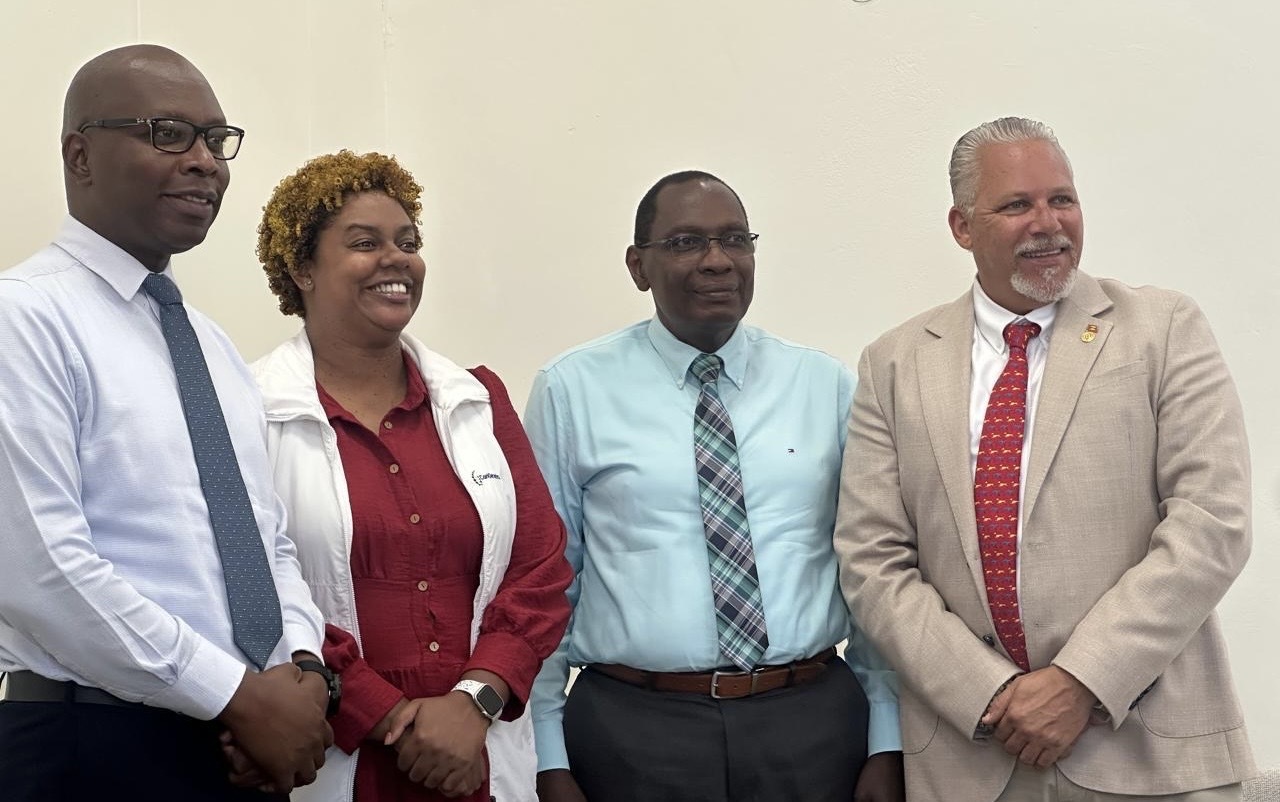
In a formal press conference held Tuesday at the Presidential Suite of SGU’s Chancellery Building in Grenada, regional genomic initiative CariGenetics and St George’s University (SGU) jointly unveiled the Caribbean Prostate Cancer Genetic Study’s Grenada cohort — a landmark initiative that marks the first large-scale genetic research project in the island nation’s history.
The launch represents a watershed moment for locally led genomic science, precision medicine advancement, and men’s health advocacy across the Caribbean region. As part of CariGenetics’ broader regional mission to correct historical underrepresentation of Caribbean populations in global medical research, the study fills a critical gap that has long left local communities without tailored healthcare insights.
Prostate cancer stands as one of the most pressing public health threats facing men across the Caribbean, and in Grenada specifically it is the leading cause of cancer death among male residents. The collaborative research team aims to unpack how genetic factors unique to Caribbean populations influence prostate cancer risk, with the ultimate goal of improving screening protocols, prevention strategies, targeted treatment plans, and long-term public health policy for Grenadian and Caribbean men more broadly.
The Grenada cohort is the third regional group to be added to CariGenetics’ ongoing Caribbean-wide prostate cancer research initiative, following the successful completion of data collection in Bermuda and St. Lucia. The project feeds into the larger Caribbean Genome Program, an ambitious effort that aims to sequence the full genomes of 250,000 Caribbean residents by 2030. By expanding the volume of genetic data from Caribbean populations, the program seeks to close deep, long-standing gaps in global health data and advance more equitable healthcare outcomes for groups that have historically been excluded from major medical research.
Beyond generating critical genomic data, the partnership between CariGenetics and SGU is designed to build local research infrastructure and workforce capacity. The initiative will establish on-island laboratory sequencing capabilities for human genomic research, and will include specialized training for SGU’s nursing department on best practices for participant recruitment in genetic studies. The training program will be delivered by CariGenetics in collaboration with the UK-based Association of Genetic Nurses and Counsellors (AGNC).
“For decades, Caribbean people have been left out of the research that shapes modern clinical care and medical progress,” explained Dr. Carika Weldon, Founder and Chief Executive Officer of CariGenetics, during her press conference remarks. “This study changes that narrative. It is not just about including Grenadian and Caribbean men in the future of healthcare — it is about letting them lead that future. When we understand our own DNA, we can build better prevention tools, catch risk earlier, deliver more informed treatment, and make stronger public health decisions that work for our communities.”
The press conference convened cross-sector leaders from genomics, public health, and higher education to underscore the urgent need for targeted prostate cancer research in the region, and to outline how widespread community participation can drive the shift toward more personalized, proactive healthcare for Caribbean men. Attending speakers included Grenada’s Chief Medical Officer Dr. Shawn Charles, Dr. Weldon, and SGU researchers Dr. Trevor Noël and Dr. Dolland Noel.
Grenada’s Ministry of Health has offered full official endorsement of the study, Dr. Shawn Charles confirmed in his address. “As the leading cause of cancer death for men in Grenada, work to advance prostate cancer research could not be more critical. We urge all eligible men to take advantage of this opportunity and take part in this important work.”
SGU Provost Dr. Mark Clunes echoed that commitment, noting: “St. George’s University is proud to partner with CariGenetics on this transformative initiative. Prostate cancer is a major public health concern for men across the Caribbean, and this work reflects our shared dedication to raising awareness, advancing life-saving research, and improving health outcomes for Caribbean communities. By expanding Caribbean representation in genomic research, this study will help build a future of precision medicine that is more equitable, more relevant, and centered on the needs of the populations it serves.”
Dr. Weldon also highlighted the contributions of two high-profile Grenadian male community leaders who have joined the effort to boost participation: Sir Dr. Kirani James, president of the Windward Islands Research and Education Foundation (WINDREF) and the most decorated 400-meter track athlete in history, and Mr. Killa, Grenada’s cultural ambassador and one of the world’s leading Soca artists, who is a prominent advocate for holistic wellness. Both leaders are leveraging their public platforms to encourage men across Grenada to learn more about prostate health, prioritize early screening, and participate in the study. Their involvement underscores the value of trusted community voices in breaking down barriers to men’s health engagement and empowering people to take control of their well-being.