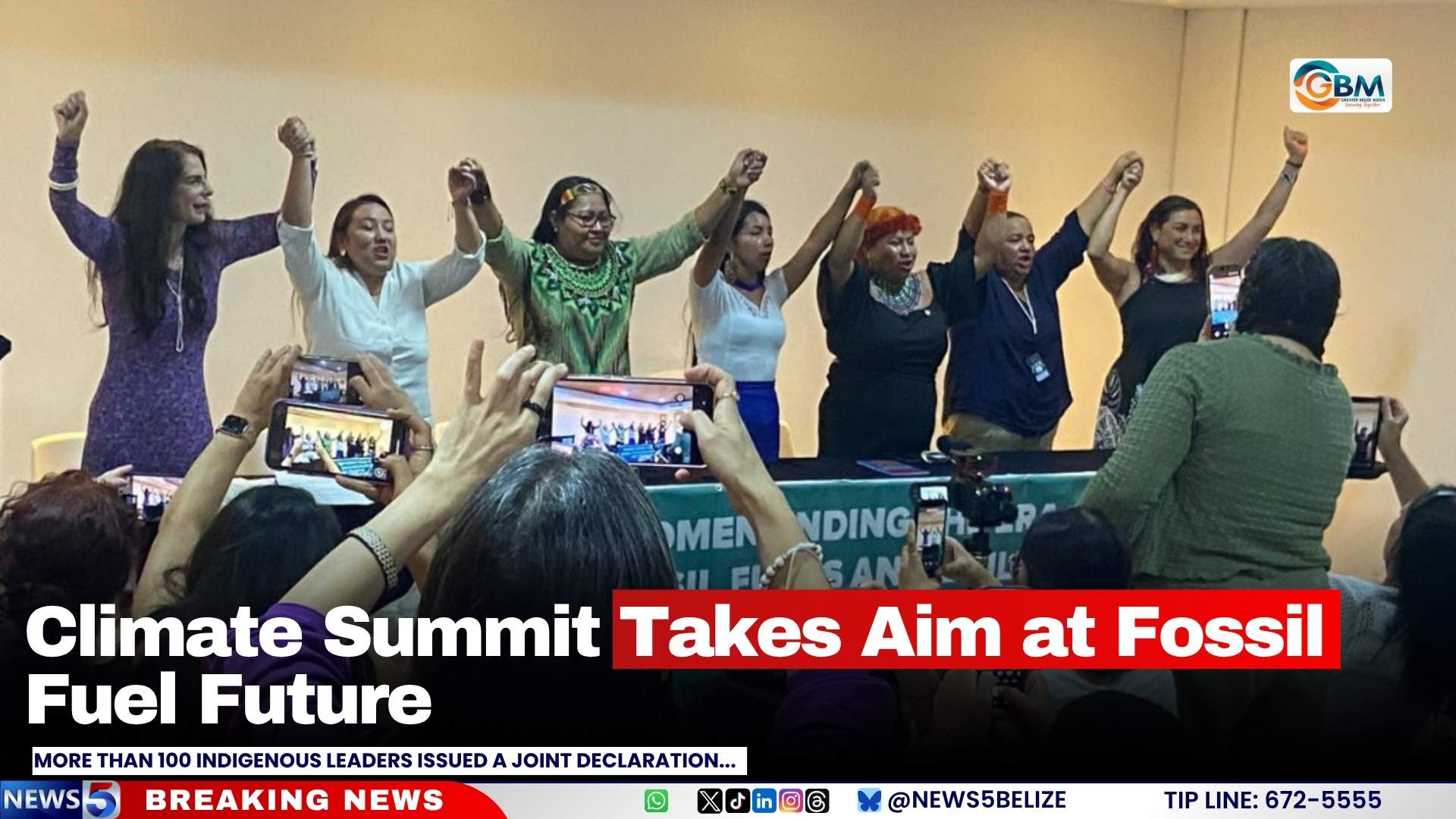
In a landmark step for global climate action, the world’s first dedicated Fossil Fuel Phase-Out Summit wrapped up its proceedings on April 30, 2026, in Santa Marta, Colombia. Convened outside the formal United Nations climate negotiation framework, the unprecedented gathering brought nearly 60 national delegations together to tackle the complex challenge of phasing out global production and use of coal, oil, and natural gas, framed by organizers as a bold experiment in collaborative climate diplomacy.
While the summit did not produce any legally binding commitments for participating nations, it delivered a series of meaningful milestones that signal a shifting global conversation around fossil fuel dependency. A core highlight came from over 100 Indigenous leaders from around the world, who released a unified joint declaration positioning Indigenous territorial protection as a non-negotiable foundation for an equitable just transition away from fossil fuels.
Patricia Suárez, a representative of the Organization of Indigenous Peoples of the Colombian Amazon (OPIAC), shared a measured assessment of the summit’s outcomes, noting that the event successfully elevated the urgency of rapid fossil fuel phase-out but left critical implementation questions unresolved. “The Santa Marta Conference has put the urgency of moving away from fossil fuels on the table, but still leaves unanswered how that will happen,” Suárez stated. “For Indigenous Peoples, the answer is clear: without the protection of our territories, and as long as energy models that plunder them persist, nothing will change.” She emphasized that a permanent ban on extractive activities within Indigenous lands must be a central component of any credible global climate strategy.
Another key institutional outcome of the summit was the launch of a new global scientific transition panel, comprising more than 250 leading climate and energy experts from around the world. The panel will be co-chaired by prominent climate scientists Johan Rockström and Carlos Nobre, tasked with providing evidence-based guidance for transition planning. Martí Orta-Martínez, a researcher at the University of Barcelona, stressed that current climate science leaves no room for delayed action, arguing that to keep global warming within the internationally agreed 1.5°C threshold, nearly all existing oil and gas extraction contracts must be canceled immediately.
Observers of the summit also highlighted critical gaps that must be addressed in future talks. Ana Carolina González, a policy analyst with the Natural Resource Governance Institute, noted that the event opened vital conversations about energy transition planning for fossil fuel-producing nations, but it lacked participation from national oil companies (NOCs) — actors that play an outsize role in global energy markets. “These are not peripheral players: they produce more than half of the world’s oil and gas, a share set to reach 62% by 2050, and are the economic backbone of countries like Colombia, Mexico and Nigeria,” González explained. “The next step must bring them in as essential partners in any credible transition roadmap.”
Despite the gaps, many participants framed the summit as a long-awaited shift from the tone of past climate negotiations. Fatima Eisam Eldeen, also of the University of Barcelona, noted that for the first time in a major global climate gathering, the focus was not solely on sounding alarms about the climate crisis, but on exploring actionable pathways forward. “For the first time, it wasn’t only sounding the alarm on what is going wrong or how little time is left, it was shining a light on what is possible, it spoke the language of hope. Now the real work begins: taking this out of conference rooms and into people’s lives,” she said.
The summit also drew input from key global energy and policy leaders. International Energy Agency executive director Fatih Birol, whose remarks were featured during the event, warned that global energy markets are undergoing irreversible structural change that is already accelerating the shift away from fossil fuels. Colombian Environment Minister Irene Vélez Torres echoed that urgency, arguing that continued reliance on fossil fuels can never deliver long-term, stable energy security for any nation.
Private sector engagement was also present, with major clean energy and industrial firms including Chinese electric vehicle manufacturer BYD and Australian green industrial firm Fortescue participating in working sessions. The companies outlined their emerging “real zero” emission strategies, which prioritize eliminating greenhouse gas emissions at the source rather than relying on carbon offsetting schemes.
In a final announcement, delegates confirmed that the second iteration of the Fossil Fuel Phase-Out Summit will be co-hosted by Tuvalu and Ireland in 2027, extending the new forum for collaborative climate action outside traditional UN processes.