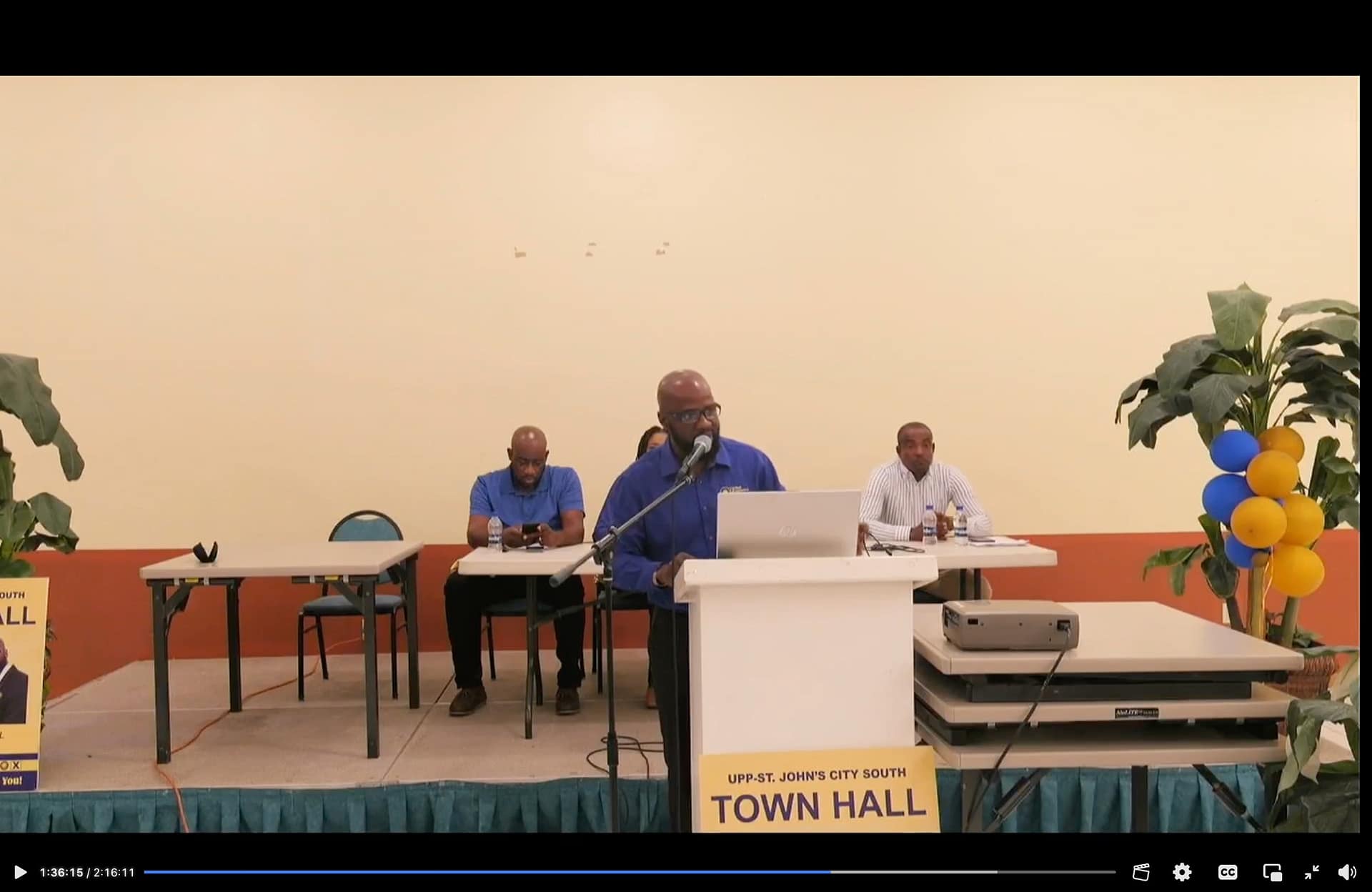
As Antigua and Barbuda prepares for its April 30 general election, United Progressive Party candidate Adrian Williams has launched a bold 10-point development framework for the country’s South City region, positioning the plan as a targeted solution to growing economic strain and a blueprint for people-centered governance.
Speaking to a packed audience at a public town hall gathering, Williams emphasized that the upcoming ballot represents a defining juncture for the twin-island nation, urging voters to recognize that shifting global dynamics will not remain distant from local realities. “We are not entering into an ordinary election,” he told assembled attendees, highlighting looming projected hikes in the cost of core household necessities: food, fuel, and rental housing. “Issues forged far beyond our shores… are certainly going to affect us right here at home.”
Williams’ comprehensive plan covers a wide range of priority policy areas, from expanding agricultural output and improving public access to land, to breathing new economic life into the capital city of St. John’s. Additional key pillars include transformative reforms to education and healthcare, expanded investment in youth development, strengthened community policing, and broad-based support for local economic activity. At the heart of his policy pitch is a commitment to “bottom-up” nation-building, a model that centers increased public participation in governance and greater decision-making power for local communities.
“The power truly belongs to the people,” Williams affirmed. “We want to give that power where it belongs.”
The candidate also drew attention to longstanding, unaddressed challenges within the national healthcare system, identifying extended wait times for care and persistent staffing shortages as issues that demand immediate intervention. He argued that any meaningful healthcare reform must prioritize two core goals: boosting service efficiency and guaranteeing equal access to care for all residents, regardless of their income or location.
Williams further underlined the urgent need for targeted policies to boost youth inclusion and grassroots community progress, calling for structured, accessible programs that build personal discipline and equip young people with in-demand employable skills.
Throughout his presentation, Williams repeatedly returned to the central theme of ongoing constituent consultation, stressing that the proposals on the table were not developed behind closed doors and imposed on the public. Instead, he explained, the plan has been shaped iteratively through direct dialogue with the communities it aims to serve.
“This meeting tonight is not us pushing things down your throat—this is us asking you, the people, how can we play a part… to modernize our system,” he explained.
Williams confirmed that the 10-point South City development plan forms an early, core component of the United Progressive Party’s broader national platform for the 2026 general election cycle. He added that if the party secures victory at the polls on April 30, the implementation of all proposals will continue to be guided by sustained, open dialogue with voters across the country.