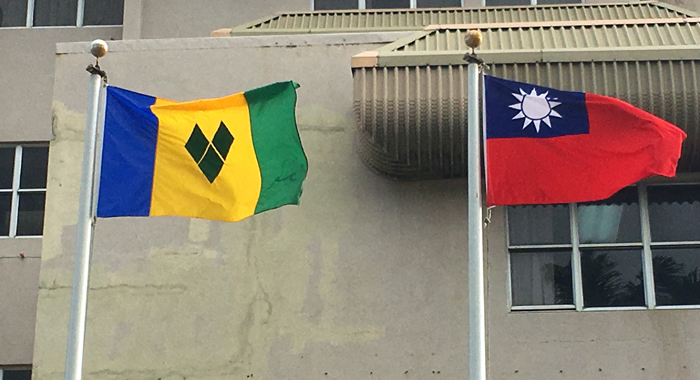
When the New Democratic Party (NDP) won general elections in St. Vincent and the Grenadines (SVG) last November, it signaled a new direction for the Caribbean nation’s foreign engagement. That policy shift was laid out clearly to lawmakers this week by Foreign Minister Dwight Fitzgerald Bramble, who outlined the government’s pivot to a results-driven “performance-based diplomacy” model that prioritizes tangible domestic development gains over traditional ceremonial diplomacy — while explicitly confirming that the 45-year diplomatic relationship with Taiwan will remain unchanged.
Speaking in Parliament on April 21 in response to a question from opposition senator and former foreign minister Keisal Peters, Bramble opened with a straightforward confirmation of SVG’s commitment to Taipei. “We appreciate and value the relationship that we have built over the last 45 years with the government and people of Taiwan,” he said, adding that the administration is preparing to take part in enthusiastic celebrations of the sapphire anniversary of diplomatic ties, scheduled for August 15.
Bramble, a career former diplomat whose portfolio also covers foreign trade, foreign investment and diaspora affairs, explained that the NDP’s new diplomatic framework marks a deliberate break from the previous model, which centered primarily on diplomatic presence and protocol. Under the revised approach, overseas missions and consulates will no longer be assessed by the flags they fly or ceremonial events they attend, but by the tangible economic and social value they generate for SVG’s 110,000 residents.
“Foreign policy is not ceremonial, and I’m sure we all know this,” Bramble told parliamentarians. “It is economic policy, social policy and national security policy projected beyond our borders.” For a small island developing state like SVG, which lacks global military or geopolitical influence, the priority of foreign engagement must be advancing the welfare of the national population, he added. “We have to make sure that our people cannot only eat and survive, but they can thrive and develop… with a decent standard of living. That is exactly what our overseas missions will be doing under the guidance of this new government.”
Under the new model, SVG’s overseas diplomatic posts — particularly those in North America and the United Kingdom, which host large segments of the SVG diaspora — will be repositioned to act as active engines of economic development. Key priorities for diplomatic engagement include facilitating trade connections for local exporters, attracting high-quality foreign investment in targeted high-growth sectors including renewable energy, sustainable tourism, the blue economy and agro-processing, and expanding market access for Vincentian goods and services, with a particular focus on diaspora niche markets for creative industries, ICT services and skilled professional services.
Multilateral diplomatic participation will also be tied to clear, actionable national priorities, Bramble said, with core advocacy focused on climate financing, global recognition of small island developing states’ economic vulnerability, and expanded access to concessional lending.
The administration is also reframing its engagement with the global SVG diaspora, treating the community as a strategic economic partner rather than merely a source of remittances. Bramble noted that the government will work to mobilize diaspora members as investors, entrepreneurs, mentors and contributors of professional skills and expertise to support domestic development.
Turning again to the question of SVG’s relationship with Taiwan, Bramble noted that a large community of Vincentian students and diaspora members already reside in Taiwan. The government will work to streamline support for Vincentian students to complete their education, he said, while leveraging the community’s connections to turn any potential brain drain into a “brain gain” that advances national development. As with all of SVG’s international partnerships, the NDP administration will work to deepen ties with Taiwan and translate the relationship into measurable, tangible benefits for SVG citizens, he added.
The confirmation of continued relations with Taiwan closes a chapter of uncertainty that stretches back to 2016, when the NDP, then led by now-retired leader Arnhim Eustace, announced that it would cut diplomatic ties with Taipei if elected. Since winning November’s election in a landslide, the party has fully reversed that earlier position: Prime Minister Godwin Friday met with Taiwan’s ambassador to Kingstown as one of his first diplomatic engagements after taking office, and the administration appointed Taiwan-trained Mandarin-speaking journalist Kenton X. Chance, who holds a master’s degree in international affairs, as SVG’s resident ambassador to Taipei in March. Later that month, Deputy Prime Minister St. Clair Leacock led a four-member official delegation to Taipei, where he publicly reaffirmed the new government’s commitment to maintaining the long-standing bilateral relationship.