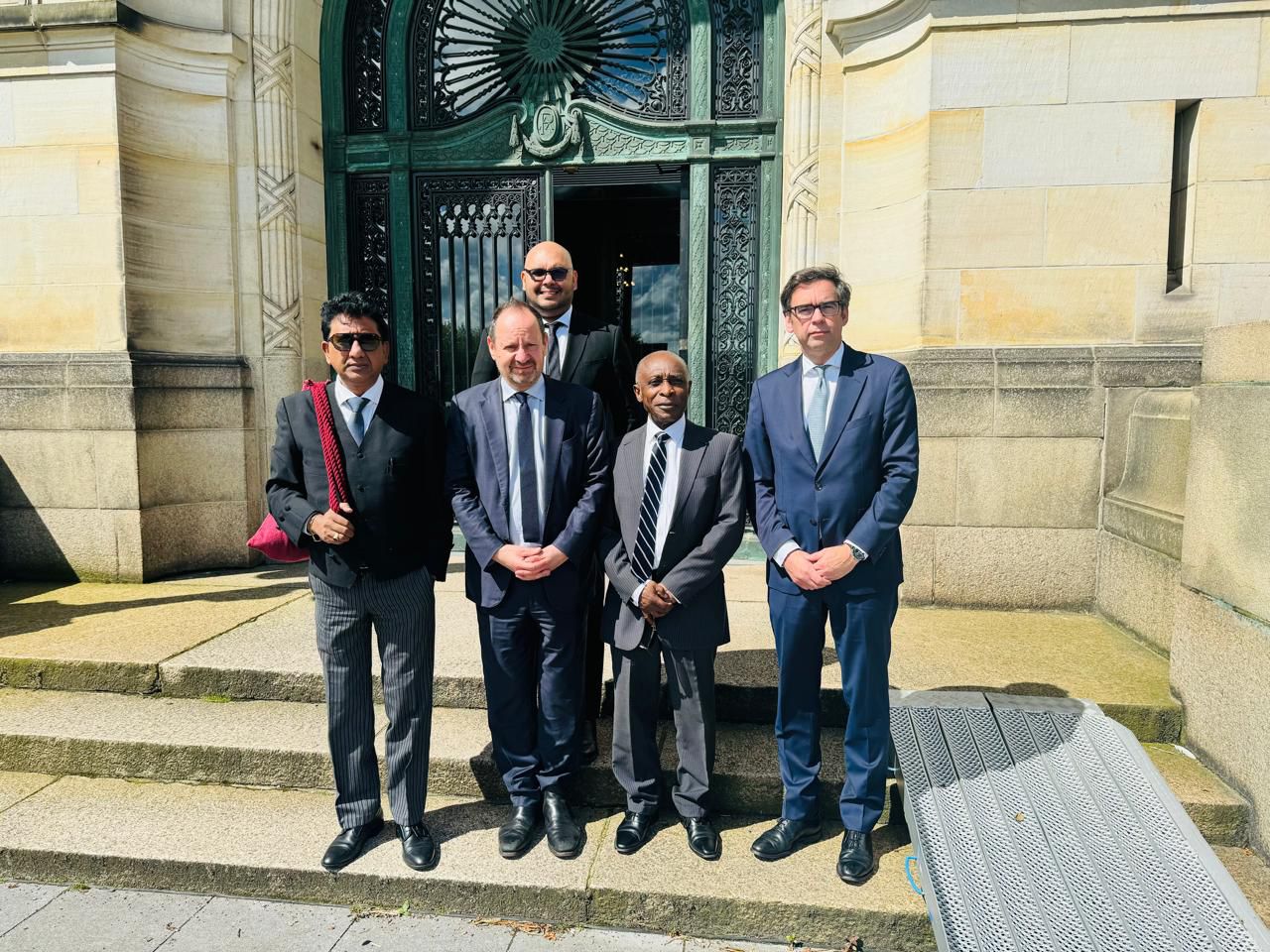
The decades-long territorial dispute between South American neighbors Guyana and Venezuela is set to enter a new, critical phase next month, as the International Court of Justice (ICJ) will launch oral hearings on the merits of Guyana’s case starting May 4, Guyana’s Attorney General Anil Nandlall confirmed in an appearance on his weekly social media program *Issues In The News* on Tuesday evening.
Nandlall, who will travel to The Hague to join Guyana’s legal team alongside the country’s co-agent Carl Greenidge and a cohort of international legal experts, noted the hearings are scheduled to run through the full week of May 4, and could extend into the following week if the volume of arguments and proceedings requires additional time. As of Tuesday evening, neither the ICJ nor Venezuela’s Ministry of Foreign Affairs has issued an official public statement confirming the hearing schedule or outlining Venezuela’s planned arguments for the proceedings.
The dispute centers on the 1899 Arbitral Tribunal Award that established the formal land border between the two countries, which Venezuela has repeatedly refused to recognize. Caracas continues to claim sovereignty over the 160,000-square-kilometer Essequibo Region, a resource-rich territory rich in mineral deposits and old-growth forests that accounts for roughly two-thirds of Guyana’s total land area, as well as Guyana’s Exclusive Economic Zone (EEZ) stretching offshore from the region.
The outcome of the case carries major commercial stakes for the global energy sector, as multiple major international oil companies hold active exploration and production concessions in offshore waters adjacent to Essequibo. Guyana first brought the case to the ICJ for adjudication on March 29, 2018, and energy industry stakeholders have been closely tracking its progress ever since.
In January 2026, Darren Woods, CEO of US energy giant ExxonMobil – which leads development of the massive Stabroek Block offshore Essequibo that has already yielded more than 11 billion barrels of proven oil reserves – described the upcoming ICJ ruling as a “critical milestone” that will shape the company’s long-term investment and operational plans in the region. Last month, Nicole Theriot, the United States Ambassador to Guyana, announced that Washington stands ready to facilitate bilateral negotiations between Guyana and Venezuela to settle remaining maritime boundary disputes after the ICJ issues its final ruling, which is currently expected in early 2027.
A key complication for post-ruling negotiations is Venezuela’s non-membership in the United Nations Convention on the Law of the Sea (UNCLOS), the international framework that governs maritime boundary delimitation. Unlike Guyana and neighboring Suriname, Venezuela has not ratified the convention, meaning any final maritime agreement will require direct bilateral negotiations between Georgetown and Caracas with no binding international legal framework to govern the process.