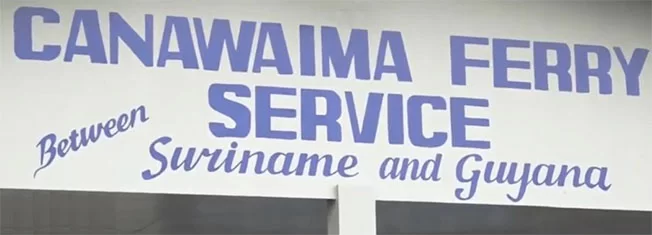
A long-standing pattern of unaddressed misconduct at the Surinamese state-owned enterprise Canawaima has pulled back the curtain on deep-rooted systemic failures in the oversight of the country’s public sector entities, a pattern that has persisted across successive government changes.
Every transition of power in Suriname follows a familiar routine: supervisory boards (Raden van Commissarissen, or RvCs) and executive teams at all state-owned companies are replaced. The theory promises fresh leadership, a new strategic direction, and strengthened independent oversight. In practice, however, the only meaningful shift tends to be who gets to hold the levers of power – while long-standing structural problems remain untouched.
The core mandate of a supervisory board is clear: to provide independent oversight, enforce accountability, and safeguard good governance. But what happens when the overseers themselves become the source of corruption and mismanagement? Long before many newly appointed supervisory boards and executive teams have even settled into their roles, allegations of impropriety have already emerged across multiple state entities. Irregularities have been flagged at Suriname’s Telecommunications Authority, the Central Milk Board, and the State Health Insurance Fund. At gold mining firm Grassalco, investigations have been repeatedly announced, but no results have ever been made public, and no officials have been held to account for wrongdoing.
The latest controversy to erupt centers on Canawaima, the critical ferry and transport enterprise connecting Suriname and Guyana. What is unfolding at the company is no isolated scandal – it is a clear symptom of a much deeper systemic rot across Suriname’s public sector. The Canawaima trade union, led by Dayanand Dwarka, has already formally revoked its confidence in the company’s supervisory board and sounded the alarm over pervasive misconduct.
The allegations leveled against the board are severe: conflict of interest, widespread financial mismanagement, and the routine overstepping of institutional authority. Rather than limiting itself to independent oversight, the board has directly inserted itself into the day-to-day operational management of the company. In effect, the referee has stepped onto the field to play the game – while also controlling the final score. This is not simply poor governance; it is outright abuse of power.
The accusations go even further. There is documented evidence that financial flows within the company are routed through opaque structures linked directly to supervisory board members. These include shell companies registered in the names of board members’ family members, questionable invoicing practices, and entirely non-transparent transactions. Far from being isolated missteps, these patterns point to a systemic scheme that diverts public funds toward private gain.
Crucially, Canawaima does not have to be a troubled enterprise. It boasts strong revenue-generating capacity and holds a strategically vital role in cross-border trade and connectivity between Suriname and Guyana, moving massive volumes of capital through its operations annually. Yet for years, that revenue has been captured by executives and overseers who have manipulated the system for their own benefit. The core problem is that state-owned enterprises are not being governed – they are being hollowed out from the inside, even as top officials draw exorbitantly high public salaries.
A bitter power struggle has paralyzed Canawaima’s operations. The company’s terminal manager has come under intense fire from the board, while he in turn accuses the supervisory board of repeated overreach and unethical behavior. The end result is institutional chaos that has strained service delivery, leaving ordinary Surinamese citizens to bear the consequences of elite infighting and corruption.
Despite the mounting evidence, no decisive action has been taken to address the crisis. Suriname’s president has repeatedly pledged to crack down hard on corruption and promised that no wrongdoer will be protected. But on-the-ground reality tells a different story: dossiers of alleged misconduct pile up, investigations drag on indefinitely, and meaningful sanctions are never imposed. The current system does not correct itself – it protects insiders. Corruption is no longer an aberration; it has become a profitable business model, one that survives on public funds and persists because there are no consequences for misconduct.
The question that lingers over Suriname’s public sector is as simple as it is confronting: who will watch the watchmen? As long as supervisory boards themselves face credible allegations of corruption and self-dealing, the entire concept of independent oversight becomes a meaningless farce. Without credible oversight, good governance becomes nothing more than an illusion, and state-owned enterprises become nothing more than playthings for powerful personal interests.
What Suriname needs right now is not another unpublicized investigation that will be buried in a government drawer. What it requires is genuine political will to intervene impartially, hold wrongdoers to account regardless of their standing, and attach real consequences to misconduct. Until that happens, the broken system will remain intact – and ordinary Surinamese society will continue to pay the price.