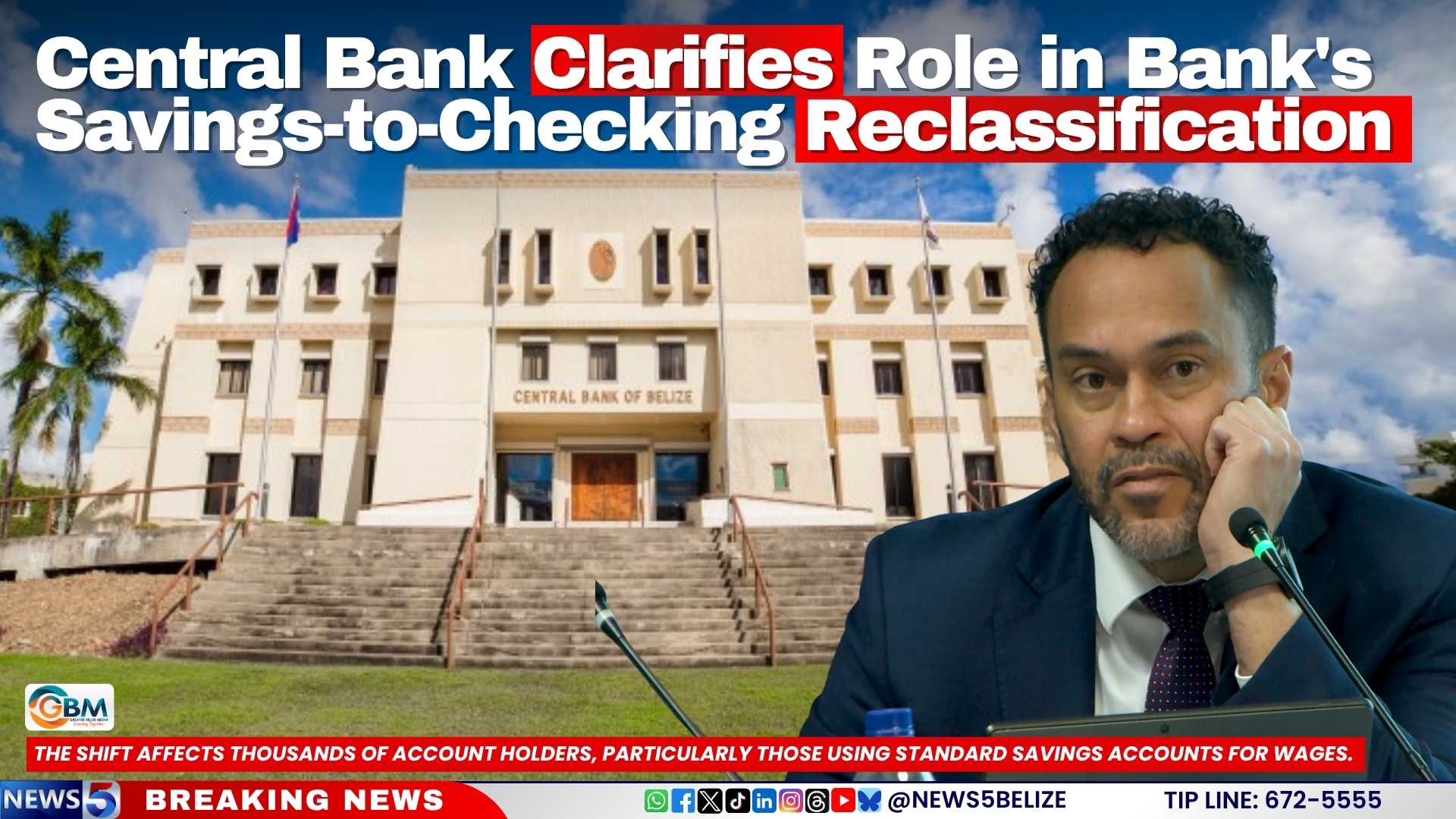
In a recent public clarification that has stirred concern among thousands of banking customers across Belize, the Central Bank of Belize has distanced itself from sweeping changes rolled out by two of the nation’s largest commercial lenders – Belize Bank Limited and Atlantic Bank Limited. The reforms, which reclassified existing basic savings accounts into two new tiers labeled “Full Access” and “Essential”, eliminated interest earnings on salary deposits and introduced new monthly maintenance and transaction fees, converting what were once interest-bearing savings products into checking-like accounts with associated costs.
The changes, implemented several weeks prior to the central bank’s statement, have disproportionately impacted working account holders who relied on their basic savings accounts to receive regular wage deposits. Under the new structure, affected customers now face a monthly maintenance fee of roughly 1.5 Belize dollars, plus teller withdrawal fees that can reach up to 4 Belize dollars per transaction, with no interest accrued on their account balances. Thousands of households across the country have seen their small but steady interest earnings disappear overnight, with many unaware the changes did not receive formal regulatory sign-off.
Central Bank Governor Kareem Michael made the regulator’s position clear in an official statement released April 21, 2026: “There was no approval sought for Atlantic Bank or any other bank to have done that.” Michael further outlined the scope of the central bank’s regulatory authority, explaining that the institution’s mandate is limited to setting binding caps and floors on interest rates across the banking sector, not pre-approving new account structures or product offerings from commercial institutions.
Amid the ongoing fallout from the unexpected reclassification, Governor Michael noted that the central bank is currently engaged in active discussions with Belize’s commercial banking sector to address the public’s concerns. The regulator is also working through a broader package of financial sector reforms, including the development of new financial consumer protection legislation and the rollout of a formal national credit reporting system – changes intended to strengthen safeguards for banking customers moving forward. The talks are focused on striking a functional balance between supporting the expansion of digital banking services, covering banks’ operational costs through reasonable fees, and protecting consumers from unfair, unexpected changes to their account terms.