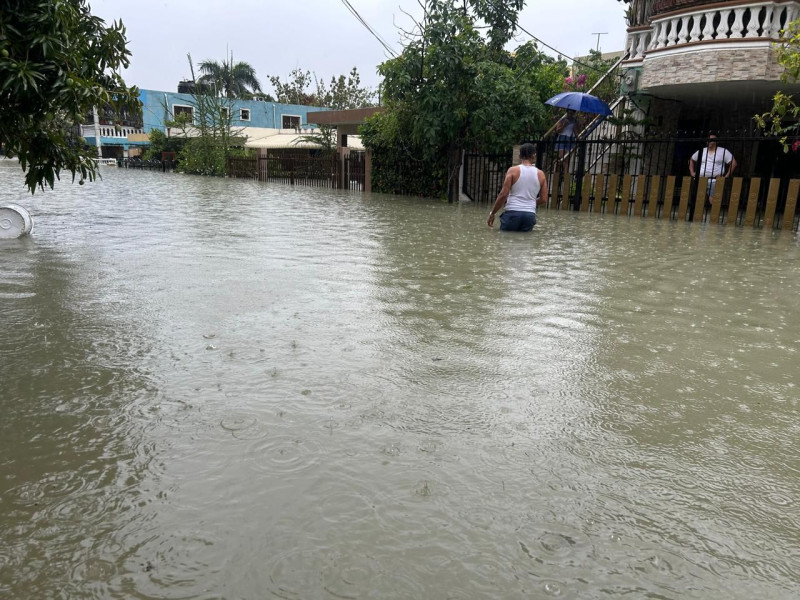
Heavy rainfall and subsequent flooding triggered by a strong low-pressure trough have swept across the Dominican Republic in recent days, leaving a trail of damage to the country’s public healthcare infrastructure. In a press briefing held in Santo Domingo, Julio Landrón, executive director of the nation’s National Health Service (SNS), confirmed that seven hospitals have sustained significant impact from the extreme weather event.
Landrón explained that while every hospital in the affected zone saw some degree of water intrusion from the intense precipitation, seven facilities experienced critical structural leaks that disrupted normal operations. The worst-hit site, the hospital in Montellano, required emergency evacuation of an interior wing after rushing water flooded through its internal corridors. Contrary to initial assumptions that the densely populated capital region would bear the brunt of the damage, Landrón clarified that the most vulnerable healthcare facilities are not located in Greater Santo Domingo. Instead, it is low-lying, high-risk regions like Montellano and Puerto Plata that have faced the most severe flood-related damage to local hospitals.
Despite the scale of the damage, the SNS has moved swiftly to restore services for patients. Landrón reported that emergency crews completed remediation work at the most affected Montellano facility in less than 24 hours, bringing the site back online to deliver essential care. To expand care capacity for affected communities, the SNS partnered with the country’s Emergency Operations Center (COE) to set up a fully functional mobile hospital near the damaged site. Landrón emphasized that the agency is well-prepared for any additional extreme weather: the SNS currently holds more than five fully stocked mobile hospital units that can be deployed immediately if new flooding occurs, to guarantee uninterrupted care for local residents.
Looking ahead to mitigate future flood-related damage to public healthcare facilities, Landrón noted that the SNS has already rolled out a national waterproofing upgrade program across the entire public hospital and primary care center network. The initiative was specifically designed to address the flood-prone terrain where many of the country’s rural and low-lying healthcare facilities are located, reducing the risk of water intrusion and structural damage during future heavy rain events.