The global popular image of the Caribbean is dominated by idyllic postcard-perfect scenery: golden endless sunshine, crystal-clear turquoise waters, lush rolling mountain ranges, and gentle consistent trade winds. What many do not recognize, however, is that these same natural features – sun, wind, ocean, and geothermal heat – represent a largely untapped clean energy powerhouse waiting to be activated across the region.
The United Kingdom has increasingly prioritized building strategic energy partnerships with Caribbean nations to convert these abundant natural assets into affordable, low-carbon energy, laying the foundation for clean, economically resilient, and long-term sustainable growth across the region.
Energy analysts widely agree that the Caribbean holds enough renewable potential to generate far more clean power than the region consumes. Many individual island nations are fully capable of transitioning to 100% renewable electricity generation, with excess production available to export to neighboring countries. Some regional economies could even convert surplus renewable electricity into transportable low-carbon fuels, including green hydrogen, ammonia, and methanol for global markets.
Despite this enormous natural advantage, the current energy landscape across the Caribbean remains heavily reliant on fossil fuels. Data shows that roughly 87% of the energy mix for the Caribbean Community (CARICOM) still comes from carbon-intensive fossil fuels, a dependence that has driven cripplingly high electricity prices for households. Many Caribbean families pay between two and nearly three times more for electricity than households in other parts of the world. This persistent reliance on imported fossil fuels also perpetuates systemic economic vulnerability, unsustainable national debt burdens, and widespread energy insecurity across the region.
Since 2015, the UK has committed more than US$39 million in targeted funding to support the Caribbean’s energy transition. This support has spanned a range of high-impact initiatives: advancing geothermal resource development, installing utility-scale and distributed solar photovoltaic (PV) systems, completing energy efficiency retrofits for public buildings, and delivering targeted training programs to build local technical capacity across the Eastern Caribbean. The UK has also laid critical early groundwork to develop a regional offshore wind energy market.
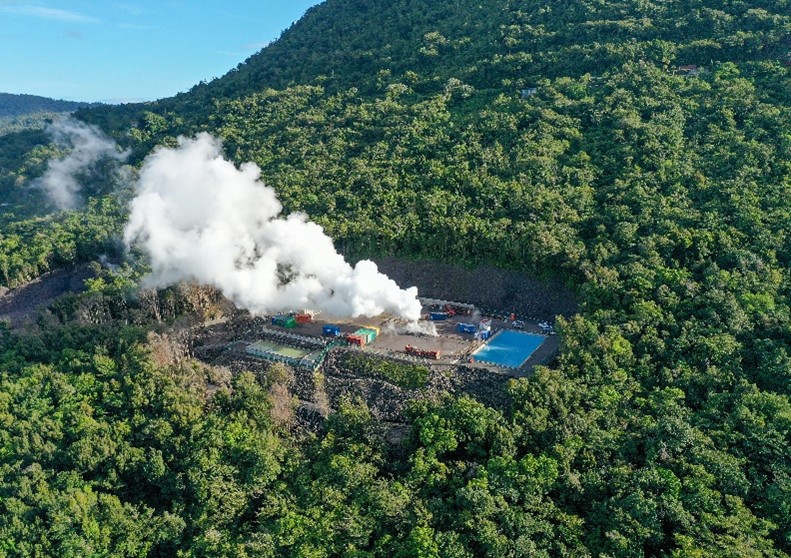
One standout success of this partnership is the UK’s support for geothermal development in Dominica. UK funding helped de-risk the high upfront costs of exploratory drilling, giving private sector investors the confidence to commit to the project. Dominica is now on track to commission the first operational geothermal power plant in the English-speaking Caribbean in April 2026. This facility is expected to deliver transformative economic and energy benefits for the island nation, a milestone that required years of committed government leadership, coordinated collaboration, and flexibility from multiple international development partners. The UK is now working to replicate this success with ongoing geothermal projects in Grenada and St. Lucia.
In St. Vincent and the Grenadines, UK support has delivered immediate tangible results: funding for energy-efficient street lighting upgrades and a new solar PV plant at the country’s main international airport has helped the government save millions of dollars in energy costs and avoid hundreds of tonnes of annual carbon dioxide emissions. Early work supported by the UK to map and assess the region’s offshore wind potential, while still in its early stages, holds enormous long-term development value for the entire Caribbean.
Back in 2013, CARICOM set an ambitious regional target: to reach 47% of electricity generation from renewable sources by 2027. As of 2023, the region has only reached roughly 13% renewable energy penetration, meaning progress has fallen far short of projections. To hit the 2027 target, the pace of transition will need to accelerate dramatically across the bloc. Progress has also been deeply uneven: a small handful of countries have made meaningful strides in scaling solar, wind, and geothermal power, while many others continue to lag well behind regional goals.
Like most Small Island Developing States (SIDS), the Caribbean faces unique structural barriers to rapid clean energy scaling. Small, isolated national grid sizes, prohibitive upfront capital costs, limited local technical capacity, and fragmented national markets that prevent economies of scale all slow deployment. Many regional countries also lack modernized grid infrastructure and updated regulatory frameworks – two core requirements for integrating variable renewable energy sources like solar and wind, which depend on flexible grid management.
Despite these challenges, clear, actionable solutions exist to remove barriers and accelerate progress. Regional pooled procurement for clean energy equipment and aggregated project pipelines can lower per-unit costs and attract large-scale global institutional investors. Modernizing aging grid infrastructure and updating outdated energy regulatory frameworks can open the market to greater private sector participation. Blended finance and concessional lending can help governments overcome the prohibitively high upfront costs that have deterred many large projects. Finally, targeted investment in building local engineering and technical capacity ensures that clean energy projects deliver long-term, sustainable benefits for regional communities.
All the resources the Caribbean needs to become a global clean energy leader are already within reach, and regional and international leaders argue there is no time to delay the transition. With decisive policy action, coordinated regional leadership, and strategic international partnerships, the region can convert its abundant natural renewable wealth into universal energy security, lower household electricity bills, and a more economically and climatically resilient future for all Caribbean people.
The UK has reaffirmed its long-term commitment to partnering with the Caribbean on this transition. Through the Global Clean Power Alliance, the two sides have agreed to a concrete three-year Caribbean action plan covering 2026–2028. The plan will provide on-demand access to UK private sector capabilities and technical expertise to address key transition barriers and attract the billions in investment needed to scale up clean energy across the region.
The natural resources are already in place. The global demand for low-carbon energy is growing. The moment for the Caribbean to unlock its clean energy potential is right now. This commentary was written by Ingrid Levine, Climate and Renewable Energy Adviser for the Caribbean Development Team at the UK Foreign, Commonwealth & Development Office.