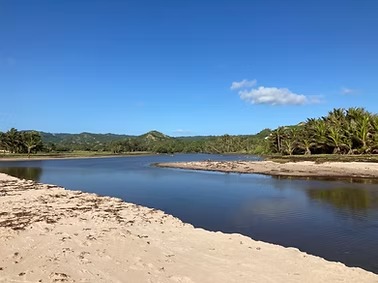
For a quarter of a century, Barbados has planned to create its first formally protected national forest and regulated conservation area – and this March, that long-held vision finally moved from planning to implementation. In an exclusive report to Barbados TODAY, conservation leaders have confirmed that on-the-ground work is now underway at two ecologically irreplaceable sites in the parish of St Andrew: Turners Hall Woods, the island’s last remaining intact patch of original rainforest, and Long Pond, a biologically diverse coastal lagoon on Barbados’ East Coast. The two-year initiative is backed by nearly $184,000 in grant funding from the Barbados Environmental Sustainability Fund (BESF), and is being led by the local chapter of global conservation nonprofit The Land Conservancy Barbados.
Robin Mahon, chair of The Land Conservancy Barbados and emeritus professor at the University of the West Indies Centre for Resource Management and Environmental Studies, emphasized that the team is prioritizing responsible use of existing funding before pursuing additional support. “We need to get on and do what we have been funded to do. I am not going to be going for any more funding from them until I finish with the funding I already have,” Mahon explained, noting the project officially launched on March 1 and is still in its early setup phases. The immediate next steps include recruiting a full-time project coordinator, building collaborative relationships with local communities, and coordinating with relevant national government departments to align work with existing national planning frameworks.
The project’s core objectives, laid out in Barbados’ national Physical Development Plan, have been 25 years in the making: to establish a formal protected conservation area at Long Pond and the country’s first official national forest at Turners Hall Woods. To date, no protected conservation areas or national forests have been formally established on the island, so this project marks a historic milestone for Barbados’ conservation movement. Leaders chose these two sites for the pilot phase to demonstrate what can be accomplished, with hopes of expanding protection to other pre-identified sites in coming years.
Turners Hall Woods spans 50 acres of land and is the only stretch of original rainforest that survived more than 400 years of human settlement and colonial-era deforestation on the island. It hosts thriving populations of ecologically significant native tree species, including sandbox, silk cotton, fustic, cabbage palm, trumpet tree, locust, and the macaw palm – a species indigenous exclusively to Barbados.
Long Pond, by contrast, is a dynamic coastal lagoon fed by the Bruce Vale and Walkers Rivers, which drain the island’s second and third largest watersheds respectively. The site hosts a rare mosaic of distinct native habitats, including a naturally formed sand dune system, mature mangrove forests, a marshy woodland ecosystem, and the coastal lagoon itself. Geographically, the site is bounded by Walker’s Reserve to the north, the community of Belleplaine to the west, and private landholdings to the south.
Mahon explained that the majority of the project budget will be allocated to the coordinator role and extensive community engagement work, as the initiative is designed to be community-led from its inception. “We want to establish community groups to run the conservation area and the national forest site long-term,” Mahon said. The project team will also resolve outstanding land ownership questions and draft formal management plans for both sites. At the conclusion of the two-year project, the team will submit a detailed outline development plan for each site to Barbados’ Planning and Development Department for formal approval.
Budget breakdowns show the Long Pond project carries an estimated price tag of $108,000, while the Turners Hall Woods initiative is budgeted at $76,000. While the team is focused on delivering results with the current funding, Mahon noted that community-centered conservation is resource-intensive, and the organization is actively seeking additional private donors to expand impact. “Community-based work takes a lot of time and trouble… you spend a lot of time chasing down people and holding meetings and that kind of thing,” he explained. “We always need more money, but we are going to do the best we can with what we have got.”
The BESF, which provided the seed funding for this initiative, is currently accepting applications for its second cycle of grant awards, after disbursing more than $1.2 million to eight local environmental projects during its first funding round last year. Beyond project grants, the fund has also invested millions of dollars in national marine spatial planning and broad sustainability initiatives across the island. For this second cycle, only organizations registered and operating within Barbados are eligible to apply, with funding available up to $300,000 per project focused on environmental conservation, climate resilience, and sustainable development.
Grants are structured in three tiers to support projects of all sizes: small grants up to $50,000, medium grants ranging from $50,001 to $100,000, and large grants from $100,001 to $300,000. To be considered for funding, projects must demonstrate clear scalability, long-term financial and ecological sustainability, and measurable environmental impact. Eligible applicants include registered nonprofits, community-based organizations, government agencies, academic institutions, and private sector entities based in Barbados, with applications due by March 26.
Established in 2022, BESF is a dedicated conservation trust fund created through a strategic Conservation Funding Agreement between the Government of Barbados and global conservation organization The Nature Conservancy. Its core mission is to mobilize financial resources to support impactful local projects that advance environmental sustainability and protect Barbados’ unique native biodiversity, safeguarding the island’s natural heritage for future generations.