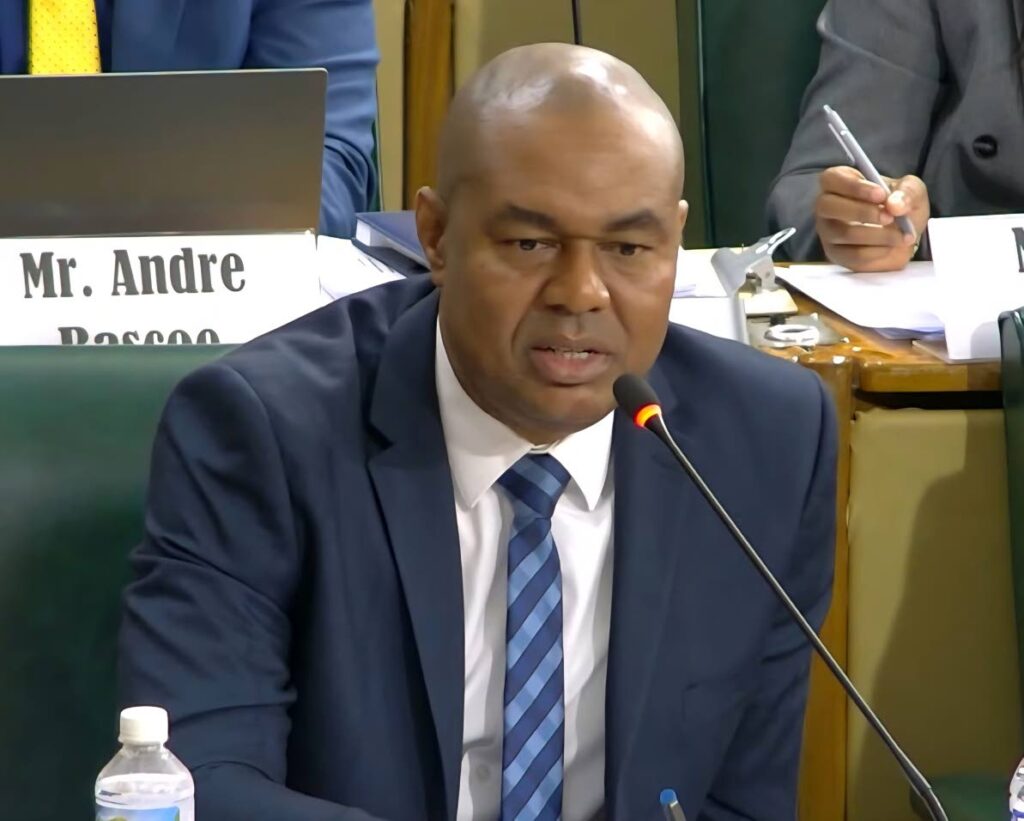
Jamaica’s top financial regulator is sounding the alarm over a crippling funding gap that threatens its ability to oversee the island nation’s fast-growing insurance sector, pushing officials to request parliamentary approval for long-delayed increases to industry fees that have not been adjusted since 2008.
Lieutenant Colonel Keron Burrell, executive director of the Financial Services Commission (FSC), laid out the stark scope of the agency’s financial strain during testimony Thursday before Parliament’s Regulations Committee, where members reviewed the proposed 2026 Insurance (Amendment of Twentieth Schedule) Regulations. Burrell explained that the disconnect between the insurance sector’s exponential growth and the FSC’s stagnant, fee-funded budget has left the regulator severely under-resourced to meet its core mandate.
“When the FSC launched in 2008, we had a workforce of 131 people overseeing a sector with roughly $170 billion in total assets,” Burrell told committee members. “After 18 years, the industry’s total assets have surged to more than $728 billion, yet we have only been able to add a small number of new staff, constrained entirely by the limited revenue we collect from frozen fees.”
Burrell emphasized that the sector’s evolution has not only been quantitative but also qualitative, bringing new levels of complexity that demand upgraded technological infrastructure and specialized regulatory expertise to detect misconduct and manage systemic risk. Unlike many government agencies, the FSC operates on a full cost-recovery model, receiving no public subsidy to cover operational gaps. “We do not get a government subvention, so every investment in better oversight has to come from the fees we charge the industry we regulate,” he added.
Aisha Wright, a divisional director at Jamaica’s Ministry of Finance and the Public Service, further detailed the scale of the revenue shortfall in her testimony. For the 2024-2025 fiscal period, the FSC incurred an estimated $749 million in costs to supervise the insurance industry, but collected just $487.2 million in fees – leaving a $262.5 million gap that the agency has had to cover using its cash reserves. Wright noted that the proposed fee changes serve two key goals: closing the funding gap to protect regulatory capacity and consumer protections, and simplifying the current convoluted fee structure. Under the current system, annual fees follow a tiered model for life and general insurance providers; the new framework will replace this with a single standard rate, making the system both easier for firms to understand and for the FSC to administer.
Burrell confirmed that the FSC has already dipped deep into reserves to cover ongoing operating costs, warning that this stopgap measure is not sustainable in the long term. Across all the sectors the FSC regulates, the agency is currently operating at an annual loss of more than $500 million, with the insurance sector alone accounting for $200 million of that deficit. “We have been burning through reserves just to keep operations running,” Burrell said. “It’s not a sustainable trajectory – any individual or organization would face collapse if they keep spending savings without growing their income.”
The proposal has drawn a measured response from parliamentary committee members. Kingston Central Member of Parliament Donovan Williams acknowledged that the regulator’s situation makes a fee adjustment unavoidable, but raised questions about the timing of the hike, coming as Jamaica continues to recover from the widespread damage caused by Hurricane Melissa in October 2024. “Coming off one of the most devastating weather events to hit our island, public and industry resistance to any price increase is understandable, so timing is a real concern,” Williams said. Still, he concluded that the 18-year freeze on fees and the FSC’s deteriorating financial position make the adjustment justified. “After 18 years of operating on an extremely tight budget, and now dipping deep into reserves to cover daily costs, I believe the increases are warranted at this juncture,” he added.
In response to concerns about industry pushback, Burrell noted that the FSC has repeatedly delayed the fee hike in response to past crises, including the COVID-19 pandemic and earlier hurricanes such as Beryl. “There is never an ideal time to raise fees, but we have waited 18 years already, and we have shown flexibility when the country faced crises,” he said. “We have listened to stakeholders’ concerns through every step of this process, but at this point, the need for adjustment can no longer be put off.”