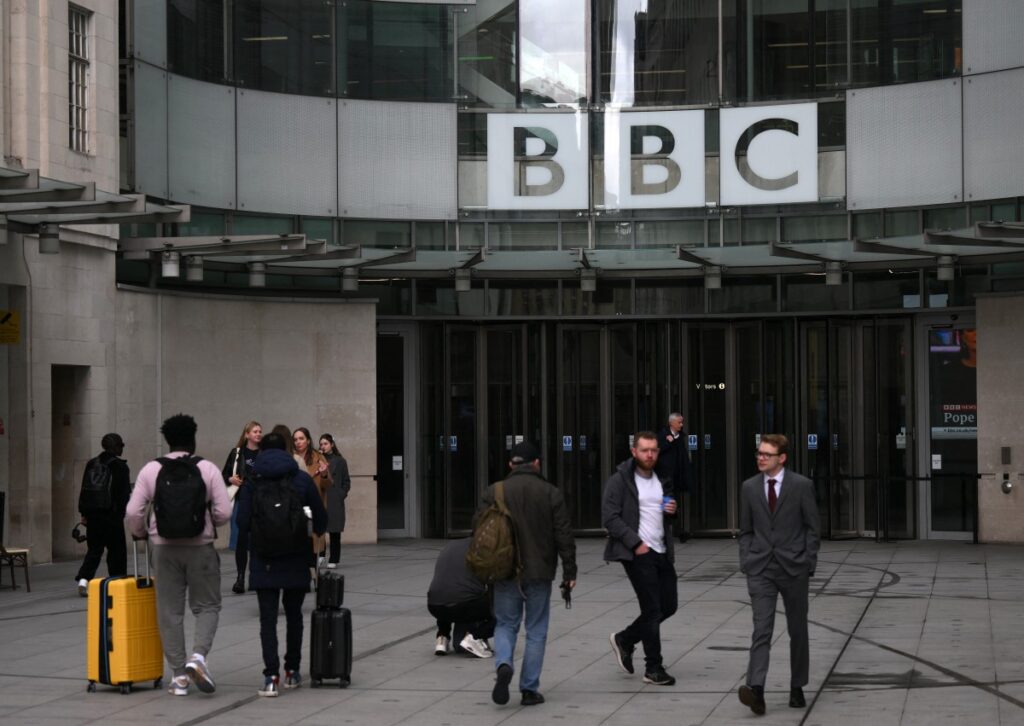
LONDON, UK – One of Britain’s most iconic public media institutions, the British Broadcasting Corporation (BBC), announced this Wednesday that it intends to eliminate between 1,800 and 2,000 full-time roles across the organization over the next two years, a move rooted in severe and growing financial strain that has reshaped the global media landscape.
In an internal statement shared with staff and later obtained by Agence France-Presse (AFP), interim BBC Director-General Rhodri Talfan Davies confirmed the scope of the cuts, noting that while final details are still being finalized, the corporation is preparing for a net reduction of nearly 2,000 roles. The announcement was first broadcast publicly on the BBC’s own rolling news channel Wednesday afternoon.
Davies emphasized that the cuts are a necessary, urgent response to what the organization calls “significant financial pressures” that cannot be delayed. The BBC has outlined a target to cut £500 million from its £5 billion annual operating budget, with the majority of these savings required by the 2027 and 2028 fiscal cycles. If carried out as planned, this round of redundancies will mark the largest workforce reduction at the 100-year-old broadcaster in nearly 15 years, according to reports from UK-based ITV News and the Press Association.
The downsizing comes at a time of unprecedented upheaval for traditional public service media. The BBC is grappling with multiple overlapping challenges: the rapid advancement of artificial intelligence that is reshaping content production workflows, shifting audience consumption habits that favor on-demand streaming over traditional broadcast, and a long-term decline in revenue from its core funding source, the television licence fee. In a March report, the broadcaster revealed that its real-term licence fee income has dropped by 24% since 2017, and the organization is required to cut its total cost base by an additional 10% by March 2029. The report warned that difficult decisions could ultimately lead to reduced content offerings and scaled-back public services.
Beyond internal financial woes, the BBC is also facing high-profile external legal pressure. Former US President Donald Trump recently filed a $10 billion defamation lawsuit against the corporation over a documentary that edited footage of a 2021 speech Trump delivered ahead of the US Capitol riot. Trump alleges the editing misrepresented his remarks to make it appear he explicitly encouraged supporters to storm the congressional building.
The restructuring comes as the BBC prepares to welcome a new permanent director-general next month: Matt Brittin, a longtime Google executive, who was hired specifically to steer the historic broadcaster through a period of major organizational transformation. Currently, the BBC remains a deeply embedded part of British public life, with the corporation reporting that 94% of all UK adults engage with its services on a monthly basis. It is funded entirely by the mandatory television licence fee paid by UK households that access any BBC content, rather than through commercial advertising.