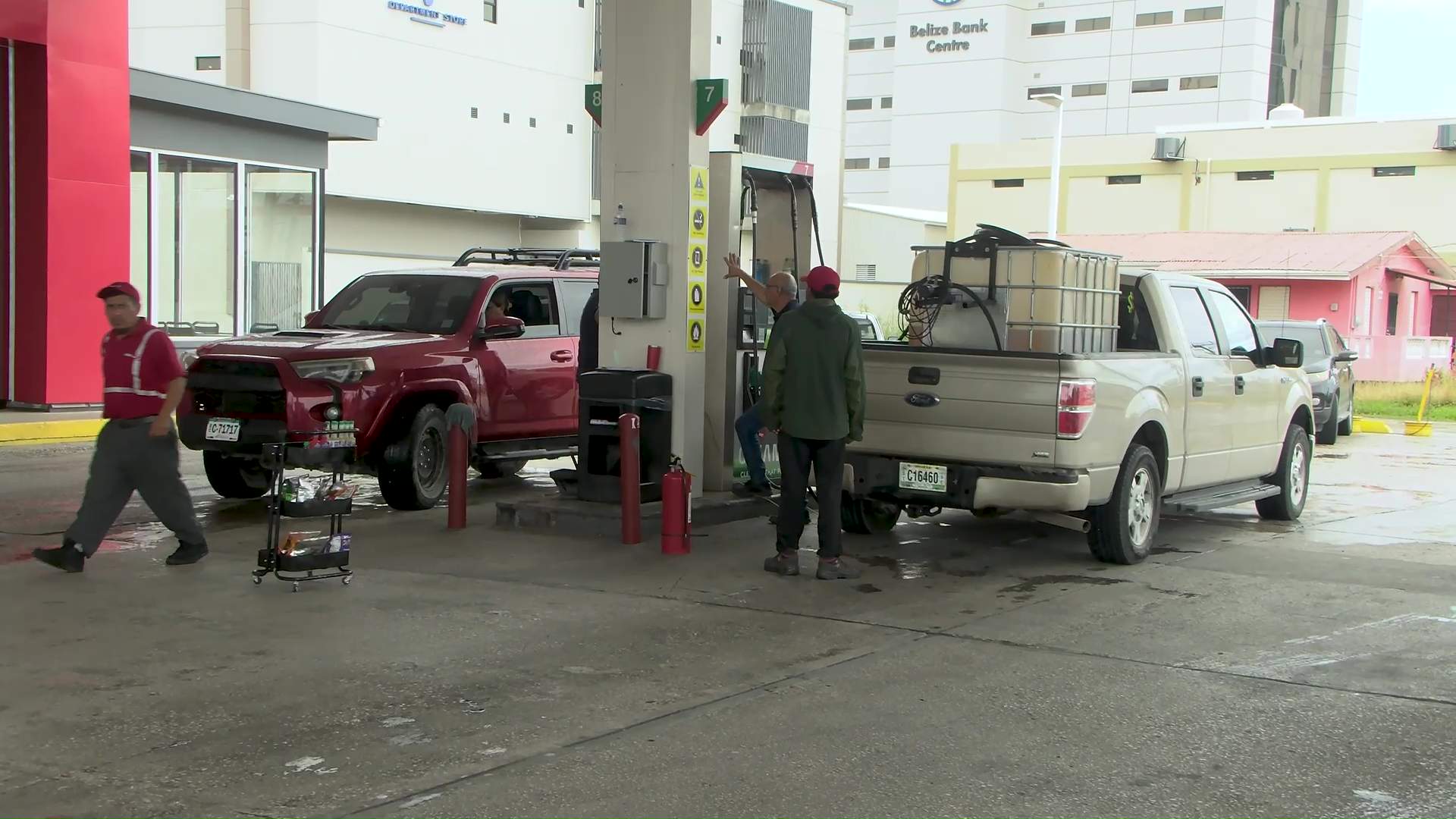
Motorists across Belize are grappling with another round of financial pressure at fuel pumps, as the country announced its third fuel price increase in just a few weeks, marking a continued stretch of upward pricing that is straining household and business budgets.
With global fuel markets continuing their upward trajectory, Prime Minister John Briceño has moved to clarify the government’s mitigation strategy, explaining that the administration has already absorbed tens of millions of dollars in foregone revenue by rolling back fuel taxes to shield consumers from the full brunt of global price gains.
Speaking publicly on the policy, Briceño confirmed that the government has already forgone roughly $60 million in tax revenue from fuel cuts, with an additional recent tax reduction on premium gasoline bringing the total amount of foregone revenue close to $80 million. These cuts mean consumers do not face the full weight of ongoing global fuel price increases, Briceño emphasized.
The revenue sacrifice is already taking a notable toll on the government’s public finances, he noted: the government currently collects only $200 million in total fuel excise taxes, making the near-$80 million in foregone revenue a substantial fiscal hit. To offset this lost income and accommodate the tax relief, Briceño has ordered a wide-ranging review of government spending to identify non-essential expenditures that can be curtailed amid the volatile fuel market.
Domestic cost-cutting measures for public operations are already being rolled out. Briceño announced that the government is encouraging carpooling among public sector employees to reduce agency fuel consumption. A vehicle tracking system that restricts unauthorized after-hours use of government vehicles is already in place, and the initiative has generated several million dollars in savings to date. Looking forward, the Prime Minister confirmed he has asked the Ministry of Finance to draft a formal cabinet paper outlining spending adjustment options, so all government officials can align on the need for targeted spending cuts to sustain fuel tax relief for consumers, at least until global fuel market conditions stabilize.