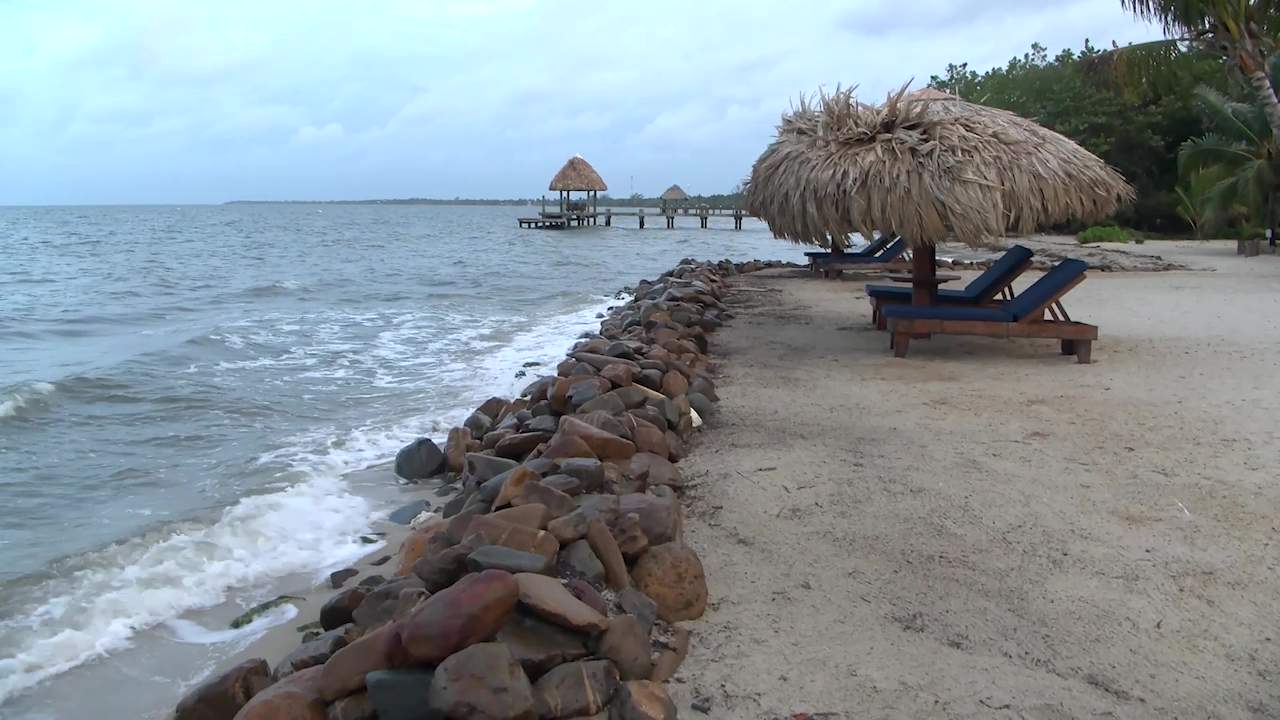
At a community gathering held to address Placencia Peninsula’s worsening beach erosion crisis, environmental experts delivered a clear, sobering assessment: the peninsula’s disappearing shorelines are not a random natural event — they are the direct cost of rapid, unregulated coastal development.
According to Anthony Mai, Chief Environmental Officer of Belize’s Department of the Environment (DOE), the agency has assembled a dedicated special task force to investigate the root causes of the region’s accelerating erosion and identify actionable solutions before irreversible damage occurs. Early research from the task force leaves no room for ambiguity: human-led development is the single largest contributor to the problem.
Expert analysis shared during the meeting confirms that 72% of Placencia’s entire 16-mile coastline is already covered by built development, ranging from residential homes to tourist resorts and commercial infrastructure. Alarmingly, if current development rates hold steady, the entire coastline will be fully developed by 2035. This continuous construction places unprecedented pressure on fragile shoreline ecosystems, accelerating erosion rates and putting both existing coastal properties and the peninsula’s iconic public beaches at extreme risk of being lost entirely.
Mai explained that the task force’s months-long research was designed to center community input, not just scientific findings. “We assembled the task force to conduct targeted studies across the peninsula to map erosion causes, given the high concentration of coastal structures,” Mai noted. “Last night’s meeting was a chance for experts to share their final findings, lay out practical, implementable solutions, and get feedback directly from the residents who live with this crisis every day.”
What may come as a surprise to many residents is that 70% of the developed coastline already has some form of man-made erosion abatement structure in place — from seawalls to rock revetments — yet these interventions have failed to stop the shoreline from retreating. Experts emphasized that hard man-made structures often disrupt natural sand movement along the coast, worsening erosion in adjacent areas over time instead of solving the problem.
Despite the grim warning, researchers have proposed a low-cost, locally accessible solution that could reverse much of the recent damage without requiring extensive new construction. New scientific surveys confirm that most of the sand eroded from Placencia’s beaches has not washed out into the open ocean. Instead, it has settled just offshore, within 15 kilometers of the original shoreline.
This discovery opens the door for beach nourishment, a proven coastal management technique that involves dredging the offshore sand deposits and redepositing them on the eroding beaches to rebuild the shoreline. Leading researchers on the project argue that retaining existing coastal structures while replenishing lost sand is the most practical, environmentally sound, and economically feasible option available to Placencia right now.
Unlike more expensive large-scale infrastructure projects, this approach leverages local resources, avoids major disruption to coastal ecosystems, and can be implemented relatively quickly to stop further shoreline loss. The proposal was shared openly with Placencia residents during the community meeting, with organizers now collecting local feedback before moving forward with a formal implementation plan.
This report is a transcribed adaptation of an evening television newscast focused on coastal management challenges in Belize.