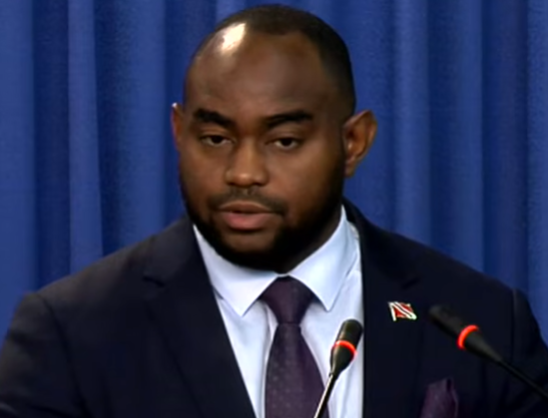
A growing procedural dispute over the reappointment of Caribbean Community (CARICOM) Secretary-General Dr. Carla Barnett has opened a rift among regional member states, with Trinidad and Tobago’s top diplomat doubling down on claims that proper governance rules were violated during the February 2026 summit. In a press conference held Thursday, April 9, 2026, Foreign Affairs Minister Sean Sobers pushed back against public claims from Guyanese President Irfaan Ali, who has defended the reappointment process as consistent with protocol used for Barnett’s first appointment five years earlier, and asserted he was satisfied with her performance in office.
Sobers stopped short of an open public confrontation with Ali, emphasizing respect for the sovereignty of fellow CARICOM member states. “I respect His Excellency Dr. Mohamed Irfaan Ali and his own positions adopted. He is a President of a sovereign country and his views are his own, our views are our own. We’re a sovereign nation as well,” Sobers told reporters.
The minister directed his sharpest criticism at two public figures who have questioned Trinidad and Tobago’s position: former St. Vincent and the Grenadines Prime Minister Dr. Ralph Gonsalves, and former Trinidad and Tobago Foreign Minister Amery Browne of the previous People’s National Movement (PNM) administration. Gonsalves recently claimed Sobers skipped a key summit retreat meeting on the island of Nevis because he suffered from sea sickness and was unable to make the short boat trip from neighboring St. Kitts.
Sobers dismissed that claim as a deliberate distraction from the core procedural violation at the heart of the dispute, labeling both Gonsalves and Browne as “political has-beens” seeking to divert attention from the real issue. He emphasized that the reappointment of the Secretary-General never appeared on any official meeting agenda, was not flagged for discussion on the morning of the leadership retreat, was never referenced in the summit’s final communique, and was not mentioned during the post-summit press conference. These omissions, he argues, directly contradict CARICOM’s foundational governing document, the Revised Treaty of Chaguaramas.
“Don’t cast any red herrings here for people to hold on to and then forget about what the real issue is which is that the procedure was not followed, which is that it was not an agenda item that was listed… That’s the real crux of the matter,” Sobers said.
He further detailed that after the heads of government of Trinidad and Tobago, Antigua and Barbuda, and The Bahamas departed the summit, foreign ministers serving as heads of national delegations were formally excluded from the closed leadership retreat, despite having participated in earlier caucus discussions. This detail, he noted, has been confirmed by both CARICOM’s Secretary-General and the Chef-de-Cabinet of the organization.
Sobers added that member states could have been formally notified if the reappointment had been raised under “any other business,” and the issue could easily have been tabled for discussion at a future leaders’ meeting, a step that was never taken.
Five weeks after the February 24–27 2026 CARICOM Summit concluded in the region, CARICOM Chairman and St. Kitts and Nevis Prime Minister Dr. Terrance Drew issued a public statement confirming Barnett had been reappointed by the “required majority” of regional leaders. Sobers confirmed that Drew has since responded to formal correspondence from the Trinidad and Tobago government, which has raised objections to the process.
The minister noted that the current Kamla Persad-Bissessar-led administration remains dissatisfied with the process to date, and that Trinidad and Tobago’s Cabinet must first review and approve the government’s official response to Drew’s correspondence before any further details are released. He added that the outcome of ongoing clarification efforts will determine whether Trinidad and Tobago participates in two upcoming CARICOM gatherings: a virtual summit scheduled for April 2026, and an in-person summit planned for July 2026 in St. Lucia.