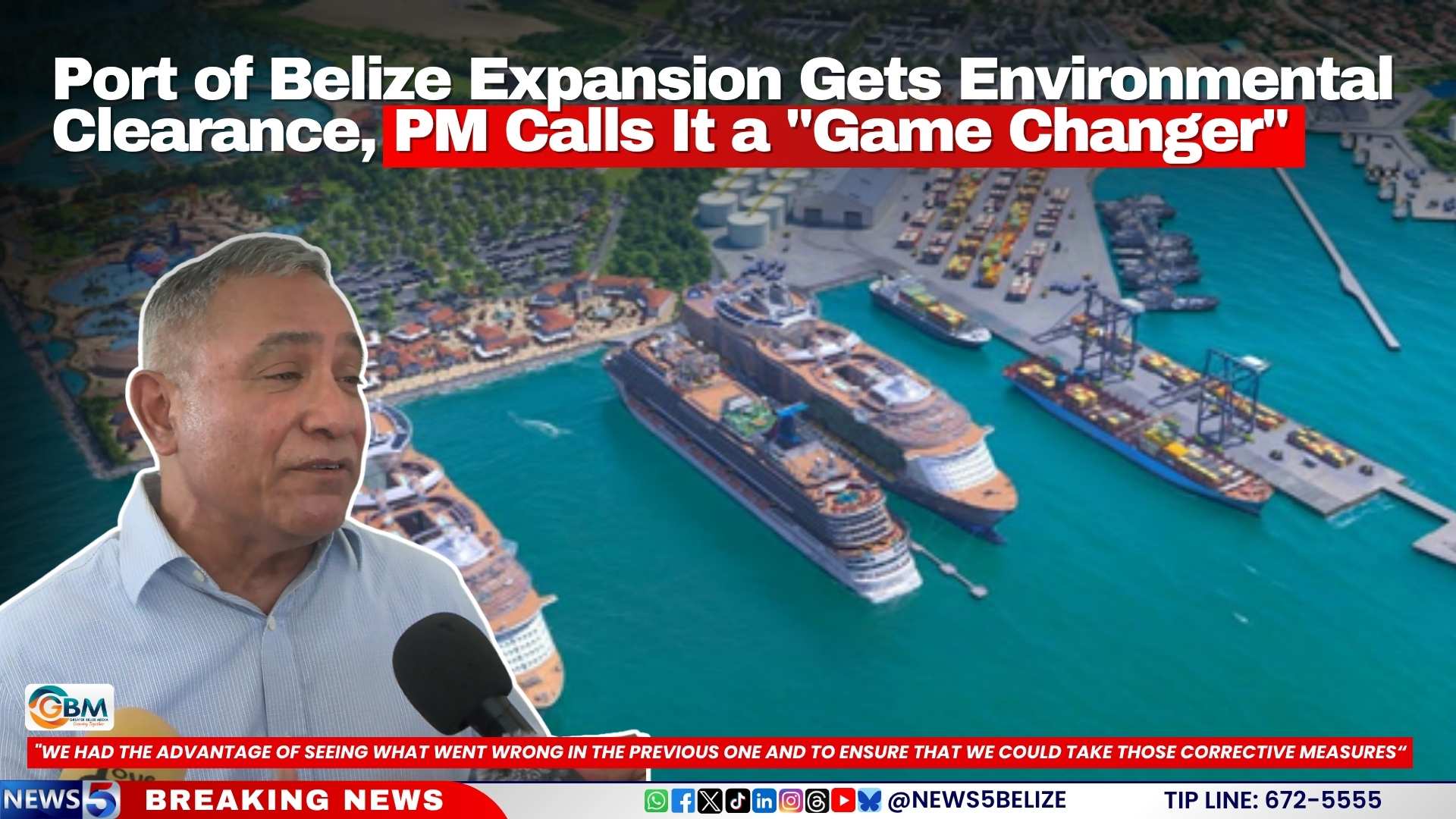
After decades of stalled attempts and contentious regulatory review, the long-awaited expansion of the Port of Belize has crossed a critical threshold, earning conditional environmental approval from the country’s top environmental assessment body that clears the way for the project to move into its investment sourcing phase.
Prime Minister John Briceño framed the green light as a transformative milestone for Belize’s economic development in an interview with local outlet News Five, describing the planned facility as a game-changing world-class hub that will serve both cruise tourism and container cargo shipping. The project has a decades-long history of failure, with multiple previous attempts to launch the expansion dating back to the early 2000s never coming to fruition.
Briceño credited coordinated support from his cabinet and careful preparation led by a dedicated public implementation unit headed by Dr. Aguile Canton for finally advancing the project past this key regulatory hurdle. “We had the advantage of seeing what went wrong in the previous attempts, so we were able to implement targeted corrective measures to address past gaps,” he explained.
The approval was issued with specific binding conditions by the National Environmental Appraisal Committee (NEAC), the independent body tasked with reviewing the project’s environmental impact. Amid circulating claims that the government exerted political pressure to force a favorable vote from NEAC, Briceño rejected the allegations as baseless nonsense, emphasizing that NEAC is composed of highly qualified independent professionals who operate free from political interference.
The Prime Minister also downplayed expectations of upcoming legal challenges from private sector entities, including the Waterloo Group, a firm that has previously raised objections to the project. Briceño noted that the government has already completed the acquisition of Waterloo’s stake in the project, putting that potential source of dispute to rest. “We have followed every regulatory step required by law, and we are on solid legal ground moving forward,” he said.
Not all stakeholders have welcomed the approval, however. Local environmental advocacy groups have raised persistent concerns about the project, arguing that Port of Belize Limited failed to address major unmitigated ecological risks and should have been required to submit a fully revised impact assessment before approval was granted. Briceño acknowledged that any large infrastructure development will inevitably generate some environmental impact, comparing it to the unavoidable footprint of building a new residential home. But he stressed that the government has committed to rigorous mitigation measures to minimize the project’s ecological effects as much as technically and financially possible.
With environmental clearance now secured, the government is advancing immediately to the next phase: securing a private development partner to finance and execute the expansion. Briceño confirmed that multiple major international firms have already submitted preliminary expressions of interest, including U.S.-based SSA Marine, which counts global investment giant BlackRock as its parent company, Turkey’s Global Port Holdings, and a Mexican investment consortium. To ensure structured, transparent negotiations with prospective partners, the government has re-engaged Moffat and Nichols, the engineering firm that developed the project’s original master plan, to draft formal terms of reference for the upcoming bidding and negotiation process.