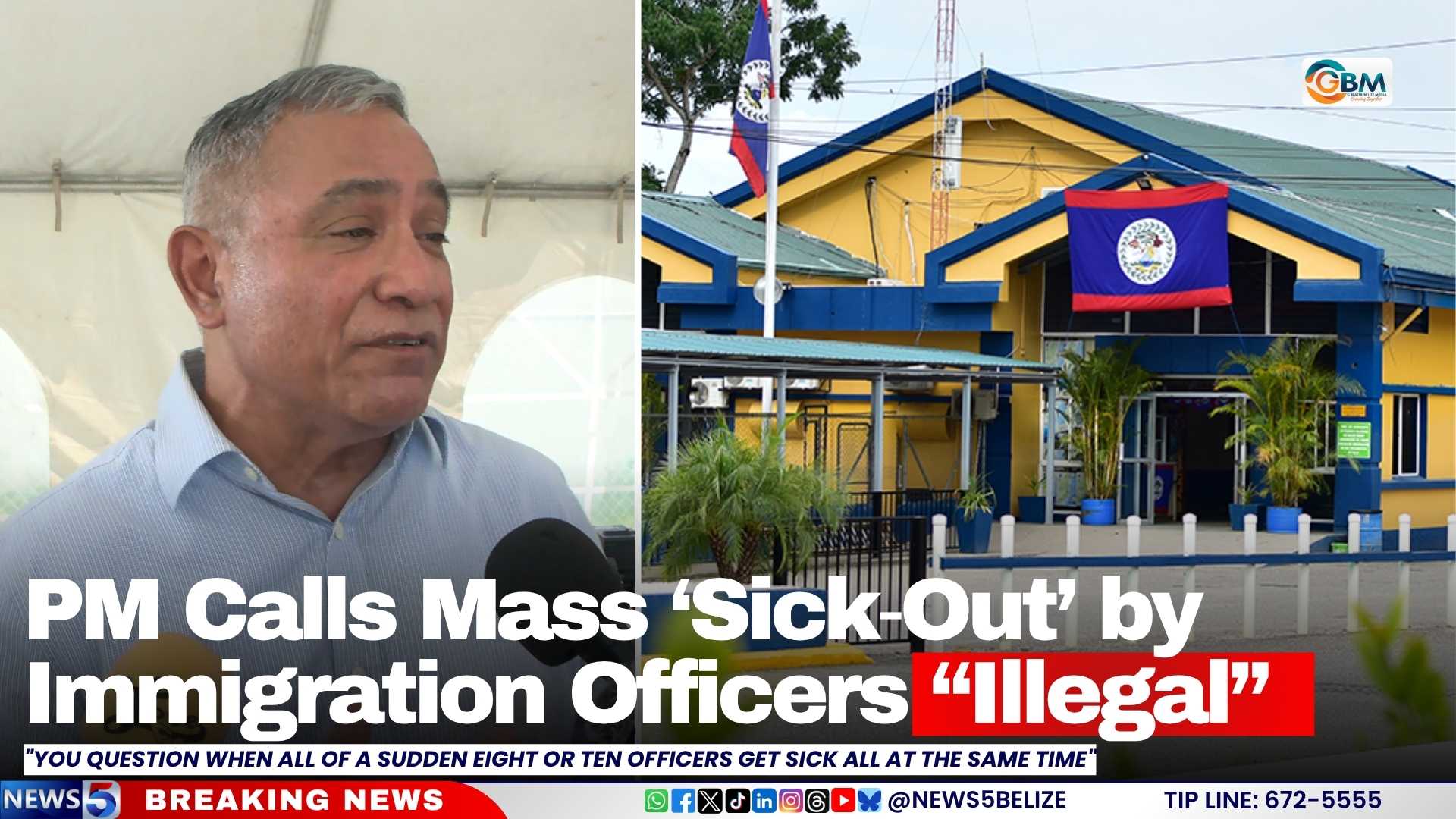
A brewing labor and political conflict has emerged in Belize’s Cayo District after a mass coordinated absence by immigration officers at the country’s busiest western border crossing drew harsh condemnation from Prime Minister John Briceño, who has labeled the action an illegal work stoppage.
On April 10, 2026, reports emerged that roughly 8 to 12 immigration officers assigned to the critical crossing all submitted sick leave notifications on the same day, bringing normal operations to a grinding halt and causing major disruptions for cross-border travel and trade. The Belizean Ministry of Immigration has already launched a formal internal investigation and initiated administrative action against multiple officers involved, based on suspicions that the simultaneous sick leave was not triggered by a genuine public health event, but rather a coordinated act of industrial action to protest unstated workplace grievances.
The Public Service Union, which represents the affected officers, has pushed back aggressively against the government’s claims. Union leadership insists that every officer followed official sick leave protocols correctly when submitting their absences, and has issued a formal warning that the union will pursue legal action against the government over the punitive administrative steps taken against its members.
Prime Minister Briceño has flatly rejected the union’s defense, calling the simultaneous outbreak of illness deeply suspicious. “You have to question why eight or ten officers all get sick at the exact same time,” Briceño stated to reporters. “It is statistically impossible for that to happen by coincidence. There is clearly something else driving this action.” He also flagged lingering concerns over the validity of submitted medical documentation, noting widespread claims that some certificates may be fraudulent, even as he acknowledged he has not personally reviewed the documents in question.
The Prime Minister went a step further by directly criticizing Public Service Union President Dean Flowers, pointing out Flowers’ well-documented public support for the opposition United Democratic Party. Briceño argued that political loyalties have no place in managing workplace disputes between public employees and the sitting government. “Flowers should set his political allegiances aside and work collaboratively with the government to resolve outstanding issues,” Briceño said. “Instead of encouraging his members to follow proper channels and telling them this kind of action is inappropriate, he has seemingly celebrated their action. That is deeply unfortunate.”
Briceño emphasized that public servants with formal workplace grievances have clear, established avenues to raise concerns: they can bring issues to direct supervisors, the Chief Executive Officer of the Immigration Ministry, or even cabinet ministers for resolution. He rejected the mass sick-out as an underhanded and unlawful tactic, noting “Public servants cannot simply abandon their posts and claim illness whenever they are dissatisfied with some workplace outcome.”