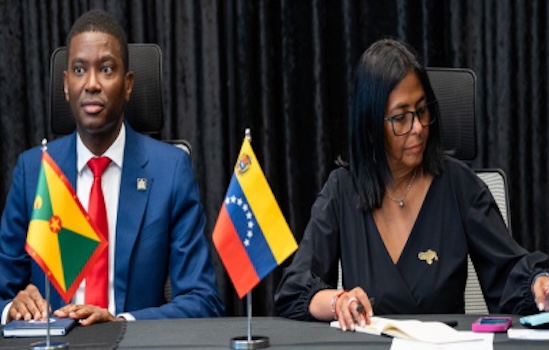
On 9 April, Venezuela’s interim leader Delcy Rodríguez wrapped up a short official visit to the Caribbean nation of Grenada, a trip timed to align with the 49th year of formal diplomatic relations between the two states. This visit marked Rodríguez’s first international official engagement since she assumed the role of acting president in early January 2026, following a United States military incursion into Venezuela that removed and detained long-time sitting president Nicolas Maduro.
Rodríguez, who previously served as Venezuela’s executive vice president, was sworn into office on 5 January, just two days after US forces took Maduro into custody. Since taking power, she has publicly committed to guiding Venezuela toward domestic stability while signaling a potential shift in the country’s long-strained relations with Washington. She has already complied with US pressure by cutting off oil shipments to Cuba and ordering Cuban professionals based in Caracas to leave the country.
According to an official statement released by the Venezuelan government during the visit, Rodríguez’s itinerary included a formal courtesy meeting with Grenada’s Governor-General Dame Cécile Ellen Fleurette La Grenade, followed by in-depth working talks with Grenadian Prime Minister Dickon Mitchell and his full cabinet. Officials noted that a joint communique would be published following the conclusion of the cabinet-level discussions, though no document has been released to date.
The trip comes against a backdrop of growing geopolitical tension across the Caribbean, where US President Donald Trump has ramped up pressure on regional governments over a range of issues, most notably their long-standing diplomatic and economic ties to Cuba. For Grenada specifically, the visit follows a recent high-stakes standoff with Washington over a US request to deploy a military radar system at Grenada’s Maurice Bishop International Airport. Grenada has so far refused to approve the request, citing unresolved technical questions, public safety risks, and concerns that the installation would violate regional sovereignty principles. The rejection came after thousands of Grenadian residents held peaceful public demonstrations urging their government to turn down the US proposal.
Speaking to reporters after the closed working talks, Prime Minister Mitchell emphasized that he was honored that Rodríguez chose Grenada as the destination for her first international trip since taking office. “Our discussions this afternoon focus exclusively on strengthening the bilateral cooperation between Grenada and Venezuela,” Mitchell stated. He added that talks covered a broad cross-section of mutually beneficial areas, including energy, agriculture, education, trade, tourism, transport, and logistics infrastructure. Moving forward, Mitchell said both nations will establish dedicated working groups from each side to advance concrete action on the agreed priorities, noting that “we are quite happy with the outcome of this working meeting, and we look forward to actioning and implementing those areas for the benefit of the Venezuelan and the people of Grenada.” Mitchell also clarified that media questions following the meeting would be limited strictly to topics related to bilateral cooperation, with no off-agenda issues permitted.
In her brief public remarks, Rodríguez echoed Mitchell’s positive assessment of the visit, saying she was deeply honored to be received in Grenada as her first international stop. “The history of Grenada is a true example to the peoples of the Caribbean and Latin America that, overcoming all difficulties, persevered in their self-determination and sovereignty,” she said. Rodríguez added that the talks allowed the two sides to update a bilateral cooperation roadmap first established last year during Maduro’s presidency, with new commitments to expand people-to-people and sectoral partnerships.
Key initiatives agreed to during the visit include expanded educational exchange programs: the arrangement will allow Grenadian students to pursue studies in Venezuela, while enabling reciprocal teacher exchanges between the two nations. The sides also discussed progress on developing new maritime and air transport links, which Rodríguez said will support expanded bilateral trade and create new trade corridors that can include other Caribbean nations. Talks also covered shared experiences in communal food production systems, as well as ongoing negotiations over the two countries’ shared maritime borders.
In a closing statement, the Venezuelan government reiterated that the visit successfully advanced core goals: reinforcing long-standing diplomatic ties, identifying new areas of shared economic interest, and nurturing bilateral partnerships designed to drive inclusive development for both nations.