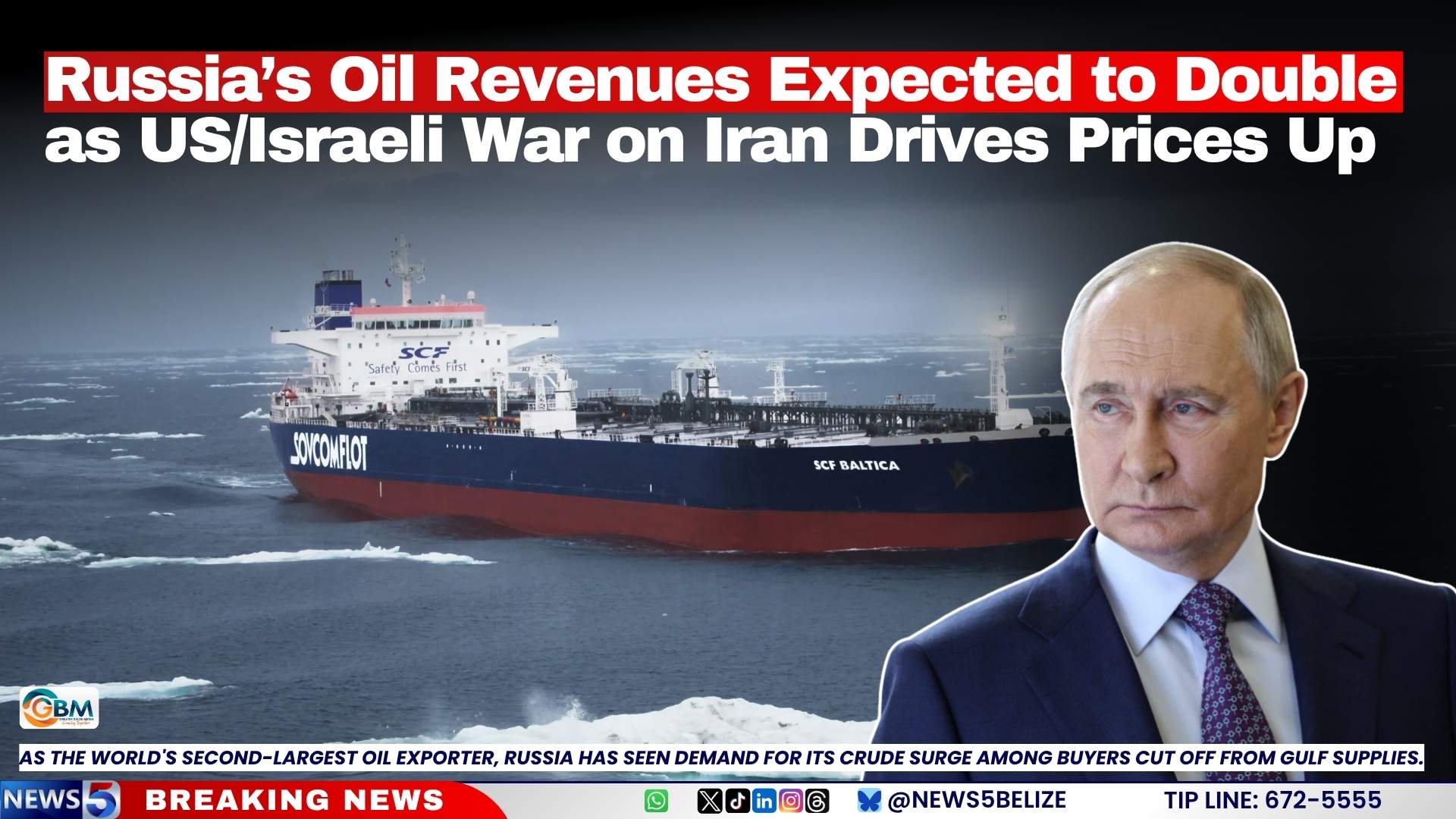
Tensions stemming from U.S. and Israeli strikes on Iran have triggered a cascading series of disruptions to global energy markets, delivering an unexpected windfall to Russian oil exports while creating new momentum for challenges to the U.S. dollar’s dominance in global energy trade, according to industry and policy sources cited by Reuters.
The crisis began with coordinated strikes targeting Iranian assets on February 28, and in the months since, global crude prices have climbed nearly 50% following Iran’s decision to severely restrict traffic through the Strait of Hormuz, the world’s most critical chokepoint for seaborne oil shipments. In a typical 24-hour period, the narrow Persian Gulf passage accommodates roughly 140 vessels carrying nearly 20% of the world’s daily oil supply. But as of mid-April 2026, just six ships made the transit through the strait’s main lanes in one day, after Iran’s Revolutionary Guard redirected most vessels to an alternate route near Larak Island and warned of naval mines deployed in primary shipping lanes.
Even after a two-week ceasefire was implemented to ease tensions, more than 180 oil tankers remain stranded in the Persian Gulf. Major shipping firms have refused to resume full regular operations until they receive binding, long-term safety guarantees for crews and vessels. Mitsui O.S.K. Lines, one of Japan’s largest shipping conglomerates, confirmed Thursday that it had successfully moved three tankers through the passage during the ceasefire window, but the company remains on pause for full operations pending official guidance from the Japanese government.
As global buyers that rely on Gulf oil exports are left scrambling for alternative supplies, Russia – the world’s second-largest oil exporter – has seen a dramatic surge in demand for its crude, translating to a near doubling of monthly oil tax revenues for the Kremlin. Independent calculations from Reuters show that Russia’s core oil extraction tax revenue is projected to hit roughly $9 billion in April 2026, up from just $4.7 billion in March of the same year. The average price of Russia’s flagship Urals crude has also jumped to $77 per barrel, a peak not seen since October 2023 and far higher than the $59 per barrel benchmark the Russian government used to draft its 2026 national budget.
Beyond energy market volatility, the crisis has accelerated long-simmering efforts by Iran and China to reduce global reliance on the U.S. dollar for energy transactions. For decades, the vast majority of international oil deals have been settled in U.S. dollars, a pillar of Washington’s global financial influence. But with control of the Hormuz passage, Iran has begun requiring some shipping firms to settle oil trade payments in Chinese yuan instead of U.S. dollars. China’s Ministry of Commerce has publicly confirmed the yuan-based transactions, while Iran’s embassy in Zimbabwe framed the shift as a long-overdue addition of the “petroyuan” to the global oil trading system.
Harvard economist Kenneth Rogoff, a leading expert on global currency dynamics, explained the dual motivation behind Iran’s policy shift in comments to Al Jazeera. “At one level, Iran is aiming to poke its thumb in the United States’s eye, adding insult to injury,” Rogoff said. “At another level, Iran is dead serious about preferring yuan to avoid US sanctions and to cultivate its ally, China.”