Across Suriname’s public administration, a growing staff crisis has reached critical levels, with hundreds of vacant positions currently unfilled across multiple government departments. A long-standing public sector hiring freeze has blocked agencies from recruiting external candidates, forcing ministries to scramble to reallocate existing staff from within the government system to cover pressing gaps.
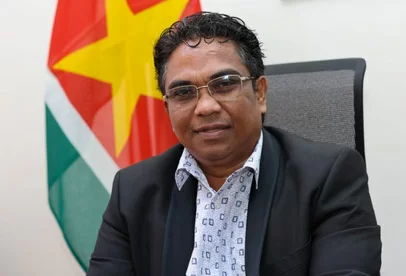
Mike Noersalim, Minister of Agriculture, Livestock and Fisheries (LVV), confirmed the sector’s staffing challenges in an interview with local outlet Starnieuws, clarifying that his department is restricted from bringing in new hires from outside the public service. “We first conducted an internal search across our four directorates, then sent lists of our open roles to other ministries to see if we can pull available staff from elsewhere,” Noersalim explained. The minister added that LVV has itself received requests from other understaffed departments seeking to borrow its employees, but the agency cannot spare any workers: “We have critical unmet needs of our own, so we have no excess personnel to offer.
Noersalim attributes the deepening public sector staffing shortage to a combination of overlapping factors that create persistent gaps across roles. When existing employees leave public service or earn promotions to higher positions, their departure creates new openings that must be filled, triggering a chain of shifting personnel that leaves lower-priority and entry-level roles empty. The minister highlighted one common example: cleaning staff who have moved up to administrative roles and have no interest in returning to their former positions, leaving vacant cleaning slots across agencies.
Within LVV alone, the demand for new staff is both large and broad. Just within the Directorate of Agricultural Research, Marketing and Processing, dozens of roles remain unfilled, spanning a wide range of positions from administrative staff and policy advisors to drivers, lab technicians and agricultural inspectors.
Beyond general vacancies, the ministry faces critical gaps in high-priority roles that directly impact public food supply. LVV urgently needs roughly 25 additional meat inspectors to conduct mandatory safety checks, a need that is expected to grow as the country’s oil and gas sector expands. A growing energy sector will bring more workers to the country and drive up overall demand for meat, making these inspection roles even more critical to protecting public health. The ministry is currently developing a targeted training program to certify new meat inspectors from existing internal candidate pools.
Staffing pressures are also acutely felt at the district level, where there is a significant shortage of agricultural extension officers. This gap has direct, real-world impacts: it reduces the quality of support available to smallholder and commercial farmers, slowing the growth and development of the entire agricultural sector, which remains a core part of Suriname’s economy. The ministry notes that it does offer additional targeted training to internal candidates who express interest in filling open extension roles to get them up to speed for the position.
The national public sector hiring freeze has drastically complicated efforts to fill open vacancies across all departments. Only senior leadership positions qualify for rare exemptions that allow external hiring, and all other roles must be filled through internal reallocation. Despite outreach to multiple other ministries for available staff, Noersalim says response has been extremely limited so far, leaving the vast majority of LVV’s vacancies still unfilled.