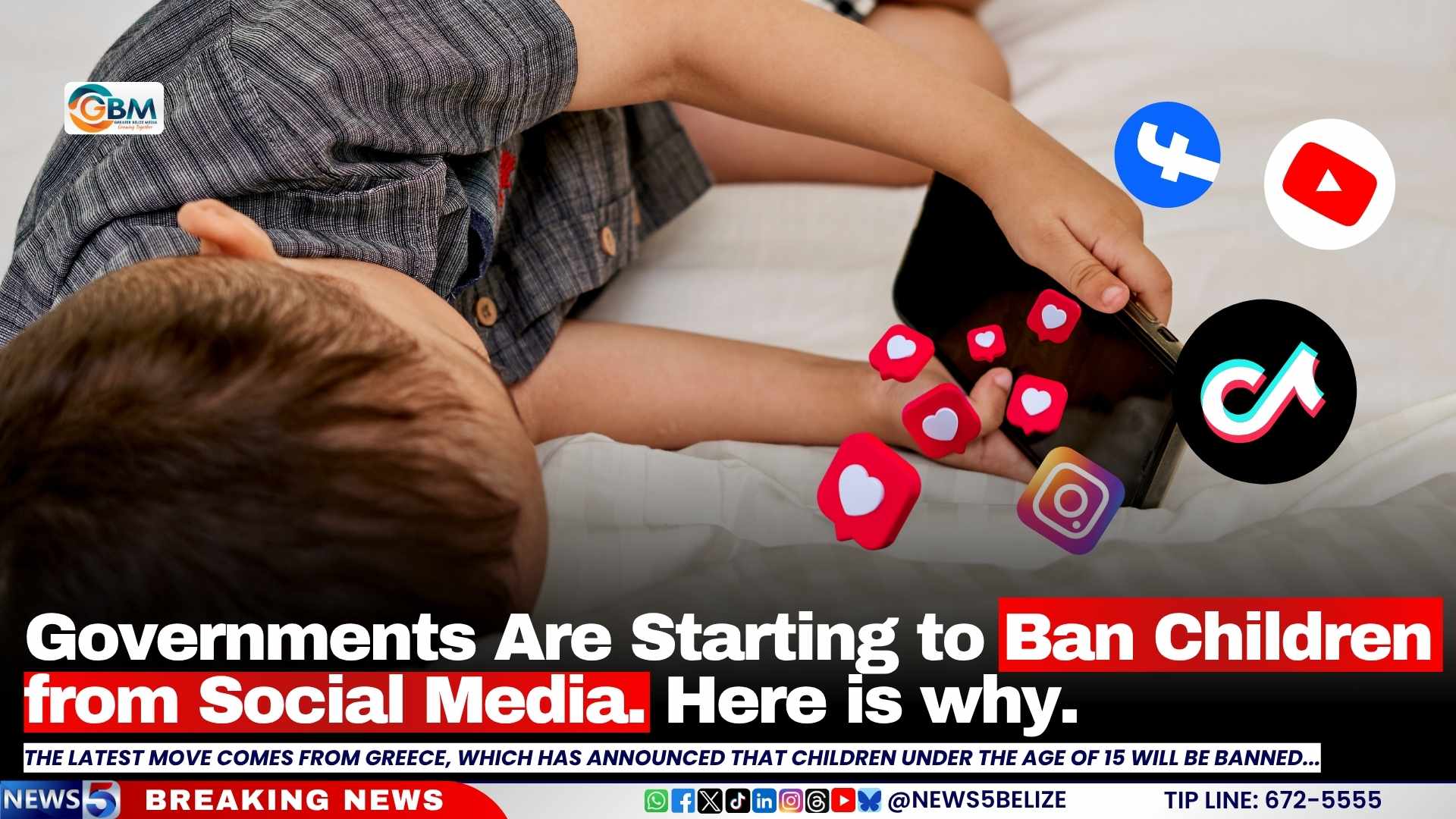
A growing global movement to restrict underage access to social media is accelerating, driven by mounting public and policy concerns over the documented harms of excessive platform use on children’s mental health and development. The most recent policy action comes from Greece, where Prime Minister Kyriakos Mitsotakis has formally announced a nationwide ban on social media access for all children under the age of 15, set to take effect on January 1, 2027.
Mitsotakis framed the policy as a targeted response to three growing crises linked to unregulated social media use among minors: rising youth anxiety rates, disordered sleep patterns, and the intentionally addictive design of most major online platforms. In a public video address addressing young people directly, the prime minister emphasized that extended screen time on social media prevents the developing brain from getting the adequate rest it needs to grow and function properly. Greek officials note that the policy emerged in response to widespread parental advocacy, with thousands of caregivers raising alarms about children staying up late scrolling through platforms, struggling with unmanaged anxiety, and prioritizing social media engagement over in-person activities and schoolwork.
Public opinion in Greece strongly backs the new restriction, according to a recent poll conducted by ALCO. The survey found that nearly 80 percent of respondents support the under-15 ban, reflecting broad public agreement on the need for regulatory intervention. This is not Greece’s first step to curb childhood social media overuse: the country has already implemented full bans on mobile phone use in primary and secondary schools, and rolled out parental control tools to help families monitor and limit children’s platform time.
Greece is far from the only nation advancing these restrictions, as policymakers around the world increasingly prioritize protecting minors from social media harms. Australia led the global movement in 2025, becoming the first country in the world to implement a total block on social media access for children under 16. Since then, a growing list of European nations have moved to draft similar rules, including the United Kingdom, Spain, Austria, and Slovenia.
In the United Kingdom, policymakers have already launched an empirical trial to test the impact of targeted social media limits. Roughly 300 teenagers are participating in a six-week study that places capped time limits on participants’ social media use, with researchers tracking how the restrictions affect sleep quality, academic performance, and family dynamics. The data collected from this trial will inform the drafting of the UK’s future national regulations.
The momentum for regulatory action has also been boosted by a landmark U.S. legal ruling from recent months. A U.S. court found Meta Platforms and YouTube legally liable in a high-profile case over social media addiction, ruling that the companies deliberately designed their platforms with algorithmic features intended to hook young users, resulting in proven harm to the plaintiff’s mental health. That ruling has set a legal precedent that strengthens the case for government regulation around the world, as policymakers point to the court’s finding that platforms are actively engineering products that harm children.