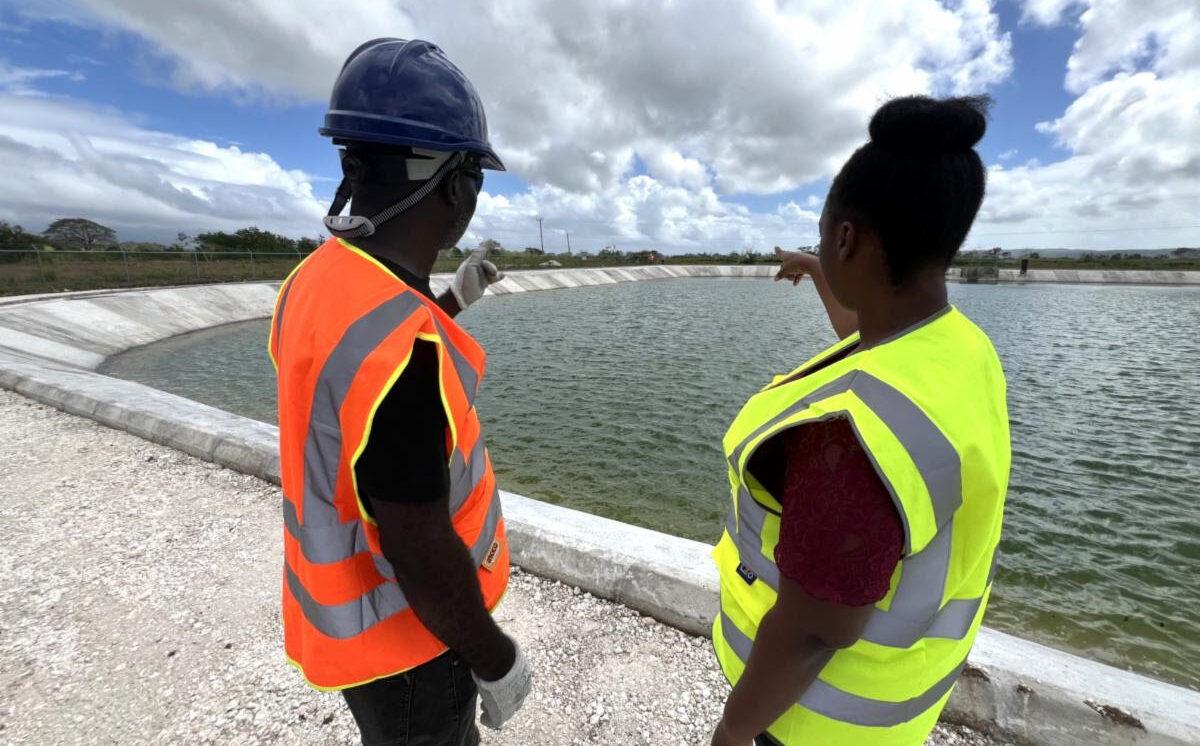
Against a backdrop of escalating climate shocks and lingering global economic disruptions, the Caribbean Development Bank (CDB) Board of Directors has greenlit an additional $12 million in concessional financing to help the Government of Jamaica cross the finish line on its transformative Southern Plains Agricultural Development (SPAD) Project.
Labeled a landmark climate adaptation initiative for the island nation in an official CDB press statement, the SPAD Project’s core mission is to reimagine Jamaica’s climate-vulnerable farmland as robust, high-productivity agricultural zones that can withstand extreme weather and shifting growing conditions.
The new funding comes via a low-interest loan disbursed through CDB’s Special Development Fund. It is specifically designed to address unforeseen cost overruns that have plagued the project since its launch, stemming from overlapping global crises: widespread supply chain breakdowns triggered by the COVID-19 pandemic and the ongoing war in Ukraine, combined with costly delays and damage from intensifying extreme weather events hitting the Caribbean. By closing the remaining project funding gap, the supplementary financing paves the way for full completion of all SPAD components by 2028.
“This additional financing is essential to safeguard and build on the gains already achieved under the SPAD Project,” noted L. O’Reilly Lewis, CDB’s Director of Projects, in remarks accompanying the funding announcement. “Completing this innovative initiative will strengthen Jamaica’s food security, safeguard rural livelihoods and ensure that climate resilient infrastructure continues to deliver long term benefits for farmers and communities.”
The $12 million will be allocated to wrap up the project’s remaining critical components. Key work includes the full installation and testing of modern irrigation systems at the Amity Hall site, as well as the construction of specialized produce handling and packhouse facilities in two locations: Amity Hall in St. Catherine parish and Parnassus in Clarendon parish. The financing will also cover related costs for engineering oversight, on-site supervision, and end-to-end project management.
Beyond physical infrastructure, the funding will sustain ongoing farmer support programs designed to make long-term climate adaptation accessible to local producers. These include the Matching Grant Scheme, which helps smallholders access affordable climate-smart irrigation equipment, hands-on training in Good Agricultural Practices and Climate Smart Agriculture techniques, and the development of formal systems for ongoing operation and maintenance of new infrastructure after project completion.
Implemented by CDB through the United Kingdom Caribbean Infrastructure Fund Programme, the SPAD Project has already delivered tangible, measurable progress across Jamaica’s Southern Plains, the country’s most productive agricultural heartland. To date, more than 790 hectares of previously underserved farmland have been connected to reliable irrigation systems, and approximately 40 kilometers of deteriorated farm access roads have been fully rehabilitated to improve market access for producers. The initiative has also expanded economic opportunity for small and medium-scale producers, including marginalized women and young farmers, by lowering barriers to land, water, modern irrigation technology, professional training, and formal agricultural markets.
A defining innovation of the SPAD Project is its shift from wasteful traditional flood irrigation to highly efficient, climate-resilient water management systems. This transition has already allowed participating farmers to better survive prolonged drought periods, keep production levels stable year-round, cut costly crop losses, and boost household incomes. CDB officials emphasize that these improvements are far more than incremental upgrades: they are critical for Jamaica’s agricultural sector, which has faced repeated devastating climate events in recent years, including Hurricanes Melissa and Beryl. As of the funding announcement, irrigation infrastructure at the Parnassus site is already fully operational, with work at the Amity Hall site nearing completion.
The new financing also aligns directly with the core goals of CDB’s newly launched 2026–2035 Strategic Plan, which prioritizes building economic, social, and environmental resilience across the Caribbean region. Through targeted investments in climate-resilient food systems, sustainable rural livelihoods, and long-lasting infrastructure, the plan seeks to equip local communities across the region to better withstand and bounce back from future systemic shocks.