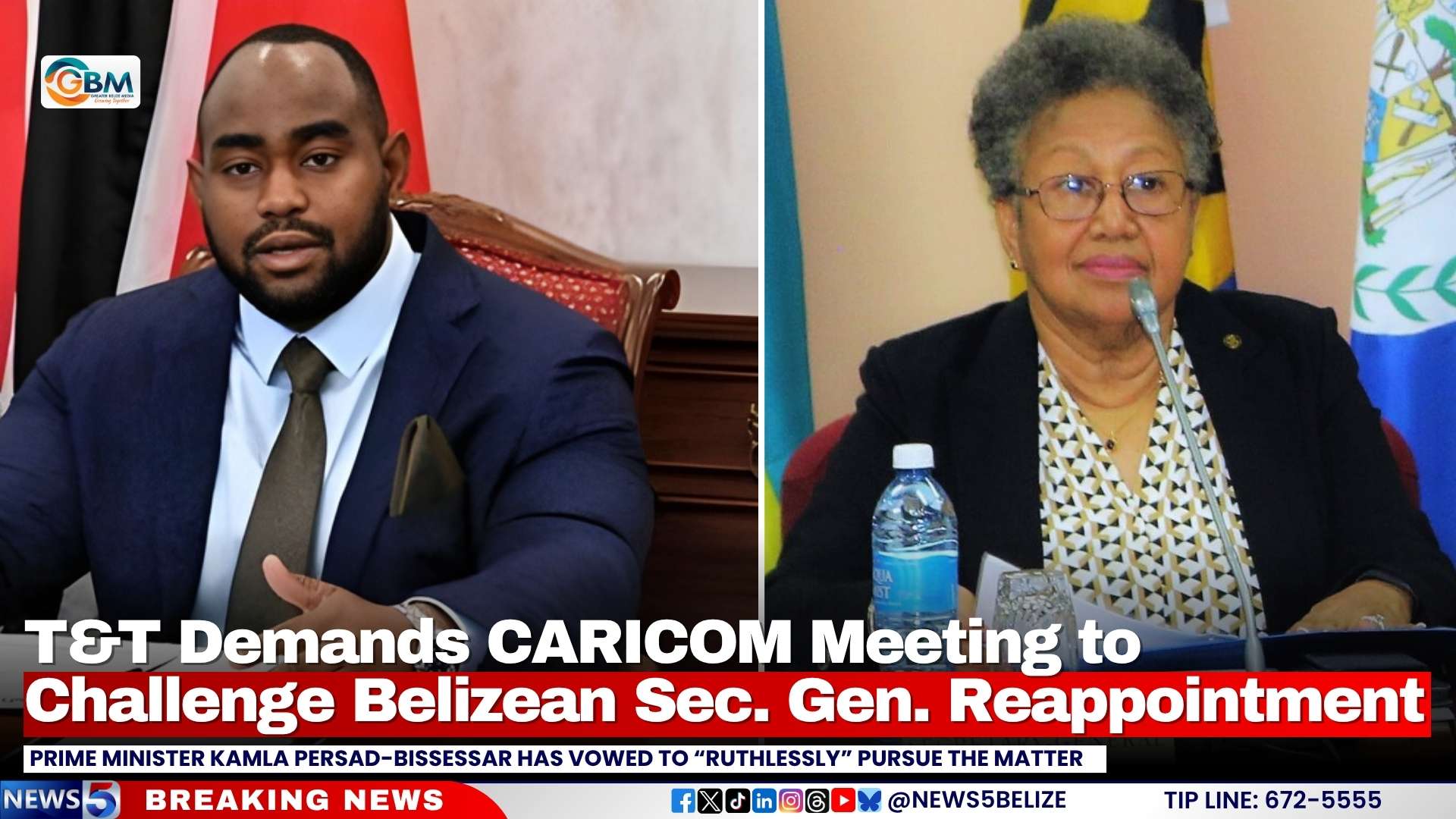
A major diplomatic rift has emerged within the Caribbean Community (CARICOM) after the government of Trinidad and Tobago formally demanded an emergency special summit of regional heads of government, accusing the bloc’s leadership of intentionally sidelining it from the process to reappoint incumbent Secretary-General Dr. Carla Barnett.
Dr. Barnett, a native of Belize, has served as CARICOM’s top administrative leader since first taking office in 2021. The controversy erupted after Trinidad and Tobago’s leadership confirmed that it was excluded from key discussions that ended with approval of her second term. Prime Minister Kamla Persad-Bissessar has publicly committed to pushing the matter forward aggressively, leaving no room for the bloc to brush off the procedural concerns.
Trinidad and Tobago’s Minister of Foreign and CARICOM Affairs, Sean Sobers, has labeled the deliberate exclusion of his country from the decision-making process as an act of extreme disrespect that directly violates the foundational Revised Treaty of Chaguaramas that governs the bloc. Sobers made the revelations in an interview with Trinidad’s Guardian Media, laying out the full scope of his country’s grievances.
As the largest financial contributor to CARICOM operations, Trinidad and Tobago contributes up to $120 million annually to the bloc’s budget. Despite this significant financial stake, Sobers confirmed that three formal letters sent by the Trinidad and Tobago government to the CARICOM Secretariat raising questions about the reappointment process received no response at all.
Sobers further claimed that he, alongside designated delegates from The Bahamas and Antigua and Barbuda, were formally disinvited from the leadership retreat held in Nevis where the final approval of Barnett’s reappointment took place. Under the terms of the Revised Treaty of Chaguaramas, heads of government have the explicit right to designate official representatives to cast votes on their behalf for CARICOM leadership decisions. Sobers argued that the Secretariat’s refusal to recognize this treaty provision strips the entire reappointment outcome of any legitimate standing.
In a key clarification, Sobers emphasized that the dispute is not a personal conflict with Dr. Barnett herself, but a fight to defend the procedural rules that underpin CARICOM’s governing structure. He confirmed that Trinidad and Tobago will submit a formal request for a meeting of CARICOM’s Community Council this week. If the council agrees to put the matter on its agenda, the dispute could be elevated to a full conference of CARICOM heads of government, where regional leaders will ultimately decide whether to uphold the controversial reappointment or order a new, fully inclusive election for the secretary-general post.