On April 8, amid soaring regional tensions that pushed the Middle East to the brink of all-out war, former U.S. President Donald Trump announced an unexpected two-way ceasefire with Iran just hours before his own escalatory ultimatum was set to expire – a sudden reversal that pulled the globe back from the edge of major conflict.
The 11th hour announcement came after a full day of rapidly escalating violence between allied U.S. and Israeli forces and Iran, which followed Trump’s dire warning hours earlier that an entire civilization would be erased overnight if Iran refused to reopen the Strait of Hormuz, the strategic global oil chokepoint. That stark threat had sent shockwaves through global markets and diplomatic circles, putting world leaders on high alert for a catastrophic regional war.
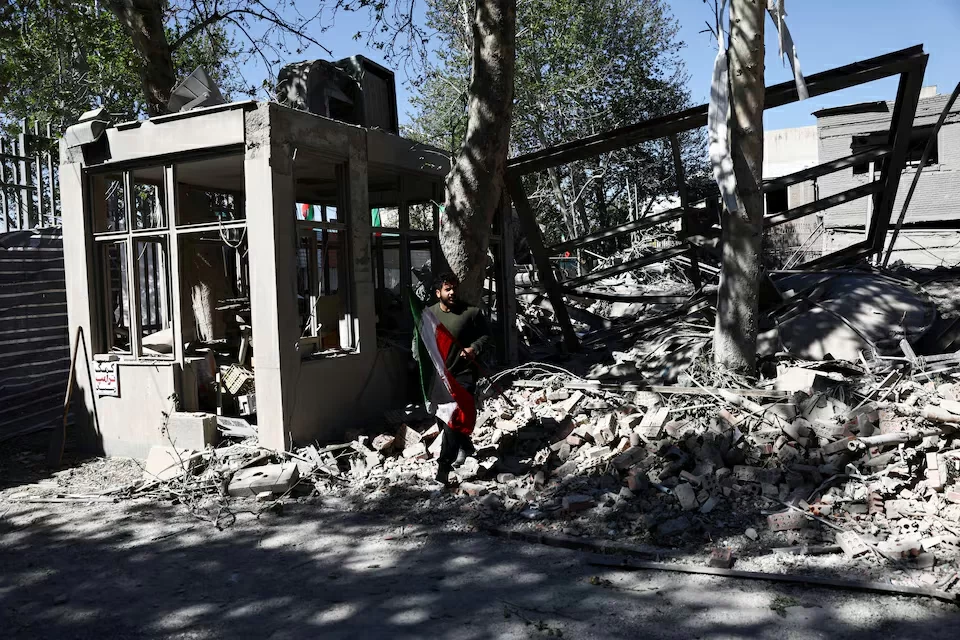
Through the day preceding the announcement, U.S. and Israeli airstrikes targeted key infrastructure across Iran, hitting railway and road bridges, a major commercial airport, and a large petrochemical facility. Strikes also reached Kharg Island, Iran’s primary crude oil export terminal that handles the vast majority of the country’s overseas energy shipments. Iran quickly retaliated, launching new attacks on commercial vessels operating in the Persian Gulf and striking a large Saudi petrochemical complex. Late in the evening, explosions were also reported in the Qatari capital of Doha, further stoking fears of a spreading conflict.
The six-week-long confrontation has already left a devastating human toll, claiming more than 5,000 lives across nearly a dozen nations, including over 1,600 civilian casualties inside Iran alone. Beyond the human cost, Iran’s temporary blockade of the Strait of Hormuz – through which roughly 20% of the world’s daily oil supplies transits – has sent global energy prices soaring, amplifying recession risks across the global economy.
The ceasefire announcement also comes against a critical domestic political backdrop for Trump, with his approval ratings sitting at historic lows ahead of upcoming U.S. midterm elections. Polling shows broad opposition to the conflict among American voters, who have grown increasingly anxious over spiking fuel prices – a trend that threatens the Republican Party’s control of Congress in the upcoming vote.
Breaking the news on his social media platform Truth Social, Trump confirmed the ceasefire would be bilateral, stating that U.S. forces had already achieved all core military objectives. He added that Washington had made significant progress toward negotiating a permanent peace agreement with Iran to stabilize the broader Middle East, noting that Iran had submitted a 10-point framework proposal that serves as a viable working foundation for formal talks. Trump expressed confidence that a final deal could be finalized within the 14-day ceasefire window.
Iran’s Supreme National Security Council responded to the announcement with a cautiously worded conditional statement, confirming that negotiations would be held in Islamabad but making clear that Tehran retains deep distrust of the United States. Iranian officials agreed to the two-week negotiating timeline, stating that a ceasefire extension would be possible only if both sides mutually agree to the move.
The Iranian statement emphasized the importance of domestic national unity, framing the upcoming talks as an extension of the country’s battlefield campaign under the oversight of Iran’s revolutionary leadership and top state institutions. “If the enemy’s retreat on the battlefield translates into a decisive political victory at the negotiating table, we will all celebrate this great triumph together,” the statement read. “If not, we will continue fighting until all the demands of the Iranian people are met.” The statement also carried a clear warning: “Our finger remains on the trigger, and the smallest mistake by the enemy will be met with a full force response.”
In an unusually forceful public rebuke, Pope Leo also weighed in on the crisis, condemning Trump’s earlier escalatory threats as unacceptable. He called on people across the world to pressure their political leaders to bring the conflict to an immediate end, noting that “people everywhere want peace.” The Pope stressed the global moral responsibility to protect innocent civilians, including children and vulnerable people in medical facilities, and labeled attacks on civilian critical infrastructure a violation of international law – a direct reference to Trump’s open threats to target Iranian bridges and energy facilities.”