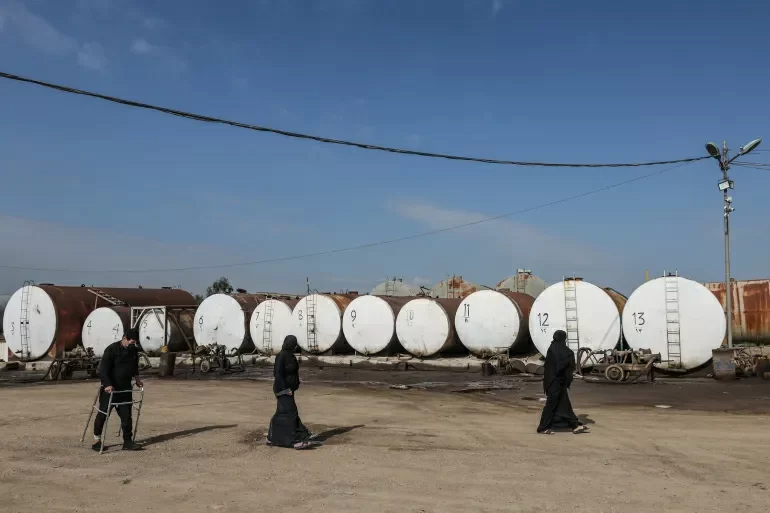
On a fuel market in Erbil, Iraq, vendors and shoppers move past stacked barrels of heating oil and vehicle fuel, a daily reminder of the uncertainty gripping global energy markets. Against this backdrop, the Organization of the Petroleum Exporting Countries (OPEC) and its partner producers, collectively known as OPEC+, announced a 206,000 barrel per day increase to crude oil production quotas for May, a move widely characterized as largely symbolic given the current geopolitical disruption.
Since late February, the Strait of Hormuz — the world’s most critical chokepoint for global oil trade, responsible for moving roughly 15% of the world’s total daily crude supply — has been effectively closed to most commercial shipping amid escalating conflict between the United States, Israel, and Iran. This prolonged closure has already choked off oil exports from major OPEC+ producers including Saudi Arabia, the United Arab Emirates, Kuwait, and Iraq. Current estimates indicate the blockade has removed between 12 and 15 million barrels of daily crude from global markets, a devastating supply cut that has sent prices skyrocketing.
In a joint statement released Sunday, signed by eight core OPEC+ members including Saudi Arabia, Russia, Iraq, the UAE, Kuwait, Kazakhstan, Algeria, and Oman, the coalition reaffirmed its commitment to closely monitoring market conditions and maintaining long-term stability in global energy markets. The participating nations also issued a joint statement expressing deep concern over recent targeted attacks on regional energy infrastructure. Industry analysts note that repairing damaged energy facilities requires extensive time and massive capital investment, which further tightens already constrained global crude supplies.
While the 206,000 barrel per day production increase for May amounts to less than 2% of the total supply lost to the Hormuz blockade, industry observers say the move sends a clear signal that OPEC+ stands ready to ramp up output as soon as the strait reopens to safe commercial navigation. This planned May increase matches the quota adjustment that the group agreed to implement in April, a consistency held despite the expanding disruptions to global oil trade.
Geopolitical tensions have already pushed global crude oil prices to a four-year high, with benchmark crude trading near $120 per barrel as of early April. This sharp price increase has directly translated to higher costs for transport fuel for consumers and businesses worldwide. Leading financial services firm JPMorgan has warned that if the Strait of Hormuz blockade continues through mid-May, global benchmark prices could climb above $150 per barrel — a new all-time record for crude.
In a small sign of potential de-escalation, Iran has granted limited exemptions to allow a small number of regional nations to use the strategic waterway. Iraq is among the countries granted permission to resume limited transit through the strait, and shipping tracking data confirmed an Iraqi crude oil tanker transited the waterway on Monday morning.
Diplomatic efforts to resolve the blockade are already underway. On Sunday, Oman’s Ministry of Foreign Affairs announced that deputy-level ministerial talks with Iranian officials are being held to explore pathways to restore unimpeded transit for all commercial vessels through the strait. However, diplomatic progress is being overshadowed by rising geopolitical rhetoric: former U.S. President Donald Trump issued a new threat over the weekend, warning that the U.S. will escalate military strikes against Iran, including targeting civilian infrastructure such as bridges and energy power plants, if the strait is not reopened to full traffic by Monday.