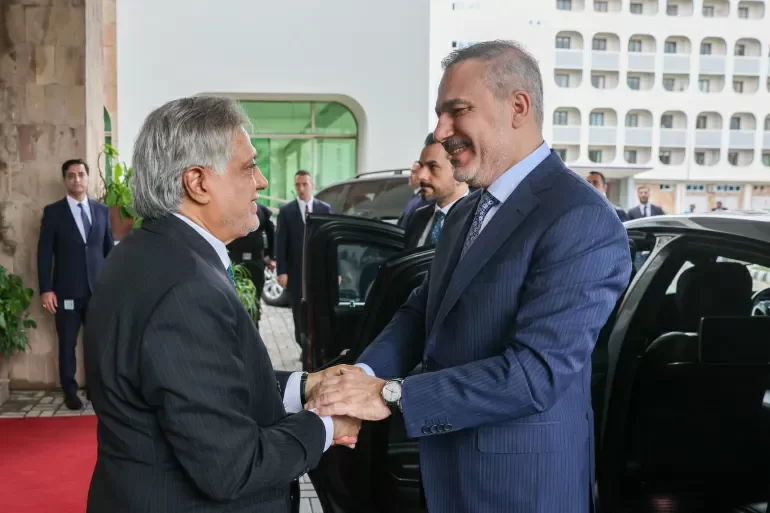
Islamabad has emerged as the epicenter of a rapidly evolving diplomatic initiative aimed at de-escalating hostilities between the United States and Iran. On March 29, 2026, foreign ministers from Turkey, Saudi Arabia, Egypt, and Pakistan commenced a two-day ministerial meeting in the Pakistani capital, signaling the most intensive diplomatic movement seen in years regarding the ongoing conflict.
The talks follow Pakistani Prime Minister Shehbaz Sharif’s second telephone conversation with Iranian President Masoud Pezeshkian within five days—a 90-minute discussion focused exclusively on de-escalation and confidence-building measures. President Pezeshkian emphasized Tehran’s precondition for direct dialogue: concrete trust-building actions following what Iran characterizes as two previous attacks during nuclear negotiations that severely damaged confidence in Washington.
This diplomatic mechanism represents an institutionalized effort originating from earlier discussions during a broader conference of Muslim and Arab nations in Riyadh. Pakistan’s central role as mediator between Washington and Tehran became evident when the meeting venue was shifted from Ankara to Islamabad, reflecting Pakistan’s active facilitation of backchannel communications.
China has formally endorsed Pakistan’s mediation efforts and encouraged Iranian participation, indicating growing great-power engagement with this regional initiative. While the immediate objective isn’t to enforce a ceasefire, diplomats are working to harmonize regional positions and establish foundations for potential direct US-Iran negotiations. For the first time, discussions have moved beyond theoretical possibilities to concrete documents awaiting implementation.
Speculation suggests that talks between US Secretary of State Marco Rubio and Iranian Foreign Minister Abbas Araghchi could occur within days, potentially in Pakistan, with Vice President JD Vance also mentioned as a possible participant. These prospects remain contingent on fluctuating conditions, including a temporary pause in US attacks to meet Iran’s confidence-building demands.
Tehran’s requirements for dialogue include cessation of hostilities, compensation payments, guarantees against future attacks, and recognition of its strategic influence in the Strait of Hormuz. President Pezeshkian recently warned of Israeli attempts to expand the conflict while expressing concerns about attacks originating from foreign territories.
Pakistan maintains that dialogue requires an atmosphere of mutual respect and an end to killings of Iranian officials and civilians. Islamabad has condemned Israeli attacks while showing solidarity with Gulf states regarding Iranian infrastructure attacks, revealing growing divergence between regional powers and Washington’s military approach.
The situation is further complicated by increased involvement of Iran-backed Houthi rebels in Yemen, whose escalated attacks on Saudi Arabia and other regions create additional security concerns and strengthen Iranian alliances.
The next 48-72 hours will prove decisive in determining whether this diplomatic initiative culminates in actual US-Iran meetings. Having consulted with Iran, hosted regional powers, and conveyed proposals, Pakistan has completed its intermediary role. The outcome now depends on decisions in Washington and Tehran.
Should this mediation effort fail due to persistent distrust and continuing violence, the regional conflict risks escalating into a significantly larger war.