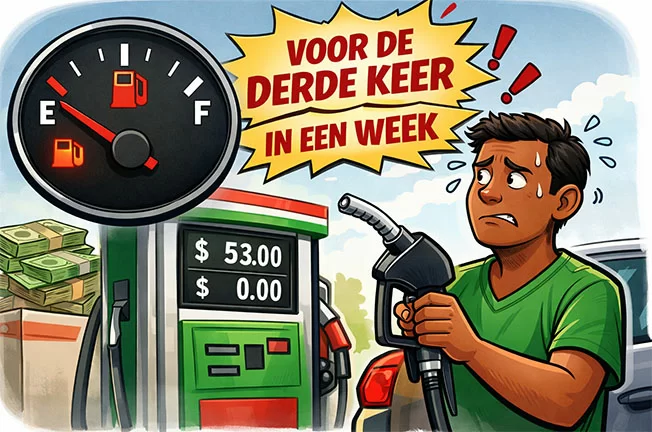
Suriname faces an escalating economic emergency as soaring fuel prices catalyze a chain reaction across all sectors, transforming from theoretical concern to tangible daily burden. The government’s temporary price cap—approximately SRD 53 for diesel and SRD 48 for gasoline—provides minimal respite while international pressures, particularly Middle East conflicts, continue driving prices upward.
Transport companies and suppliers have already implemented rate increases, affecting land transportation, imported goods, and even emergency services like ambulance costs in Coronie. The crisis disproportionately impacts small businesses and vulnerable populations while driving food prices and construction costs to unprecedented levels.
This economic shock echoes previous crises like COVID-19, yet the current response lacks equivalent urgency and decisive action. The government faces a credibility challenge: meaningful austerity must begin with visible reductions in public spending and operational efficiency. Structural changes like reinstating verifiable remote work policies could immediately reduce fuel consumption and foreign currency pressure.
Effective resolution requires genuine multilateral consultation—not just top-down mandates. Engaging businesses, trade unions, and civil society organizations through platforms like the recently established Social Economic Council could yield implementable solutions with broader acceptance. Simultaneously, citizens must reconsider consumption patterns and reduce dependence on non-essential imports while investing in local production and self-sufficiency.
The reality demands courageous political will from both coalition and opposition parties. Without leadership, consensus-building, and equitable burden-sharing, delayed action will inevitably worsen outcomes in this critical economic crossroads.