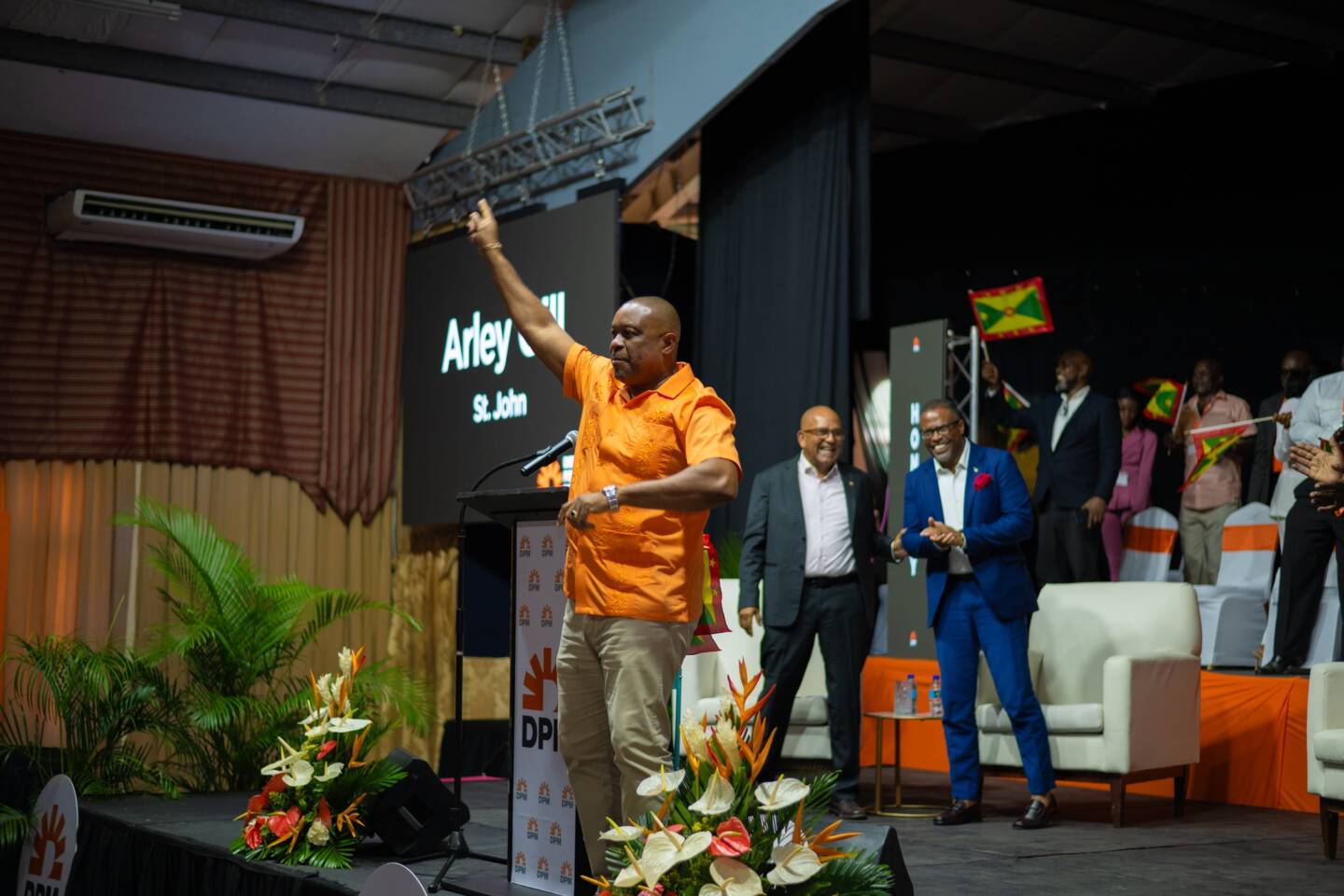
In a significant development for Grenada’s political landscape, the Democratic People’s Movement (DPM) has solidified its leadership structure during its inaugural congress held at the Grenada Trade Centre. The newly formed party confirmed Independent Member of Parliament Peter David as its Political Leader through unanimous delegate voting, while veteran politician Arley Gill assumed the role of Deputy Political Leader.
The congress attracted hundreds of supporters nationwide, marking a pivotal moment for the emerging political force. Both David and Gill bring considerable experience to their roles, having previously been expelled from the National Democratic Congress (NDC) before their current alignment. David subsequently associated briefly with the New National Party (NNP) prior to establishing the DPM framework.
Gill, addressing delegates, revealed his thoughtful transition into the movement: ‘Only weeks ago, I hadn’t committed to direct participation, but an internal conviction persuaded me that greater contributions remained possible. One doesn’t merely join a movement—you become swept by its momentum, and ultimately, the movement becomes an extension of yourself.’
The party simultaneously announced its initial candidate roster for upcoming general elections, with Gill contesting the St John constituency and David vying for the Town of St George seat. Additional candidates include Andy Best (St Patrick West), Pamela Williams (St Andrew North East), Olvine Holas (St Andrew North West), Aaron Lewis (St Andrew South West), Charmaine Gibbs (St George South), and Christopher Cudjoe (Carriacou and Petite Martinique).
David characterized the congress as both an organizational milestone and a symbolic demonstration of readiness: ‘Today’s proceedings transcend internal elections—they represent our collective preparedness to advance together toward national transformation.’
The DPM’s emergence is reshaping opposition dynamics, attracting attention as a potential alternative drawing support from traditional bases and younger voters alike. With experienced leadership now established, the party faces the critical challenge of converting early momentum into tangible electoral success.