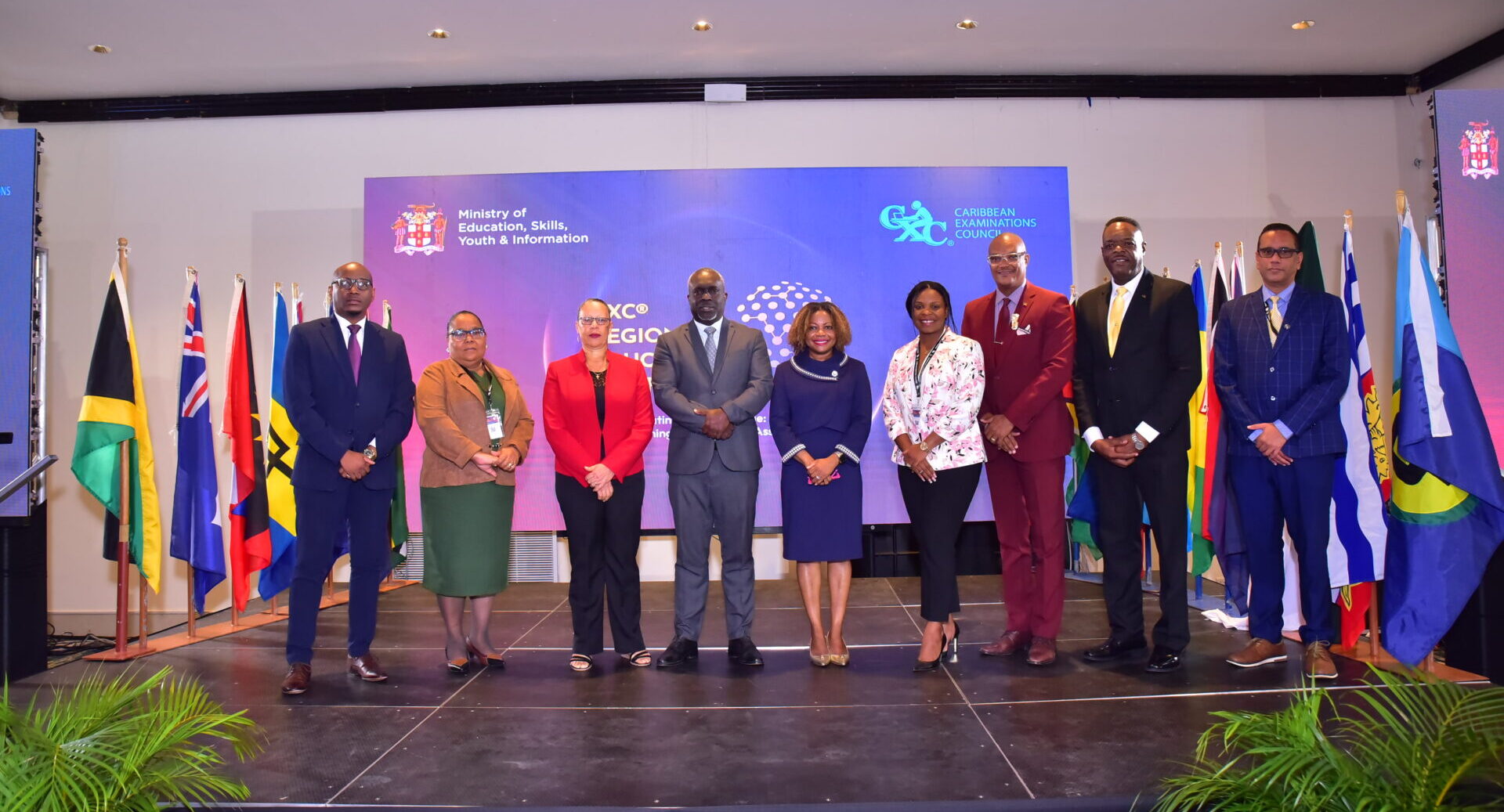
JAMAICA — Against a backdrop of post-hurricane resilience, the Caribbean Examinations Council (CXC) successfully convened its inaugural Regional Education Conference and Ministerial Forum, bringing together nearly 400 education leaders from 27 Caribbean nations and international delegations. Originally scheduled for October 2025 but delayed by Hurricane Melissa, the four-day gathering demonstrated unwavering commitment to transforming regional education systems.
Dr. Wayne Wesley, CXC’s Registrar and CEO, set the visionary tone by declaring knowledge the region’s most powerful compounding resource. “Every other resource—wealth, land, technology—can be hoarded or hacked, bombed or destroyed,” he stated. “But knowledge, once transmitted, multiplies. A teacher reaches 30 students. Those students reach thousands more. The compounding never stops.”
The conference agenda addressed pressing contemporary challenges, including generative AI integration in classrooms, persistent literacy and numeracy gaps, and creating flexible certification pathways. A landmark Partnership Engagement Agreement with Caribbean employer groups signaled recognition that workforce preparation extends beyond traditional academic boundaries.
Jamaica’s Education Minister Dr. Dana Morris Dixon highlighted the tension between technological advancement and educational fundamentals. “In the midst of this AI whirlwind,” she cautioned, “we must preserve what is most human and essential in education—curiosity, character, critical thinking, creativity, empathy, and purpose.”
Guyana’s Education Minister Sonia Parag reinforced this balanced approach, warning against sacrificing foundational skills for digital transformation. “Digitization must not distract us from these fundamentals; it must strengthen and promote them,” she asserted, urging closer collaboration with CXC to align assessments with regional needs.
The gathering coincided with a significant technological milestone: the successful administration of fully electronic and hybrid examinations across 17 Caribbean states in January 2026. With over 10,000 candidates completing nearly 18,000 subject entries, the results demonstrated Caribbean students’ readiness for digital assessment formats.
Dr. Wesley emphasized the generational imperative: “Our Gen Z and Alpha learners are digital natives. Learning and assessment systems must be congruent with how they process knowledge.” He reframed CXC’s identity as an “activist” organization championing educational equity across the region.
The conference concluded with what organizers described as “a covenant with our children”—a commitment to transform dialogue into actionable policies that ensure educational excellence becomes a fundamental right rather than a privilege for select few.