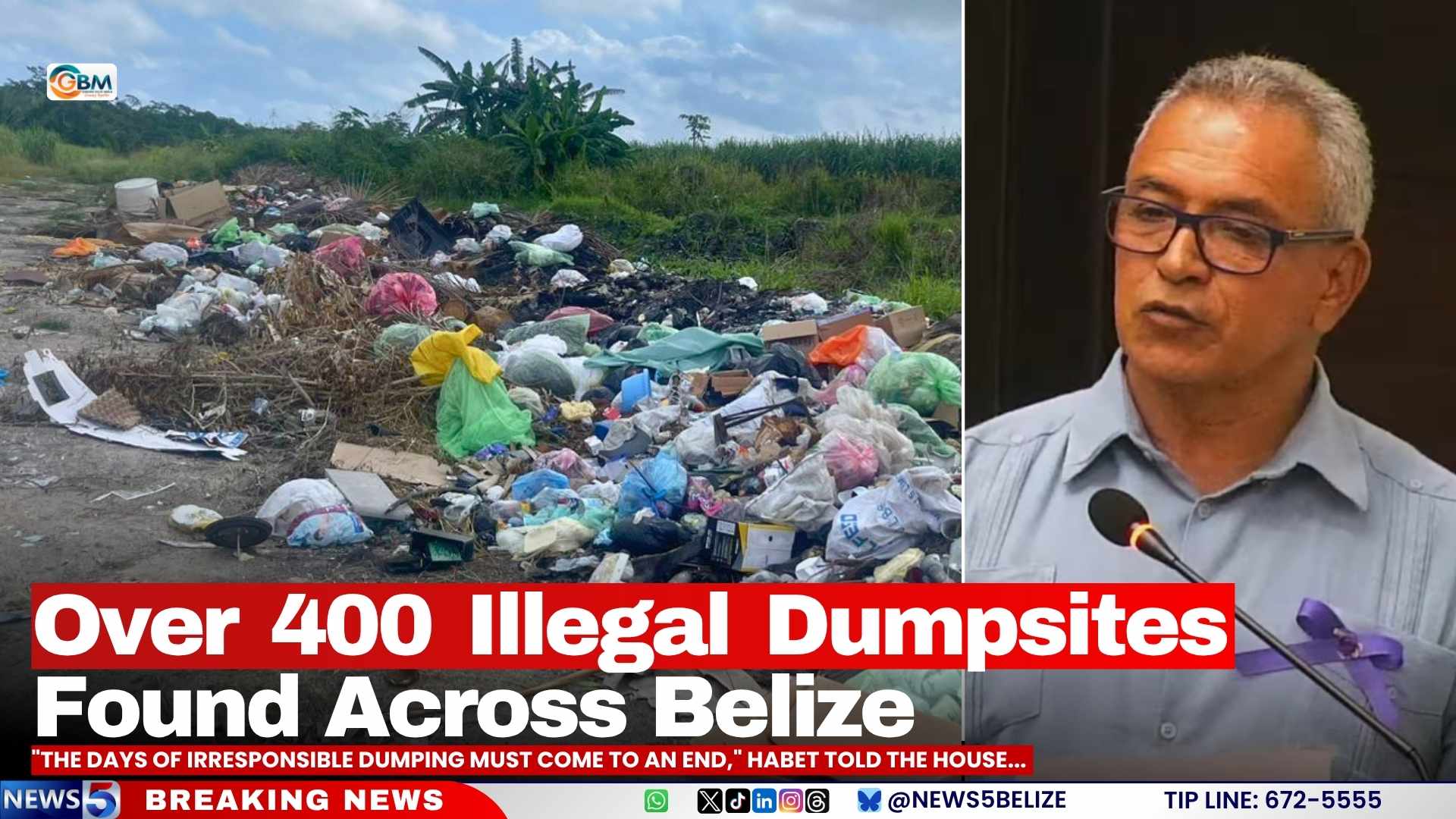
The Belizean government has declared war on environmental pollution after revealing the existence of more than 400 illegal dumpsites scattered across the country. Minister of Sustainable Development Orlando Habet unveiled an ambitious $2 million anti-dumping initiative during Monday’s budget debate at the National Assembly.
The comprehensive strategy employs a multi-pronged approach combining technological surveillance, enhanced enforcement, and infrastructure development. Surveillance cameras will be deployed at identified garbage dumping hotspots while littering laws will be rigorously enforced. “The days of irresponsible dumping must come to an end,” Minister Habet asserted before the House, emphasizing strengthened public accountability measures.
Financial allocation will facilitate the complete operationalization of transfer stations in Orange Walk and Corozal, extending proper waste management services to previously underserved communities. National assessment data indicates the Belize District contains the highest concentration of illegal dumping activity.
Despite the challenges, progress reports indicate positive momentum. Over the past year, approximately 62,000 tonnes of waste were properly processed through seven transfer stations serving around 220,000 citizens. Concurrently, a home composting pilot project across Orange Walk, Benque Viejo, and Dangriga is projected to divert over 590,000 pounds of organic waste annually from landfills.
The environmental department will double its enforcement capacity through new personnel hires, with officers deploying district-wide to collaborate with local councils on identification and cleanup operations. Special emphasis will be placed on San Pedro, a key tourism destination, where stronger regulatory presence is planned. The government is additionally exploring waste-to-energy conversion technologies, including repurposing sargassum seaweed accumulations.