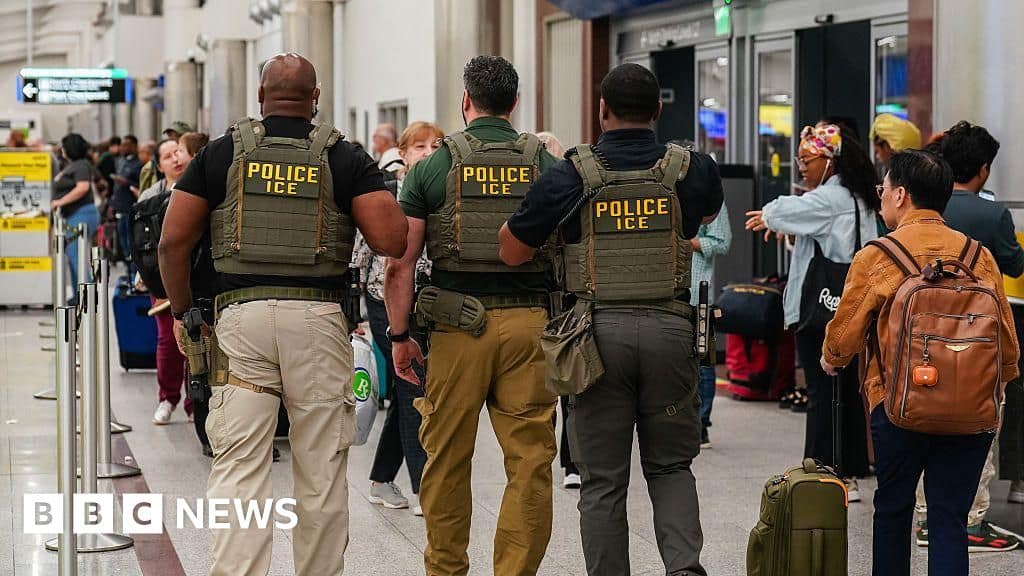
The ongoing partial government shutdown has triggered a critical operational crisis at major US airports, prompting an unprecedented deployment of Immigration and Customs Enforcement (ICE) agents to assist with security operations. With thousands of Transportation Security Administration (TSA) employees refusing to work due to missed paychecks, security checkpoints have experienced massive disruptions characterized by extensive queues and hours-long delays.
According to official figures obtained by CBS, absentee rates among TSA staff reached critical levels on Sunday, with Hartsfield-Jackson Atlanta International Airport recording 41.5% staff absences and Louis Armstrong New Orleans International Airport experiencing a staggering 42.3% call-out rate. Three additional airports reported more than one-third of their workforce absent the same day.
In response to the growing security vacuum, White House border advisor Tom Homan confirmed the deployment of hundreds of ICE agents to 14 major airports including New York’s JFK, Atlanta, and Houston facilities. The deployment has sparked both operational and political controversies, particularly regarding the agents’ appearance and training.
President Trump addressed the unusual sight of unmasked ICE agents at security checkpoints, stating he had specifically requested the removal of masks because he “didn’t think it was an appropriate look for an airport.” This contrasted with their normal protocol when conducting enforcement operations.
The Department of Homeland Security acknowledged that wait times have become so severe that travelers are reportedly “sleeping in the airport” to avoid missing flights. Airports Council International, representing over 100 airport leaders, expressed “deep concern about the growing operational disruptions” in a letter to Congress, warning that the impacts are “significant, growing, and potentially long-lasting.”
TSA leadership characterized the ICE deployment as a force multiplier, with Acting Deputy Administrator Adam Stahl explaining the agents would handle “non-specialized security functions” to allow TSA staff to focus on aviation-specific security. Homan clarified that ICE personnel would primarily support crowd control rather than passenger screening.
The deployment occurs amid declining public support for ICE’s immigration enforcement activities and has drawn sharp criticism from civil rights organizations. NAACP President Derrick Johnson condemned the move, stating the agents are “inadequately trained, armed, and instructed to profile people based on race and accent.”
The political standoff continues as Democrats refuse to fund DHS without new restrictions on immigration agents, while Republicans have rejected proposals to fund TSA separately from ICE reforms. With TSA agents missing their second paycheck on Friday and Congress facing a two-week recess, the crisis shows no immediate signs of resolution.