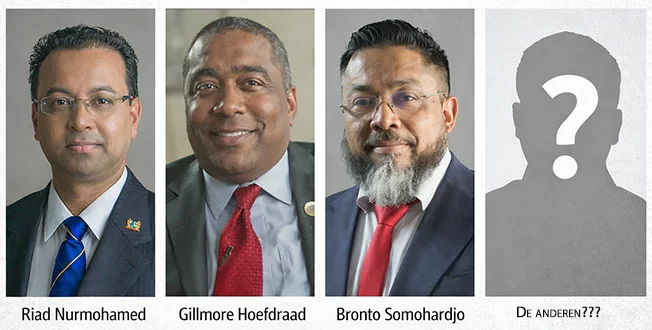
Suriname’s National Assembly confronts a constitutional crossroads today as it deliberates on whether to authorize criminal proceedings against three former high-ranking officials. The decision transcends individual cases involving Riad Nurmohamed, Bronto Somohardjo, and Gillmore Hoefdraad, representing instead a fundamental test of how the nation handles the serious constitutional process of charging political officeholders.
While no one disputes the necessity of thorough investigation or advocates for impunity, the Assembly cannot be expected to rubber-stamp the Public Prosecutor’s requests without proper scrutiny. Significant unanswered questions persist across all three cases, and the legislature maintains the constitutional authority to establish an investigative commission for further examination.
The Nurmohamed case presents particularly complex allegations regarding the Pan Am project, raising concerns about whether the investigation has adequately addressed potential accomplices beyond the primary suspect. The Somohardjo matter relies heavily on a CLAD report that remains inaccessible to lawmakers, despite the defendant’s persistent claims of innocence and his unusual request for formal charges to clear his name. The Hoefdraad situation proves most problematic as the former official remains missing, making cross-examination impossible despite this being the third attempt to bring charges against him.
This unprecedented situation crosses political boundaries, with each former minister representing different parties: Hoefrabd (NDP), Nurmohamed (VHP), and Somohardjo (Pertjajah Luhur). The Assembly’s decision must therefore demonstrate legal rigor rather than political motivation, avoiding any appearance of partiality.
The incomplete nature of the current files suggests this process represents merely the beginning of a broader accountability effort. Strong indications point to wider involvement in the Pan Am case, suggesting that charging a single former official would be inadequate. The political ramifications will undoubtedly be significant as Suriname establishes precedents for handling allegations against political figures.
[Editor’s Note: The article concludes with a tribute to former police spokesperson Ro Gajadhar, recognizing his unparalleled contribution to police communications and media relations.]