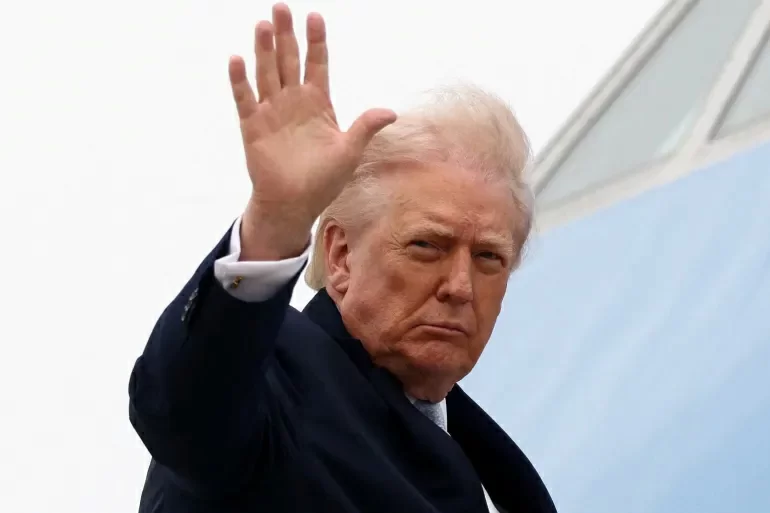
In a significant diplomatic development, U.S. President Donald Trump has ordered a five-day suspension of planned military strikes against Iranian energy facilities and critical infrastructure. The decision followed what Trump characterized as “very good and productive discussions” between Washington and Tehran over the past two days.
Announcing the temporary de-escalation via his Truth Social platform on Monday, Trump declared in all caps: “I am pleased to report that the United States and Iran have held very good and productive discussions regarding a complete and total cessation of hostilities in the Middle East.” The president explicitly instructed the Defense Department to postpone all military operations for five days, contingent upon the progress of ongoing negotiations.
While the announcement brought global relief, particularly to a region severely impacted by Iranian attacks, Iranian officials immediately contradicted Trump’s claims. The semi-official Mehr News Agency suggested the delay primarily serves to curb rising energy prices and buy time for military preparations. Iran’s Foreign Ministry placed full responsibility for the conflict on Washington, labeling the U.S. as “the party that started this war.” Tehran further denied engaging in direct negotiations with American officials, directly contradicting Trump’s assertions of productive dialogue.
The Islamic Revolutionary Guard Corps issued stern warnings that any American attack would trigger Iranian countermeasures targeting electricity supplies powering U.S. bases, alongside economic, industrial, and energy infrastructure with American interests. Iran’s Defense Council additionally threatened maritime mining operations that would effectively blockade Persian Gulf shipping routes if attacks targeted Iran’s southern coast or islands.
The escalating Middle East tensions had already triggered a global energy crisis, driving oil prices upward. Trump had previously given Iran a 48-hour ultimatum on Saturday to reopen the Strait of Hormuz to all vessels, threatening to “destroy” Iranian energy installations otherwise. This critical waterway facilitates approximately one-fifth of global oil and liquefied natural gas shipments.
Al Jazeera analyst Osama Bin Javaid described Trump’s decision as a potential “exit route” from the conflict, noting: “This is the news everyone has been waiting for… Trump can unilaterally end this war, which he started without legal basis, without conditions.” However, Washington correspondent Alan Fisher cautioned that Trump’s deadlines often prove flexible, suggesting that five days might not yield resolution.
Doha Institute analyst Mohamad Elmasry speculated that Trump might be seeking a “dignified excuse” for withdrawal, with the critical question being whether Iran and Israel would continue the conflict without U.S. support. Trump told Fox Business Network that Iran showed strong interest in a deal that could materialize within five days, with emissaries Steve Witkoff and Jared Kushner recently engaging Iranian representatives.
Despite tensions, multiple Middle Eastern and international nations continued pursuing diplomatic de-escalation efforts during Eid celebrations. Diplomats warned Trump that further escalation would prove detrimental to both Iran and Israel. The International Energy Agency characterized the current Middle East situation as “extremely serious,” with impacts potentially exceeding both the 1970s energy crises and the aftermath of the Ukraine war combined.