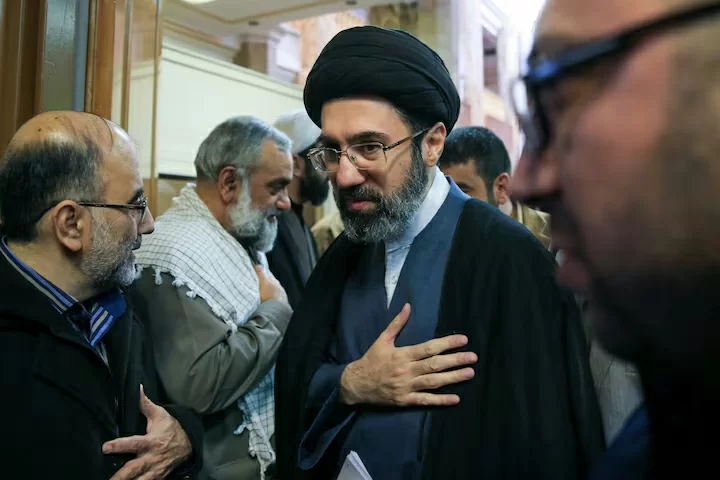
In his inaugural public communication since assuming leadership, Iran’s newly appointed Supreme Leader Mojtaba Khamenei has proclaimed the nation’s adversaries “defeated” despite ongoing military pressures from the United States and Israel. The message, delivered during Nowruz (Persian New Year) celebrations, marked Khamenei’s first official statement following the assassination of his predecessor and father, Ayatollah Ali Khamenei, on February 28th.
Khamenei, who has maintained a notably low profile since the transition of power, utilized the national broadcast to praise the Iranian people’s resilience and characterize the coming year as one of “resistance economy under national unity and security.” He emphasized that an extraordinary unity had emerged among citizens despite their diverse religious, intellectual, cultural, and political backgrounds, resulting in the enemy’s defeat.
The Supreme Leader specifically rejected Western expectations that Iran’s population would overthrow their government following brief military engagements, labeling such assumptions a “grave miscalculation.” He asserted that the conflict was intended to instill fear and despair to achieve dominance and fragmentation of Iran, but instead created division among opposing forces.
Addressing regional tensions, Khamenei denied Iranian involvement in recent attacks on Turkey and Oman, describing them as “false flag” operations designed to sow discord among neighboring nations. This contradicted reports from Turkish and Omani authorities alleging ballistic missiles and drones had been launched from Iranian territory, resulting in two fatalities in Oman.
In a diplomatic overture, Iran’s leader called upon Afghanistan and Pakistan to cease hostilities and offered mediation assistance to restore bilateral relations. Both nations have reportedly agreed to observe a temporary ceasefire during the Eid al-Fitr celebration following weeks of sustained violence.
Political analysts note that Iran’s constitutional framework was specifically designed to prevent power vacuums, enabling regime continuity even during periods of significant external pressure and internal transition.