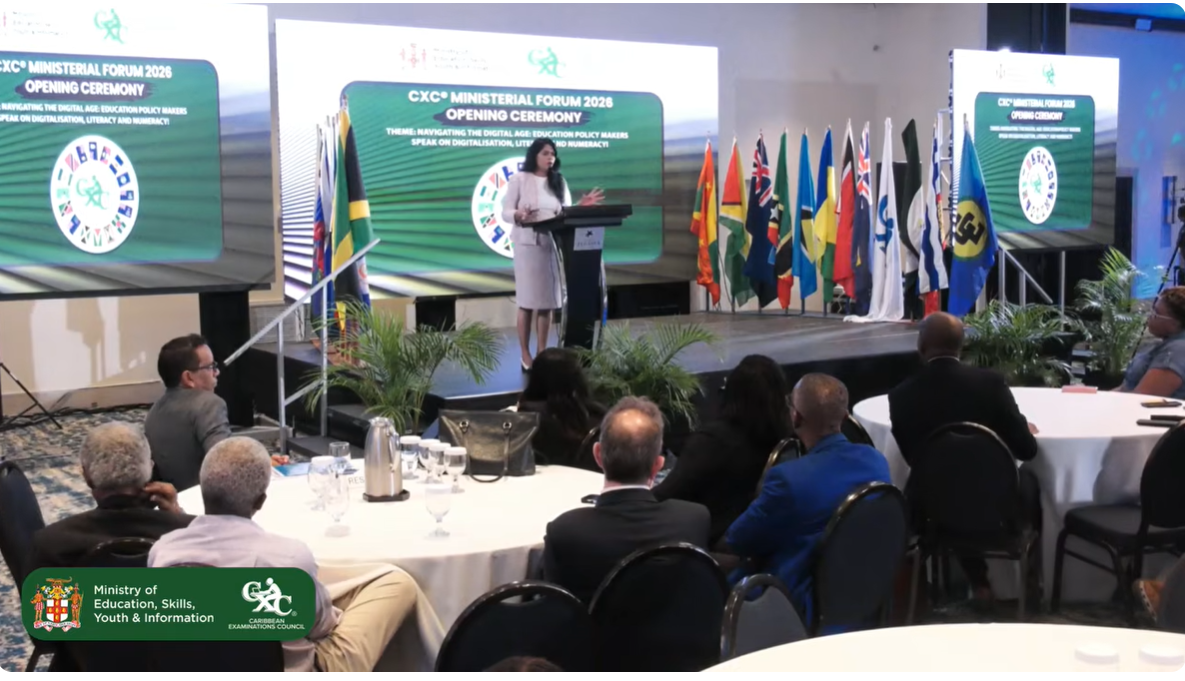
Guyana is implementing sweeping educational reforms with the introduction of Grade Two and Four literacy assessments, Education Minister Sonia Parag announced at the Caribbean Examinations Council (CXC) Ministerial Forum in Jamaica. The initiative aims to ensure students achieve literacy before completing primary education, addressing what Minister Parag acknowledged as the region’s problem with “producing functionally illiterates.”
The comprehensive strategy includes establishing community literacy tents where parents can assist children with homework, creating a collaborative learning environment that extends beyond classroom walls. Minister Parag, who also chairs CARICOM’s Council for Human and Social Development, revealed that numeracy assessments will follow in 2027.
The conference, themed “Navigating the Digital Age: Rethinking Teaching, Learning and Assessment,” became a platform for Caribbean education leaders to address both the opportunities and challenges presented by artificial intelligence. While recognizing AI’s potential for personalized learning and immediate feedback, Minister Parag warned of risks including false imagery, plagiarism, data privacy concerns, and increased bullying. She advocated for responsible integration with “clear frameworks” focusing on ethics, data protection, and academic integrity.
CARICOM Assistant Secretary General Alison Drayton emphasized the urgency of educational transformation, stating incremental changes are insufficient in the face of rapid technological advancement. She cautioned that delays risk widening existing inequities, particularly when combined with the lingering impacts of COVID-19 and annual hurricane disasters.
The conference concluded with several key resolutions: assessment systems prioritizing fairness and authenticity, sustained investment in teacher development and digital infrastructure, and strengthened regional collaboration. CXC Chairman Sir Hilary Beckles highlighted the concerning decline of history as a compulsory subject over the past fifty years, noting the visible consequences of historical ignorance in contemporary society.
All speakers emphasized that educational reform must be implemented through phased, consultative approaches rather than sudden, heavy-handed measures that could leave teachers and students feeling unprepared or excluded. The consensus emerged that Caribbean nations must collectively navigate digital transformation while preserving regional identity and cultural values.