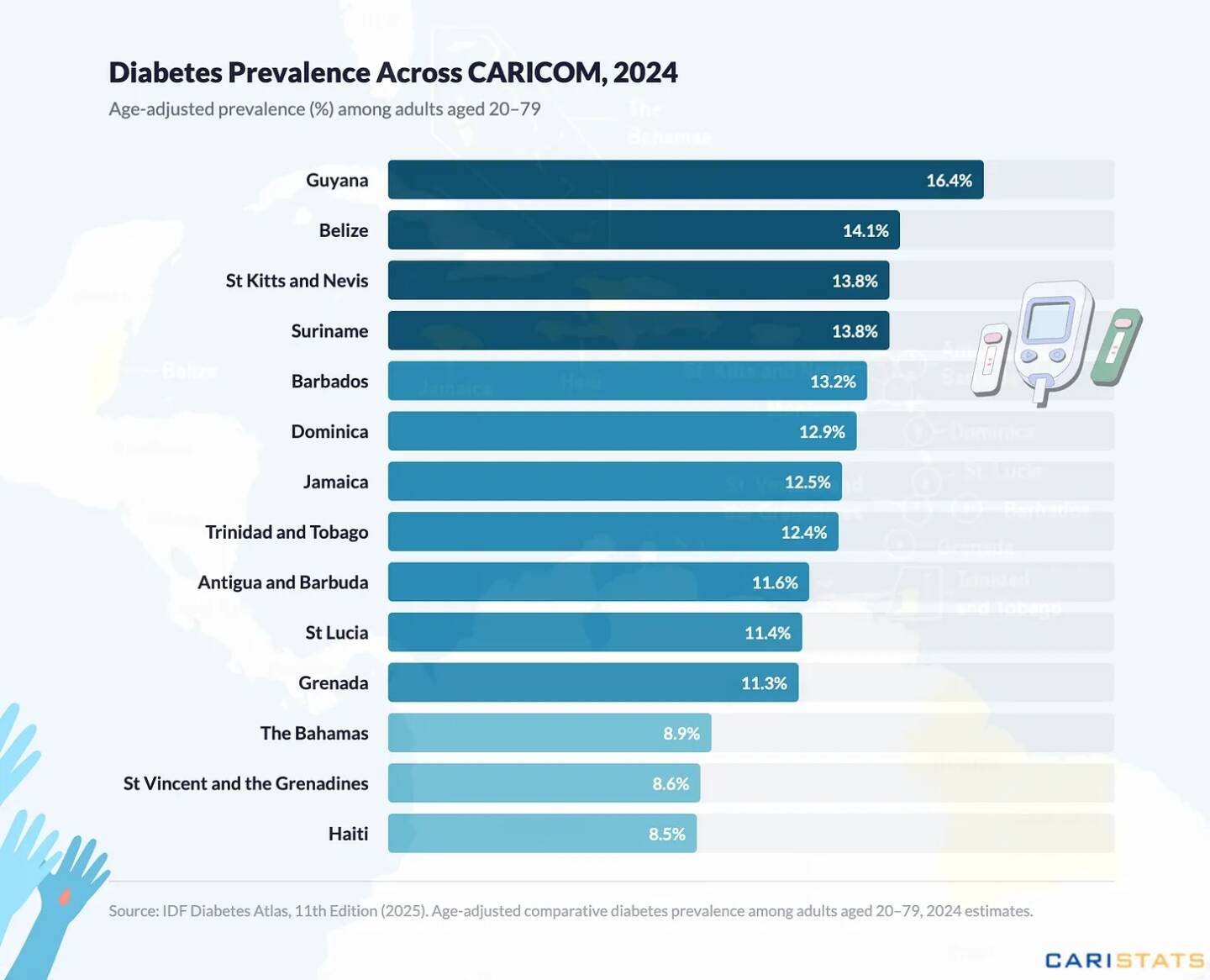
A stark disparity in diabetes prevalence has emerged across the Caribbean Community (Caricom), with age-adjusted rates varying dramatically from 8.5% in Haiti to 16.4% in Guyana, according to the forthcoming 2025 International Diabetes Federation (IDF) Diabetes Atlas. This near twofold difference highlights significant public health inequities within the single regional bloc.
The data, which standardizes comparisons by accounting for national age structures, identifies Guyana (16.4%), Belize (14.1%), alongside St. Kitts and Nevis and Suriname (both 13.8%) as the nations with the highest prevalence. A middle cluster of seven countries, spanning from Barbados (13.2%) down to Grenada (11.3%), forms the core of the region. Notably distinct at the lower end of the spectrum are The Bahamas (8.9%), St. Vincent and the Grenadines (8.6%), and Haiti (8.5%).
This public health challenge is set against a concerning regional backdrop. The broader North America and Caribbean zone already contends with the second-highest diabetes prevalence globally. IDF projections indicate an additional 12 million adults living with diabetes across the region by 2050. For high-prevalence Caricom states, this accelerating trajectory intensifies an already critical health crisis, demanding urgent policy intervention and coordinated public health strategies to mitigate long-term impacts on healthcare systems and population wellness.