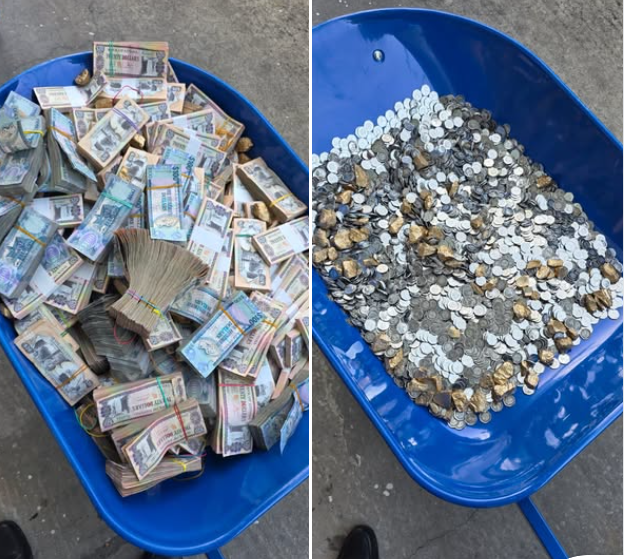
In an extraordinary display of financial theatrics, prominent Guyanese businessmen Azruddin and Nazar Mohamed fulfilled a High Court monetary order by transporting approximately GY$900,500 in small denomination bills and coins using two wheelbarrows to the Attorney General’s Chambers on Thursday. The payment followed a formal warning from Attorney General Anil Nandlall that he would seek court enforcement if the costs related to lost extradition committal proceedings were not immediately settled.
The delivery, which consisted primarily of low-value currency notes alongside coins up to the legal limit of GY$500, required government employees to remain until approximately 5:30 PM to complete the counting process. Nandlall confirmed via Facebook that public servants were significantly inconvenienced by the unusual payment method, noting that the Mohameds still owed a balance of GY$99,500 despite the elaborate display.
Azruddin Mohamed, who leads the opposition WIN party and serves as Guyana’s Opposition Leader, explained to Demerara Waves Online News that the payment method was necessitated by banking restrictions imposed after the United States Treasury Department’s OFAC sanctions in June 2024. The sanctions, which alleged gold smuggling and tax evasion exceeding US$50 million, resulted in the revocation of the brothers’ foreign exchange license and the closure of their commercial bank accounts.
Mohamed asserted the money originated from his child’s piggy bank, emphasizing his commitment to ‘honor the rules of the country’ despite the political tensions. He further revealed plans to appeal both the High Court and Court of Appeal decisions regarding alleged political bias in the extradition proceedings initiated by Home Affairs Minister Oneidge Walrond.
The transaction occurred under the provisions of the Bank of Guyana Act, which establishes legal tender limitations for coin payments while imposing no restrictions on currency notes. Mohamed indicated he would return with additional currency notes to settle the outstanding balance, maintaining his stance that the payment spectacle highlighted the government’s contradictory acceptance of funds from sanctioned individuals despite previous warnings about associated risks.