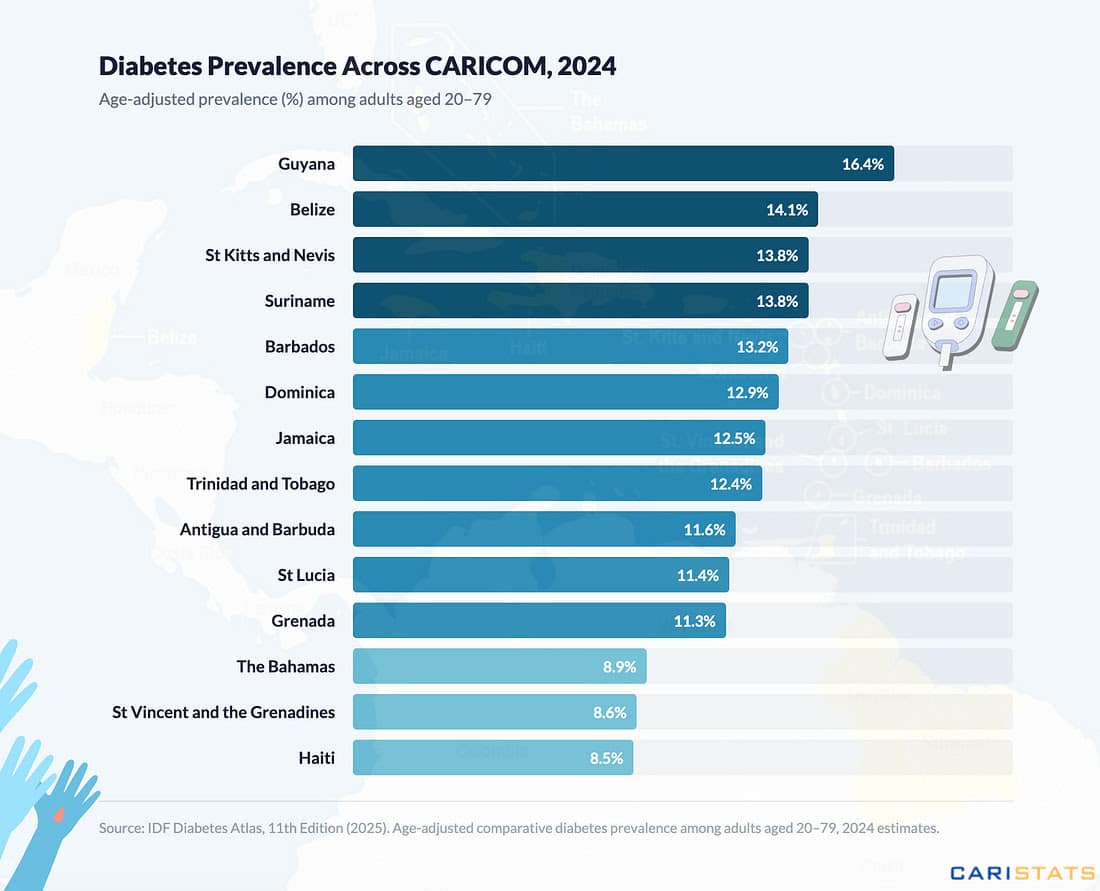
A stark health disparity is unfolding across the Caribbean Community (CARICOM), where diabetes prevalence exhibits a near twofold variance among member states. According to the latest International Diabetes Federation (IDF) Diabetes Atlas (11th Edition, 2025), age-adjusted comparative data reveals a troubling landscape. Guyana leads the region with a staggering 16.4% of its adult population (aged 20-79) living with diabetes, closely followed by Belize at 14.1%, and both St. Kitts and Nevis and Suriname at 13.8%. A significant middle cluster encompasses seven nations, including Barbados (13.2%), Trinidad and Tobago (12.9%), Jamaica (12.6%), Antigua and Barbuda (12.3%), Dominica (11.9%), St. Lucia (11.6%), and Grenada (11.3%). Notably distanced at the lower end of the spectrum are The Bahamas (8.9%), St. Vincent and the Grenadines (8.6%), and Haiti (8.5%). This detailed epidemiological snapshot, which standardizes figures for age structure to ensure equitable comparison, underscores the severe and uneven burden of the disease. Compounding the concern is the broader context: the North America and Caribbean region already bears the world’s second-highest diabetes prevalence. The IDF projects an additional 12 million adults will be living with the condition across the region by 2050. For high-prevalence CARICOM members, this trajectory intensifies an already critical public health emergency, demanding urgent and targeted intervention strategies.