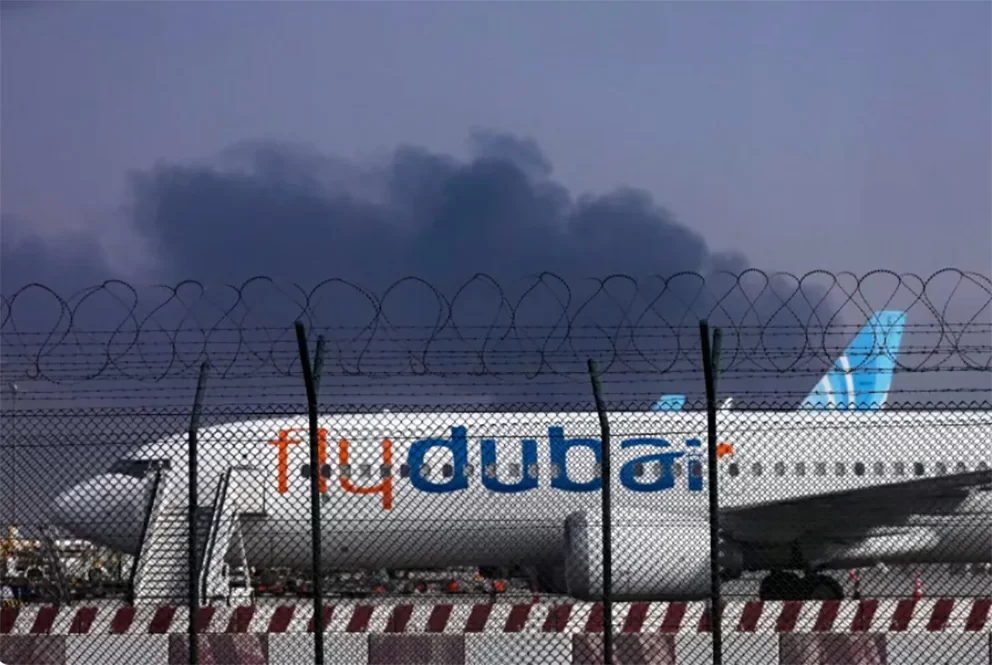
The ongoing military confrontation between the United States, Israel, and Iran is inflicting severe economic damage across Gulf Cooperation Council (GCC) states, with analysts warning of potential recessionary pressures comparable to the 1990-1991 Gulf War. Since hostilities erupted on February 28th, Iran’s persistent attacks on military bases throughout the region have created catastrophic disruptions to energy production, tourism, and transportation networks.
According to aviation analytics firm Cirium, approximately 37,000 flights were canceled between February 28 and March 8 alone due to airspace closures and restrictions. Dubai International Airport, typically the world’s busiest international hub, suspended operations following a drone strike on nearby fuel storage facilities. While Qatar Airways has gradually resumed limited special flights, no Gulf carrier has restored pre-conflict flight capacity.
The energy sector has suffered particularly dramatic losses. Rystad Energy data indicates Middle Eastern oil production plummeted from 21 million to 14 million barrels per day within little over a week. In worst-case scenarios where commercial vessels continue avoiding the Strait of Hormuz due to Iranian threats, production could crash to just 6 million barrels daily.
Despite former President Donald Trump’s claims that multiple nations would help secure the vital waterway, no government has confirmed participation in military operations, with some explicitly rejecting involvement in maritime coalitions.
Goldman Sachs estimates suggest Qatar and Kuwait could experience 14% GDP contractions if the conflict persists through April, while the UAE and Saudi Arabia would face 5% and 3% declines respectively. Capital Economics projects regional economic shrinkage of 10-15% should the conflict extend at least three months with lasting energy infrastructure damage.
The tourism sector, representing approximately 11% of GCC GDP, faces devastating losses. The World Travel & Tourism Council calculates the region is losing $600 million daily in international tourist expenditures. Emilie Rutledge of The Open University emphasizes that cancellations of tourist bookings, conferences, and sporting events are creating massive repercussions for hospitality industries.
Iraq, though not a GCC member, suffers equally severe consequences. Wood Mackenzie analyst Peter Martin estimates the Iraqi government is losing roughly $3 billion daily in revenue from approximately 70% reduced oil production. A 10% annual production decline could trigger 3.5% GDP contraction for Iraq in 2026.
Khaled Almezaini, political scientist at Zayed University in Dubai, notes that combined disruptions to aviation, tourism, shipping routes, and energy exports—coupled with rising insurance premiums and transport costs—could cost the region hundreds of millions in daily economic activity. However, he anticipates no full-scale regional recession due to substantial financial reserves that can buffer short-term shocks.
“The most probable outcome remains growth deceleration and delayed recovery, particularly in larger economies like the UAE and Saudi Arabia,” Almezaini stated. “Should tensions de-escalate rapidly, the region remains well-positioned for faster recovery than many anticipate.”