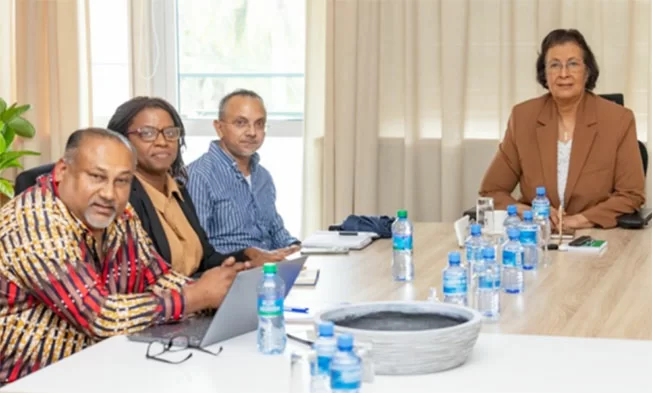
The Association of Economists in Suriname (VES) is preparing to deliver a comprehensive set of policy recommendations to President Jennifer Simons aimed at strengthening national production capabilities and economic resilience. This development follows a substantive dialogue between VES leadership and the head of state, addressing critical economic challenges facing the nation.
Central to the discussions were the escalating international fuel prices and their potential ripple effects throughout Suriname’s economy. The economists noted that while fuel typically constitutes a minor component in overall production costs, market actors frequently implement disproportionate price increases across goods and services. The VES explicitly opposed blanket fuel subsidies, instead advocating for targeted support mechanisms for vulnerable households and economically disadvantaged groups. This approach necessitates updated and refined database systems within the Social Affairs Ministry to ensure precise intervention delivery.
Simultaneously, the rising global oil prices present a fiscal opportunity through increased revenue transfers from Staatsolie to government coffers. The economists emphasized that these additional funds should be strategically deployed to mitigate inflation impacts on susceptible populations, with absolute transparency regarding allocation methodologies and implementation frameworks.
The dialogue also encompassed debt management strategies, with VES questioning how the administration plans to address both national and international debt obligations medium-term, noting that repayments have been deferred similarly to previous governments. Regarding state-owned enterprises, the government acknowledged ongoing development of a policy framework for rationalization and potential privatization, though specific timelines and candidate enterprises remain undefined.
Agricultural production and food security emerged as paramount concerns, particularly in light of geopolitical tensions in the Middle East and lessons from the COVID-19 pandemic. The government revealed reserved resources for youth training programs within production sectors and upcoming agricultural initiatives. VES stressed the strategic imperative of maintaining operational integrity at the Fish Inspection Institute, crucial for sustaining international export standards, and addressing cassava disease impacts to prevent regional food shortages.
The association further highlighted the critical need for anti-corruption measures and transparent appointments within government and state enterprises, particularly during periods requiring public sacrifice. Both parties characterized the exchange as openly critical yet constructive, fostering mutual understanding of Suriname’s economic priorities.