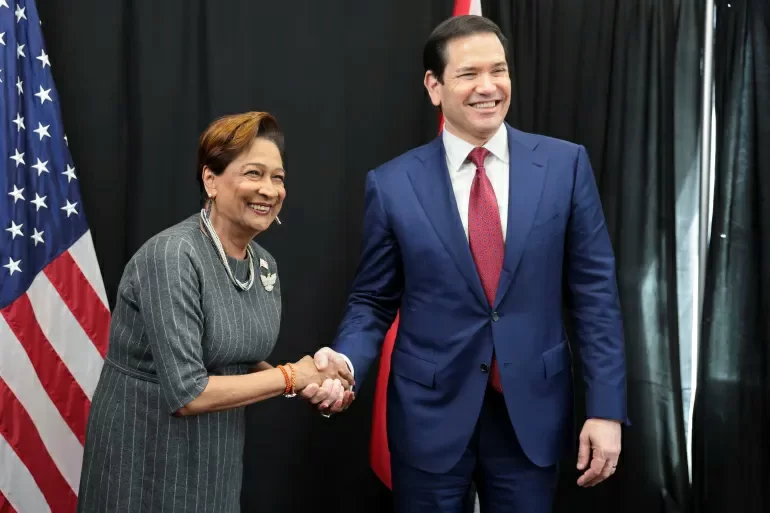
The Trinidad and Tobago government has secured parliamentary approval to extend its state of emergency for an additional three months, continuing its controversial approach to combating violent crime. The House of Representatives voted 26-12 on Saturday to prolong the emergency measures that grant security forces expanded powers while suspending key civil liberties.
This extension marks approximately 10 of the past 14 months that the twin-island nation has operated under emergency provisions. Initially declared in December 2024 following a surge in gang violence, the state of emergency enables authorities to arrest individuals based on “suspicion of criminal activity” and suspends constitutional protections against government searches in both public and private properties.
Prime Minister Kamla Persad-Bissessar recently informed parliament that 373 individuals have been detained under the emergency framework, while the country has recorded over 60 homicides this year alone. Opposition lawmakers argue that despite these extensive measures, the government has failed to effectively control violent criminal activities.
The move reflects a broader regional trend where Latin American and Caribbean governments increasingly employ emergency powers to address security challenges. Nations including El Salvador and Honduras have implemented similar measures with varying degrees of success, often extending temporary provisions multiple times despite international concerns.
Human rights organizations have raised alarms about potential abuses under such frameworks. Last year, the UN High Commissioner for Human Rights called on Honduras to terminate its state of emergency after approximately 17 extensions. Recent findings presented by international legal experts at a UN Human Rights Council side event suggest the Salvadoran government under President Nayib Bukele may have committed crimes against humanity during its emergency period.
Activist groups allege that emergency powers in El Salvador have been weaponized to threaten and imprison dissidents and human rights defenders. The country prepares to mark the fourth anniversary of its emergency declaration on March 27, highlighting the prolonged nature of these security measures across the region.