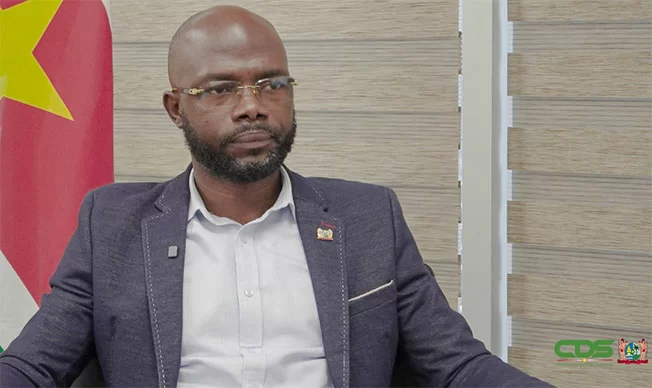
The Surinamese government has initiated a comprehensive strategy to strengthen regional healthcare infrastructure, targeting three key hospitals outside the capital to improve medical accessibility and reduce dependence on Paramaribo’s Academic Hospital. Health Minister André Misiekaba announced active investments in Wanica Regional Hospital (RZW), Marwina District Hospital, and Atjoni District Hospital as part of this decentralization effort.
Minister Misiekaba acknowledged that these facilities currently operate with financial government support as they haven’t achieved full operational independence. The administration remains committed to ongoing development assistance to enhance their capabilities.
A particular controversy involves RZW’s outsourcing arrangement with private company TMS Global, which currently manages laboratory, pharmacy, and radiology services—departments the minister considers essential revenue-generating components that should be under hospital control. The government plans to terminate this contract and will engage legal counsel if TMS Global proves uncooperative.
Meanwhile, Marwina District Hospital is undergoing significant modernization through a €5 million loan from the French Development Agency (AFD). This funding will expand basic services and medical specializations, including the placement of two pediatric specialists. Additional enhancements include an operational optician service, plans for a diabetes clinic, and temporary medical support from French specialists. These improvements aim to reduce patient referrals to the Centre Hospitalier de l’Ouest Guyanais in French Guyana.
Atjoni District Hospital, functioning with basic equipment and laboratory facilities, requires improved coordination with Medical Mission services. Minister Misiekaba observed that critically ill patients from the Upper Suriname region (population approximately 20,000) often bypass Atjoni for direct transport to Paramaribo. The minister advocates for Atjoni to serve as a primary reception center, with its current staff of four Cuban doctors handling all but the most complex cases requiring transfer to the Academic Hospital.
This regional strengthening initiative ultimately seeks to provide residents of Sipaliwini, Brokopondo, Para, and Wanica districts with quality healthcare closer to home while alleviating pressure on Paramaribo’s central medical facility.