In a significant legislative development, four members of Suriname’s National Assembly (DNA) have submitted a substantive amendment to the Judicial Status Act, proposing two major reforms to the country’s judicial system. The proposal, filed on Friday afternoon by assembly members Steven Reyme (A20), Xiaobao Zheng (PL), Ronny Asabina (BEP), and Rabin Parmessar (NDP), seeks to recalibrate both retirement protocols and administrative structures within the Public Prosecutor’s Office (OM).
The central amendment aims to reverse the current retirement age for members of the Public Prosecutor’s Office, including the Attorney General, from 70 back to 65 years. According to explanatory notes accompanying the proposal, this adjustment seeks to reharmonize pension regulations across the magistracy, addressing inconsistencies that have emerged within judicial retirement policies.
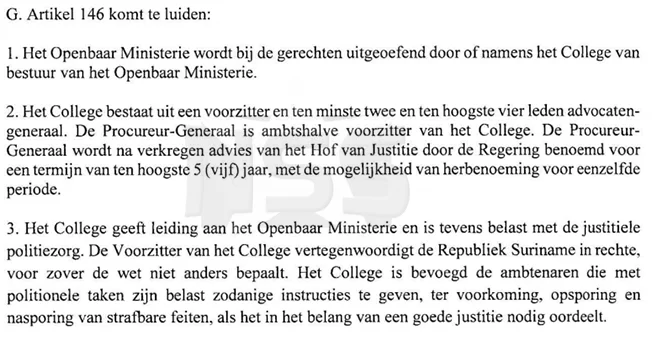
Concurrently, the amendment proposes transforming the prosecutorial leadership model from a single Attorney General system to a collective Board of Prosecutors General. This new governance structure would consist of one Attorney General as chairperson complemented by two to four Advocates General. Proponents argue that this collegiate approach would enhance institutional balance, strengthen internal controls, and ensure greater continuity in prosecution policies.
The proposed reforms emerge against the backdrop of intensive debates within legal and political circles regarding the organizational framework and leadership dynamics of the Public Prosecutor’s Office. The amendment also introduces fixed-term appointments for the Attorney General position, proposing a five-year term renewable once, replacing the previous lifetime appointment system.
The National Progressive Party (NPS), while supporting the amendment, was unable to formally endorse the proposal due to time constraints affecting representative Jerrel Pawiroredjo. Meanwhile, the opposition Progressive Reform Party (VHP) has expressed reservations about the current amendment and is expected to present alternative proposals during Monday’s parliamentary session, where the amendments will undergo thorough public deliberation.
These proposed changes represent part of broader institutional reforms aimed at strengthening Suriname’s judicial apparatus by reducing dependence on individual officials and creating more robust systems of checks and balances within the nation’s law enforcement infrastructure.