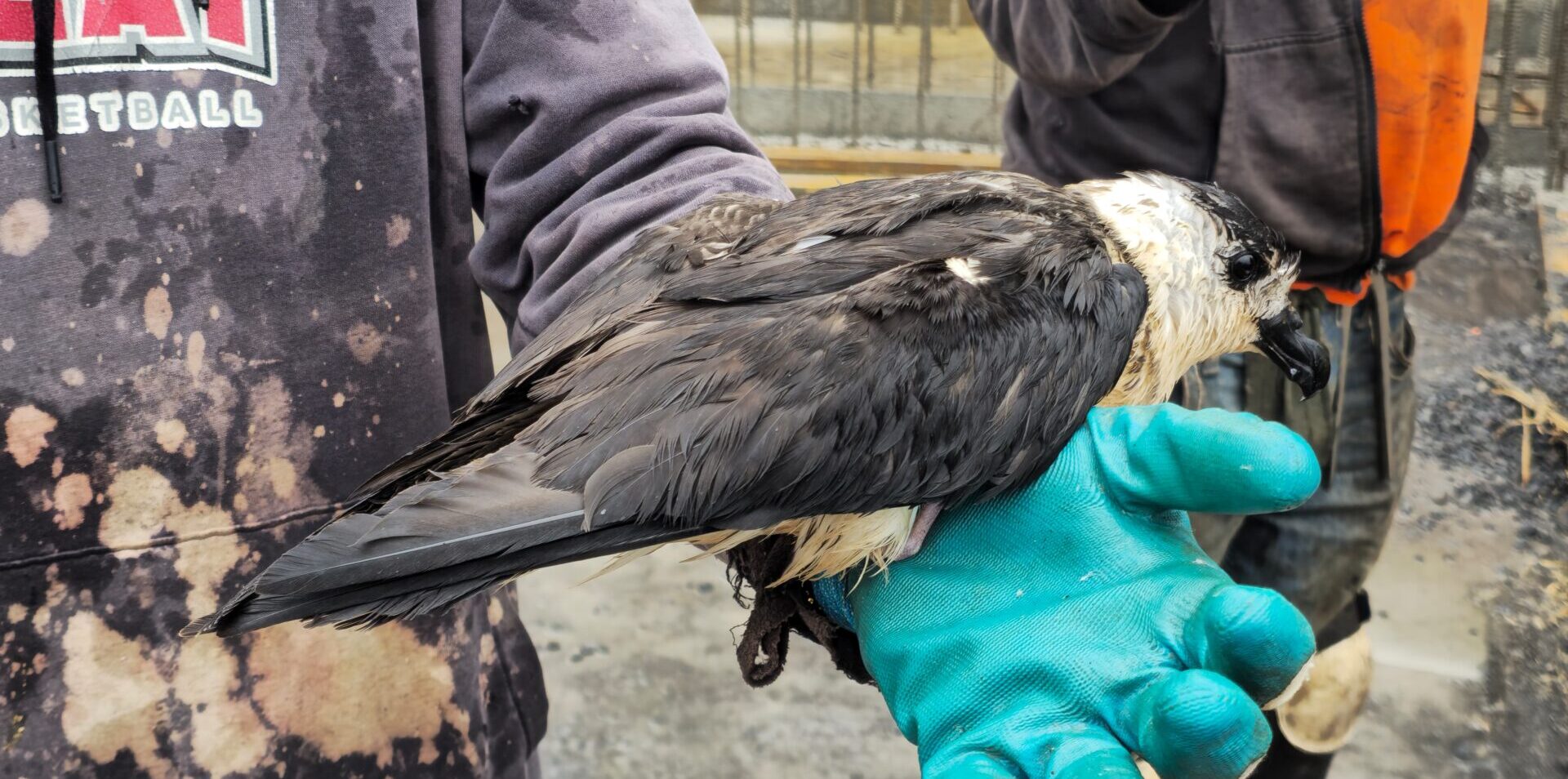
In an extraordinary wildlife encounter, Darnell Carbon of Morne Prosper, Dominica, has potentially become the first living Dominican to handle two critically endangered Dyabloten birds within an eight-month period. The latest encounter occurred on February 10, 2026, when Carbon’s colleague discovered a grounded black-capped petrel at the Upper Station of the island’s Cable Car Project.
The nocturnal seabird, known scientifically as Pterodroma hasitata, was found nestled within steel formwork designated for concrete flooring at approximately 3:00 AM. Carbon, who had previously cared for another Dyabloten in May 2025, carefully retrieved the creature from the construction site at 8:00 AM, noting its significantly larger size and damp plumage.
Remarkably, the bird demonstrated exceptional tameness toward Carbon, climbing onto his arm and head while resisting handling by other workers. Carbon provided paternal care for the avian visitor, housing it in a box with warming blankets for two days. The bird exhibited unusual behaviors including using its prehensile beak to climb onto Carbon’s bed.
The reunion concluded on February 12 when the petrel launched from Carbon’s shoulder at daybreak, executing a circular flight pattern before disappearing toward Morne Nicholls’ summit. Carbon speculates this might be the same individual from his previous encounter, now nine months matured, based on its recognizable behavior and apparent familiarity.
The black-capped petrel remains one of the Caribbean’s most elusive seabirds, currently known to nest exclusively on Hispaniola despite historical presence on multiple islands. Their eerie nocturnal calls earned them the colloquial name ‘little devil’ in local dialects. While Dominica has documented several grounded specimens, no active nests have been located on the island despite extensive searches using specialized detection methods.
This exceptional encounter provides valuable insight into the species’ movement patterns and behavior, offering hope for conservation efforts aimed at protecting these critically endangered seabirds.