Suriname’s agricultural export sector faces an existential crisis as systemic deficiencies trigger a catastrophic decline in international shipments. Official data reveals a staggering collapse from 65 tons of monthly vegetable exports in 2018 to merely 15 tons currently, while active exporters dwindled from 13 to just 7 companies.
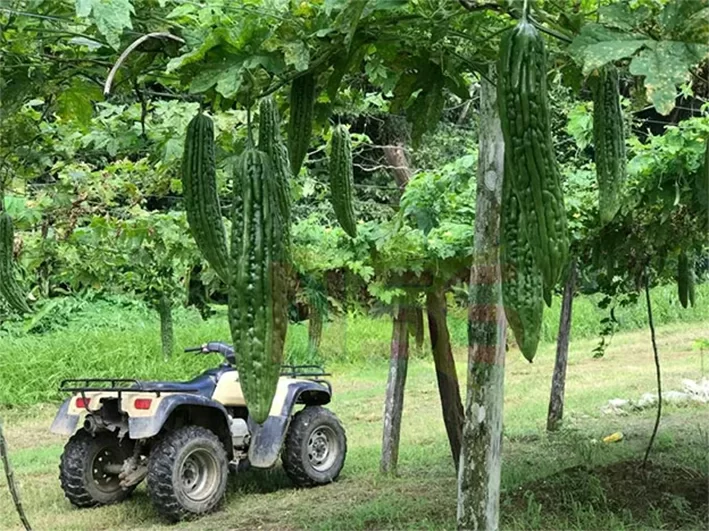
The crisis stems from multiple structural failures. The European Union’s 2019 ban on bitter melon (sopropo) exports—despite six years of advance warning—eliminated 40% of Suriname’s export revenue. Unlike Mexico and Santo Domingo which successfully regained market access, Suriname remains excluded from key markets.
Ram Soeknandan, President of the Vegetable Exporters Association (VEAPS), condemns the policy inertia: “While political parties universally promise agricultural support, once elected they neglect practical collaboration with scientific institutions.” He notes the bitter irony that while commercial sopropo exports remain prohibited, individuals freely ship the vegetable via postal services to relatives abroad.
Seasoned exporter Bhiesnoe Gopal of Gopex NV identifies rampant corruption in production chains as crippling legitimate businesses. Unscrupulous exporters ship products without proper cultivation documentation, while the National Plant Protection Organization (NPPO) turns a blind eye. This malpractice contaminates legitimate shipments when mixed with illicit produce.
Critical staffing shortages plague inspection services, creating arbitrary enforcement that undermines process reliability. Although packing house and Vito inspections function adequately, bureaucratic rigidity at Zanderij customs requires perfect alignment between shipment manifests and actual cargo—a practical impossibility that causes extensive delays.
Logistical failures compound these issues. Despite ISO 9001 certification, Surinam Air Cargo (SAC) lacks adequate cold chain infrastructure. Produce frequently sits exposed after weighing due to workers’ reluctance to transport it 500 meters to refrigeration units. Flight schedules exacerbate the problem—cargo must arrive by 11 AM for flights departing hours later.
Packaging regulations create additional obstacles. Surpost packaging triggers frequent scanner alarms at customs, causing two-day delays that render perishables unsalable. Financial protections remain virtually nonexistent—with no local representatives of transport companies, insurance claims become impossible to process, forcing exporters like Gopal to prefer KLM for its marginally better reliability.
The Federation of Surinamese Agrarians (FSA) warns of complete institutional collapse, citing the paralysis of the National Food Safety Institute and demanding autonomous professional institutions free from political interference. Without immediate structural reforms, Suriname’s agricultural export sector faces irreversible decline and permanent market exclusion.