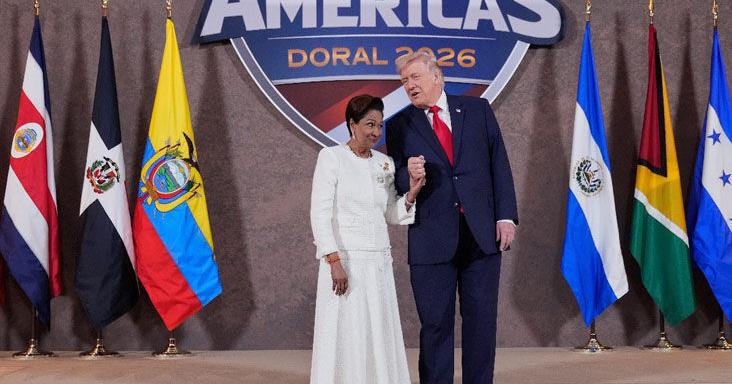
In a significant development for Caribbean security cooperation, Trinidad and Tobago’s Homeland Security Minister Roger Alexander has confirmed that United States officials have provided the island nation with a comprehensive list of individuals connected to narcotics trafficking, illegal firearms, and organized violence. This intelligence sharing occurs within the framework of the newly established Americas Counter Cartel Coalition, a Trump administration initiative that includes Trinidad and Tobago among 17 Latin American nations.
Minister Alexander, while maintaining discretion regarding specific operational details for national security reasons, emphasized the transformative nature of this bilateral partnership. “The United States gathers massive intelligence on countries, organizations, and individuals,” Alexander stated. “They know exactly who they can work with and who they can trust regarding security efforts against cartels and narco-traffickers.”
The coalition represents a strategic shift in hemispheric security policy, with U.S. President Donald Trump characterizing criminal cartels as a “cancer” requiring decisive military response. Official proclamations from the coalition’s inaugural meeting indicate participating nations will receive training and mobilization support to create “the most effective fighting force necessary to dismantle cartels.”
Concurrently, Defence Minister Wayne Sturge revealed that Prime Minister Kamla Persad-Bissessar’s diplomatic efforts have positioned Trinidad and Tobago among twelve key nations engaged in critical hemispheric security discussions. Sturge noted that the country’s geographic location places it at the forefront of combating narcotics trafficking and transnational criminal operations in the Caribbean region.
This enhanced cooperation includes advanced surveillance capabilities, improved intelligence sharing mechanisms, and acquisition of sophisticated equipment to secure borders against criminal networks. Both ministers characterized this partnership as facilitating a “national security reset” for Trinidad and Tobago, which is currently operating under a state of emergency due to escalating criminal violence.
Minister Alexander defended the coalition’s potentially aggressive stance: “We support aggressive action against those who continue to kill our citizens through trafficking. They are killing entire society with nefarious activities impacting our youth. We are fed up with this criminality.”