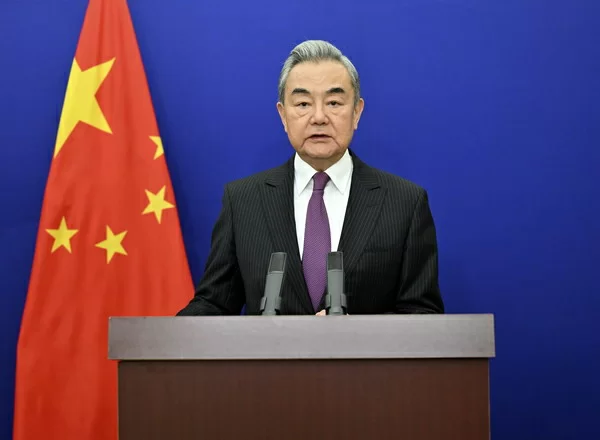
Amid escalating tensions between the United States, Israel, and Iran, China has positioned itself as a vocal advocate for diplomatic resolution in the Middle East. Chinese Foreign Minister Wang Yi, speaking during a press conference at the sidelines of a major annual political gathering in Beijing, issued a stark warning against attempts to orchestrate regime change in Iran, emphasizing the critical importance of respecting national sovereignty.
Wang characterized the ongoing conflict as ‘a war that should never have occurred’ and one that ‘benefits no party involved.’ He articulated China’s firm position that military solutions inevitably breed hatred and spawn new crises rather than delivering sustainable resolutions. The Foreign Minister underscored that Middle Eastern nations must independently determine their own affairs without external interference, stating that ‘the people of the Middle East are the true masters of their region.’
The Chinese diplomat employed vivid metaphorical language, asserting that ‘a strong fist doesn’t equate to a strong argument’ and cautioning against reverting to the ‘law of the jungle’ in international relations. He called upon all involved parties to promptly return to negotiation tables, advocating for dialogue as the primary mechanism for resolving differences and establishing collective security frameworks.
China has offered to collaborate with regional partners to restore order, provide stability for affected populations, and promote global peace. Simultaneously, Wang reaffirmed the resilience of China-Russia relations, describing them as ‘steadfast and indestructible’ despite Western criticism of Russia’s actions in Ukraine.
The geopolitical context remains volatile, with the United States and Israel conducting strikes on Iranian targets—including Tehran’s oil storage facilities and refineries—triggering significant fires. Iran has responded with attacks on American bases throughout the Gulf region, with collateral damage affecting neighboring nations such as the United Arab Emirates, Kuwait, Qatar, Bahrain, and Saudi Arabia through missile and drone assaults.
Notably, despite Iranian President Masoud Pezeshkian’s official apology for these attacks, Tehran has continued its military operations, drawing criticism from hardline factions within the country. A leaked assessment from the U.S. National Intelligence Council suggests that even large-scale American military operations would unlikely succeed in overthrowing Iran’s established military and religious power structures—directly contradicting claims that external forces could install preferred leadership.
The conflict’s economic ramifications continue to intensify, with rising oil prices and disruptions to critical trade routes like the Strait of Hormuz. Regional leaders and international observers increasingly emphasize the dangers of further escalation and the urgent necessity for diplomatic solutions.