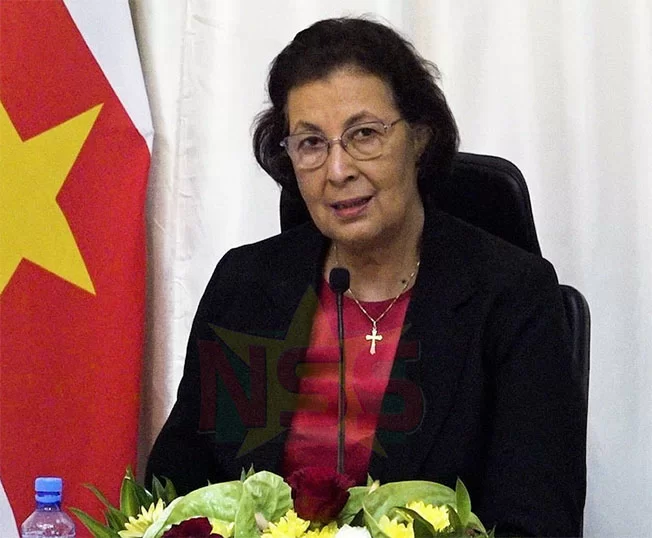
The Surinamese government has unveiled a comprehensive economic stabilization plan designed to bolster purchasing power for civil servants and vulnerable populations while implementing stringent measures to curb government waste. President Jennifer Simons acknowledged during a March 6th press conference that public sector wages have significantly eroded due to currency devaluation, though she emphasized that across-the-board salary increases remain economically unfeasible.
Two primary relief models are under consideration: adjustment of income tax brackets benefiting all working citizens, and temporary inflation compensation measures. Finance and Planning Minister Adelien Wijnerman detailed the immediate relief package, which includes monthly allowances for civil servants ranging from SRD 1,000 (March-May) to SRD 1,500 (September-December). Educators will receive bridging allowances escalating from SRD 500 to SRD 1,000 monthly between March and June.
Additional support extends to pensioners, disabled citizens, and low-income households through SRD 250 monthly supplements from March through June. The universal child benefit (AKB) increases to SRD 250 per child monthly. Notably, directors and senior officials are excluded from these benefits. The total relief package requires approximately SRD 1.8 billion in funding.
Concurrently, the government is implementing aggressive anti-corruption measures. Interior Ministry interventions have already blocked salaries of non-working or overseas-based personnel, generating annual savings of SRD 300 million. A religious institution audit resulted in blocking over 100 fraudulent salaries, saving nearly SRD 1 million yearly. Telecommunications expenditures were slashed from SRD 16 million to under SRD 2 million monthly at the Interior Ministry alone.
The administration has launched digital registration verifying actual residency, with 15,000 individuals already processed. This data will integrate with border management systems to identify and terminate salaries of permanent overseas residents. President Simons asserted that government cannot serve as a social safety net for non-workers, stating: ‘People must work and receive commensurate wages. We aim to make those wages dignified.’
The reforms include stricter personnel policies requiring new appointments to fit within established organizational frameworks, fundamentally restructuring Suriname’s public sector compensation system.