A landmark legal case in Suriname has ignited serious concerns about press freedom and potential censorship in the Caribbean nation. Burney Brunswijk, a prominent public figure, has initiated legal proceedings against media outlet DTV-Express over their reporting of an official criminal complaint filed against him and Grassalco director Wesley Rozenhout for alleged document forgery.
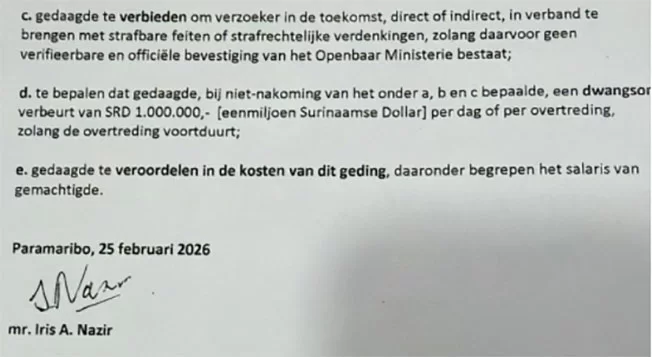
The lawsuit demands the complete removal of the article from all DTV-Express platforms, requires a formal retraction, and most alarmingly, seeks to prevent future publications linking Brunswijk to criminal activities without prior official confirmation from the Public Prosecutor’s Office. Legal experts and press freedom advocates have characterized these demands as nothing less than attempted preventive censorship.
This legal challenge emerges at a critical juncture in Suriname’s democratic development, where journalists have recently intensified investigative reporting on political scandals, potential corruption within state-owned enterprises, and judicial financial irregularities. The media’s professional approach to the Brunswijk case included standard journalistic practices of fact verification and right-of-reply, given that the mere existence of a formal complaint constitutes verifiable news.
Press freedom advocates argue that requiring media to await official permission before reporting on filed complaints fundamentally undermines democratic principles. Such precedents could force journalists into self-censorship, particularly when covering influential figures. The case now rests with Suriname’s judiciary to determine whether the courts will enable the preemptive restriction of journalistic reporting—a decision with profound implications for the balance between individual reputation rights and society’s right to information in a functioning democracy.