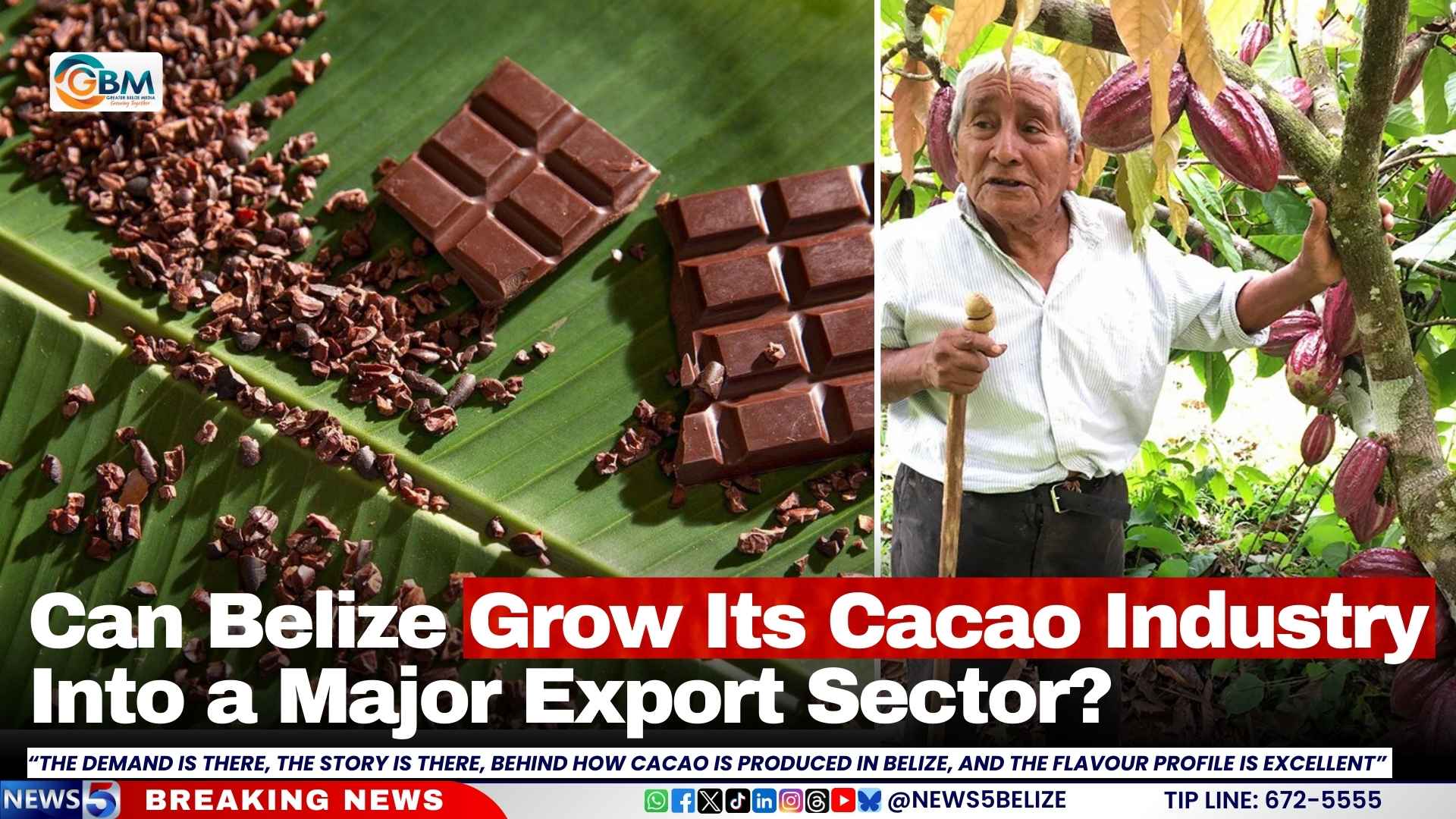
Belize has embarked on an ambitious agricultural initiative with the establishment of the National Cacao Committee, a strategic body designed to elevate the nation’s cacao sector into a significant export-oriented industry. The committee convened its inaugural session this week, uniting government representatives, agricultural producers, and export specialists to formulate a comprehensive development strategy.
Berisford Codd, Senior Trade Economist, emphasized the distinctive socioeconomic dimension of Belize’s cacao production. “This crop possesses unique characteristics as it’s predominantly cultivated by small-scale farmers. Approximately one thousand agricultural producers stand to gain substantially from targeted sector investments,” Codd stated during the committee’s foundational meeting.
Although not currently a dominant export commodity, cacao already generates between $3-12 million annually for Belize’s economy, with the Toledo District serving as the primary production hub. This region’s cacao cultivation functions as an economic cornerstone for rural and indigenous communities.
Industry stakeholders identify considerable expansion potential, particularly given escalating international demand for premium-quality cocoa products. Codd highlighted the competitive advantages of Belizean cacao: “Market demand exists unequivocally, our production narrative is compelling, and the flavor characteristics are truly exceptional.”
The committee has established multiple strategic priorities for immediate implementation, including production scale enhancement, processing infrastructure modernization, and digital transformation through national farmer registries and geospatial farm mapping. Additional focus areas encompass rural transportation infrastructure improvement and regulatory framework modernization to attract investment.
Legislative reform emerged as a critical discussion point, potentially enabling strengthened oversight mechanisms and industry-wide certification standards. Codd explained, “Appropriate legislation would facilitate registry development and create conditions for governmental support initiatives, including comprehensive certification programs.”
The tri-ministerial leadership structure comprises the Foreign Affairs and Foreign Trade Ministry, Agriculture Ministry, and Rural Transformation Ministry, collaborating with industry representatives from the Toledo Cacao Growers Association, Belize Cacao, and Maya Mountain Cacao – the nation’s predominant exporter.